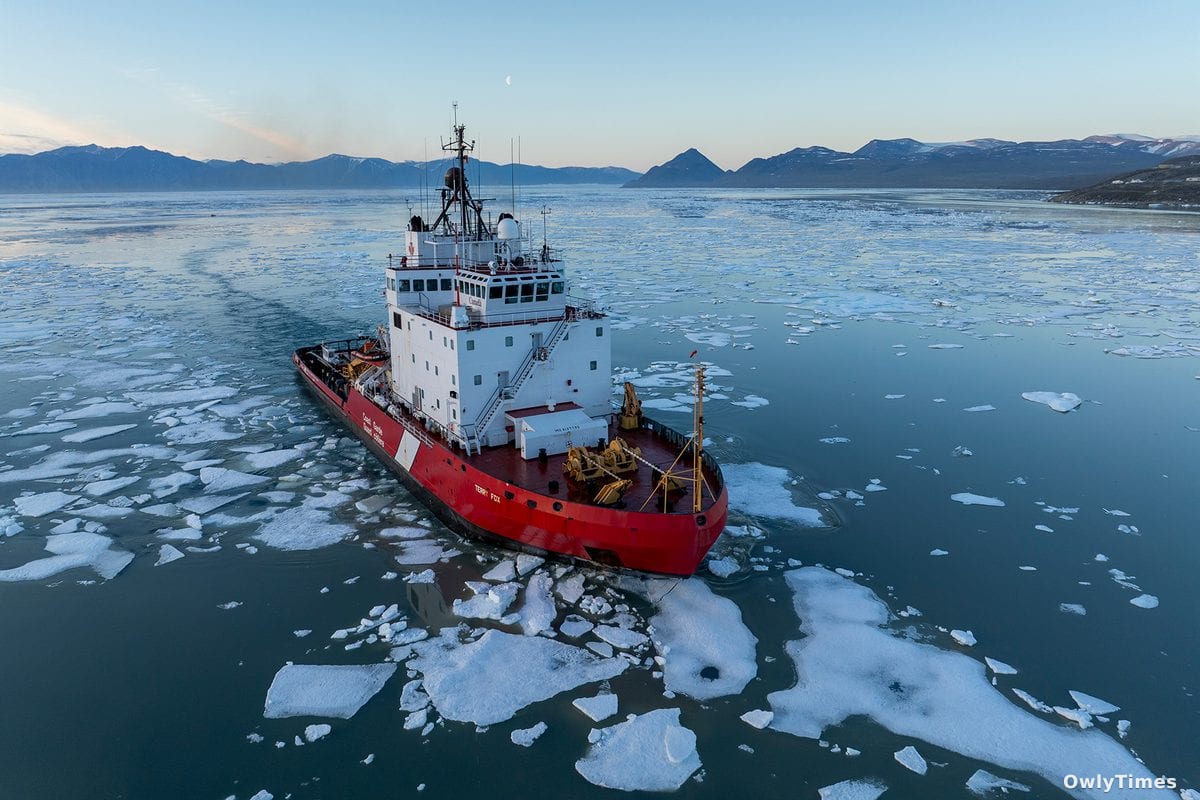

The Arctic, often envisioned as a pristine expanse of ice and snow, is experiencing a sonic boom – and not from natural phenomena. A new study published in npj Acoustics reveals a rapidly changing underwater soundscape in the Canadian Arctic, driven by climate change and a surprising diversity of human-generated noise. This isn’t simply a matter of louder oceans; it’s a fundamental shift in the environmental cues crucial for the survival of iconic Arctic species, and it exposes a critical gap in how we currently monitor and regulate human activity in this fragile region. The urgency isn’t about eliminating all sound, but about acknowledging the full spectrum of noise and proactively managing its impact before the Arctic’s acoustic environment is irrevocably altered.
Researchers, led by Dr. Philippe Blondel, senior lecturer in the Department of Physics at the University of Bath in the UK, analyzed a decade of underwater sound data collected from Cambridge Bay. Their findings demonstrate that the accelerating loss of sea ice – a process occurring at more than three times the global average rate in the Arctic, according to Dr. Blondel – is opening the region to increased human activity and, consequently, a more complex and pervasive underwater noise profile. While large ships have long been recognized as a primary source of noise pollution, the study highlights the significant contribution of smaller vessels, snowmobiles, and aircraft – sources often overlooked in existing environmental assessments. This is a crucial distinction; current regulations, like those within the European Marine Strategy Framework Directive, typically focus on monitoring and mitigating noise within narrow “shipping bands,” effectively ignoring a substantial portion of the acoustic disturbance.
This piece references the sciencefocus.com report.
The implications for Arctic wildlife are profound. Species like whales and seals aren’t simply exposed to sound; they rely on it. Sound is their primary means of communication, navigation, foraging, and predator avoidance. Dr. Blondel uses the analogy of standing beside a motorway: a constant background hum punctuated by disruptive bursts of noise. A passing motorcycle’s high-frequency whine can mask subtle communication signals, while a rumbling truck’s low-frequency vibrations can disrupt essential behaviors like feeding. Imagine a whale attempting to locate its calf amidst this cacophony, or being driven away from vital feeding grounds by an unexpected sonic intrusion. The study doesn’t quantify specific behavioral changes yet, but it establishes the conditions under which those changes are increasingly likely to occur. The sheer variety of noise, and its unpredictable nature, is what poses the greatest threat.
What’s particularly concerning is the inadequacy of current monitoring systems. Many of these smaller noise sources are “invisible” to satellite tracking, which primarily focuses on large ship movements. This means that existing models, used to predict and mitigate noise pollution, are providing an incomplete – and likely optimistic – picture of the acoustic reality on the seafloor. The study’s data suggests that the Arctic soundscape is already far more varied and intense than previously understood, raising questions about the accuracy of past assessments and the effectiveness of current protective measures. This isn’t a failure of intent, but a failure to account for the full complexity of the problem.
Limitations to Consider
It’s important to acknowledge the scope of this study. The data is specific to Cambridge Bay, a region experiencing rapid environmental change. While the findings likely have broader relevance across the Arctic, extrapolating them to the entire region requires caution. Furthermore, the study establishes correlation between ice loss and increased noise, but doesn’t definitively prove causation in every instance. It’s possible that increased human activity is also driven by factors independent of ice conditions. Finally, the study focuses on the physical characteristics of sound; future research will need to investigate the specific behavioral responses of different Arctic species to varying noise levels and frequencies.
A Call for Broader Acoustic Regulation
Dr. Blondel isn’t advocating for a silent Arctic. He emphasizes the need for a more comprehensive approach to environmental policy, one that extends beyond the narrow focus on shipping noise. He proposes establishing variable speed limits for ships within designated Arctic lanes, adjusted based on the presence and sensitivity of wildlife. This would require international cooperation and robust enforcement mechanisms, a significant logistical and political challenge given the multiple nations bordering the Arctic region. However, the core message is clear: we need a framework for managing Arctic soundscapes now, before the situation deteriorates further.
The next critical research step is to correlate the acoustic data with observed changes in wildlife behavior. Are whale vocalizations becoming less frequent or more strained? Are seals altering their foraging patterns in response to increased noise? Answering these questions will require long-term monitoring programs and sophisticated analytical techniques. But perhaps the most important question we should be asking ourselves is this: as the Arctic continues to open up to increased human activity, what level of acoustic disturbance are we willing to accept, and what sacrifices are we prepared to make to protect the unique and vulnerable wildlife that call this region home? The answer will define the future of the Arctic soundscape – and the fate of the creatures that depend on it.