
Is Arizona deliberately starving its public schools? That’s the question no one in Phoenix seems willing to ask directly, but the newly released audit from Arizona Auditor General’s office paints a picture far more damning than simple “budgetary challenges.” The real story here isn't declining enrollment – it’s a systematic dismantling of public education through financial neglect, and the consequences will ripple far beyond the classroom. We’re not talking about a few districts tightening their belts; we’re witnessing a slow-motion crisis impacting the future workforce and, crucially, the property values of entire communities.
A Third of Districts in Financial Freefall
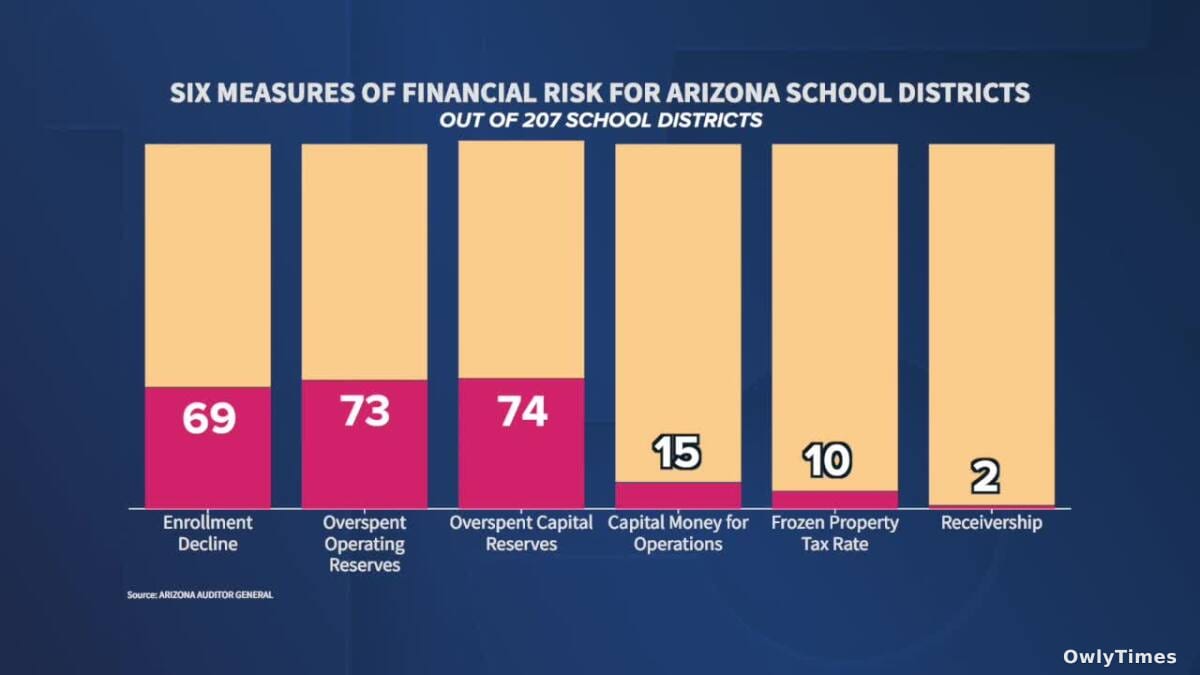
The numbers are stark. The auditor examined ten key financial indicators across the state, and the results are uniformly grim. Roughly a third of Arizona’s school districts are experiencing significant enrollment declines, a trend often attributed to the rise of charter schools and, increasingly, families simply leaving the state. But even districts with stable enrollment are struggling. Another third overspent their budgets last year, a level of fiscal irresponsibility that would get a household flagged for predatory lending. Nine districts are now categorized as facing “high financial risk,” with Tucson Unified, the state’s largest district, prominently featured on that list. This isn’t a localized problem; it’s a statewide pattern.
Valley Schools Lead the Decline
The Phoenix metropolitan area, often touted as a booming economic hub, is ground zero for this educational collapse. Isaac Elementary and Wilson Elementary districts are both on the “high-risk” list, and five Valley districts saw enrollment drops exceeding 10%, with Isaac leading the pack. Consider this: a 10% drop in enrollment isn’t just about fewer students. It’s about fewer state dollars following those students, creating a vicious cycle of cuts and further decline. Thirty-two of the Valley’s 55 districts blew past their legal spending limits in the last fiscal year. Nadaburg Unified overspent by a staggering 92%, while even affluent Scottsdale Unified missed its mark by 44%. These aren’t accounting errors; they’re deliberate choices, or, more accurately, the result of a system that incentivizes financial mismanagement.
This article draws on reporting from abc15.com.
Raiding the Piggy Bank: Capital Funds Under Siege
Perhaps the most alarming finding is the systematic diversion of capital funds. Five Valley districts – Cave Creek Unified, Paradise Valley Unified, Glendale Union, Riverside Elementary, and Tempe Elementary – raided money earmarked for building improvements to cover day-to-day operating expenses. Think about that for a moment. Schools are literally dismantling their own futures – delaying repairs, postponing upgrades, and ultimately creating unsafe learning environments – to pay for teacher salaries and basic supplies. It’s like selling the furniture to pay the rent. This isn’t just short-sighted; it’s a betrayal of the communities these schools serve. The auditor also flagged Balsz Elementary, Fountain Hills Unified, and Scottsdale Unified as districts nearing high-risk status, suggesting the problem is poised to worsen.
Beyond Budgets: The Human Cost
The political rhetoric around school funding often focuses on abstract numbers and percentages. But let’s be clear: these budget cuts translate directly into larger class sizes, fewer extracurricular activities, and overworked, underpaid teachers. It means crumbling infrastructure and outdated textbooks. It means fewer opportunities for students, particularly those from disadvantaged backgrounds. And it means a less-skilled workforce in the future, impacting Arizona’s ability to compete in a global economy. The long-term consequences of this financial neglect will far outweigh any short-term savings.
The situation in Arizona isn’t unique, but the scale of the crisis is particularly acute. Other states are grappling with similar challenges, but few are actively dismantling their public education systems with such blatant disregard. Expect to see a surge in parent-led advocacy groups demanding accountability from local school boards and state legislators. But more importantly, watch for a mass exodus of families from districts facing the most severe financial distress. The next domino to fall won’t be a school closing; it will be a neighborhood losing its economic vitality as families seek better educational opportunities elsewhere.