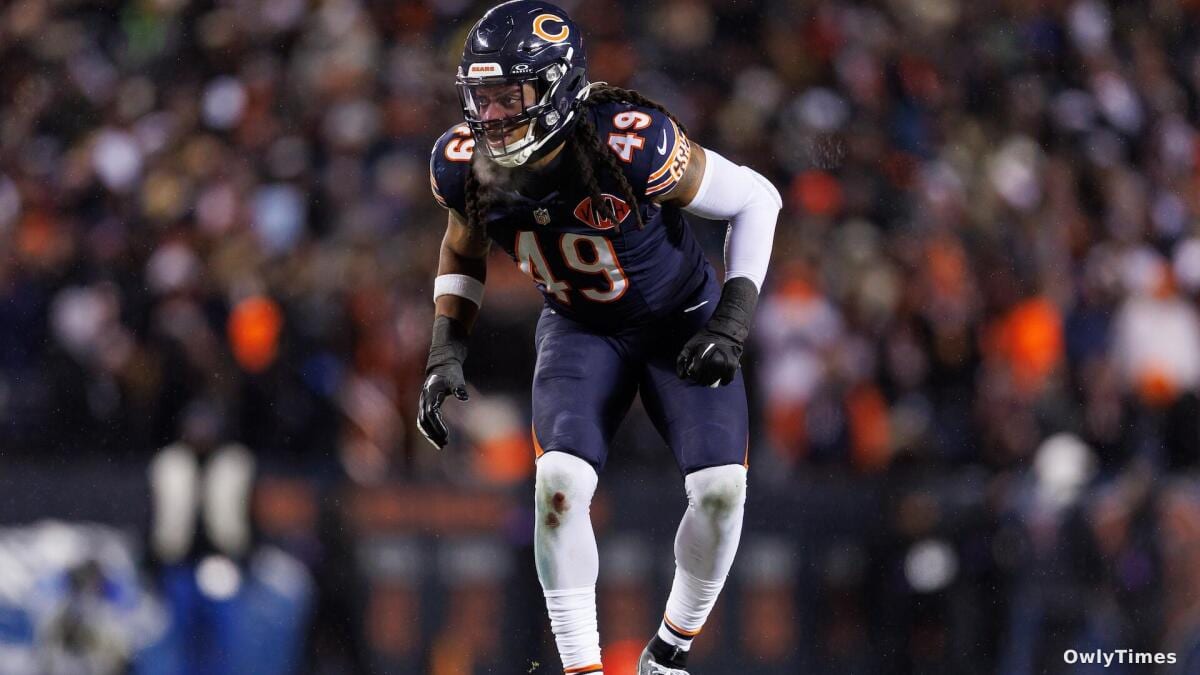

The roar inside Soldier Field still echoes, a phantom limb of the improbable joy the Chicago Bears gifted their fans last season. Eleven wins, a division clinched for the first time in six years, a playoff victory that felt like a resurrection – it was a narrative shift so complete, so unexpected, that it lulled a city into believing a dynasty might be brewing. But the quiet work of roster management, the cold calculus of cap space, is already underway, and it’s threatening to dismantle the very foundation of that success. The Bears have granted permission for linebacker Tremaine Edmunds to seek a trade, a move that, while financially prudent, feels like a jarring punctuation mark on a season that promised so much more.
The Price of a Turnaround
The decision isn’t about Edmunds’ performance. Even hampered by a groin injury that sidelined him for four games, he led the team with 112 tackles in 2025, adding four interceptions and nine passes defensed. This is a player who has consistently delivered, reaching the 100-tackle mark in every one of his eight NFL seasons since being drafted by the Buffalo Bills in 2018. He’s a Pro Bowler, a proven leader, and at 27 (turning 28 in May), still theoretically within his prime. The issue, as it so often is in the NFL, is money. Edmunds is entering the final year of a four-year, $72 million contract, carrying a $17.4 million cap hit in 2026. Releasing or trading him frees up roughly $15 million – a significant sum for a team navigating the complexities of building a sustainable contender. This isn’t a story about a declining player; it’s a story about the brutal economics of the modern NFL, where even impactful veterans become expendable in the pursuit of long-term financial flexibility.
Source material: CBS Sports.
Beyond the Cap Sheet: A Shifting Philosophy
The Bears’ turnaround under head coach Ben Johnson and defensive coordinator Dennis Allen wasn’t built on individual superstars, but on a collective identity. Their defense, which led the NFL with 33 takeaways, thrived on opportunistic playmaking and a relentless pursuit of the ball. Edmunds was a key component of that, but the team’s record-breaking seven wins when trailing in the final two minutes suggest a resilience that extends beyond any single player. Yet, the willingness to even consider moving Edmunds signals a subtle but significant shift in the Bears’ approach. General Manager Ryan Poles has openly acknowledged the need to explore “all the different scenarios,” even regarding wide receiver DJ Moore, whose $28.5 million cap hit in 2026 is the highest on the team. This isn’t simply about trimming fat; it’s about prioritizing future cap space, potentially for extending younger, emerging players or making a splash in free agency down the line. The Bears are betting that a team built on depth and strategic spending can be more sustainable than one reliant on a handful of expensive stars.
The Ripple Effect of Calculated Risk
The timing of this decision is particularly noteworthy. The NFL recently experienced a period of unprecedented spending, fueled by a surge in media rights deals and a growing fan base. However, the league is now bracing for potential financial headwinds, with the salary cap expected to remain relatively flat in the coming years. Teams like the Bears, who have proactively addressed their cap situation, are positioning themselves to weather the storm. But this strategy comes with a cost. Trading or releasing proven players like Edmunds risks disrupting team chemistry and potentially weakening the defense. The Bears are essentially gambling that the financial benefits of freeing up cap space outweigh the on-field risks of losing a key contributor. This is a calculated risk, one that reflects a broader trend in the NFL towards prioritizing financial stability over immediate gratification.
What Happens When Loyalty Meets the Ledger?
The Tremaine Edmunds situation isn’t isolated. It’s a microcosm of the larger forces reshaping the NFL. The league is becoming increasingly driven by data analytics and financial modeling, with player value often reduced to a series of numbers on a spreadsheet. While this approach can lead to more efficient roster construction, it also raises questions about the human element of the game. What message does it send to players when their contributions are weighed against their cap hit? Will this trend further erode player loyalty and create a more transactional relationship between teams and their athletes? The Bears’ decision will be closely watched by other teams across the league, as they navigate their own cap challenges and weigh the trade-offs between winning now and building for the future. The question isn’t just whether the Bears can replace Edmunds’ production; it’s whether they can maintain their winning culture while simultaneously prioritizing financial prudence. And that, ultimately, will determine whether their 2025 success was a fleeting moment of glory or the beginning of a new era in Chicago.

