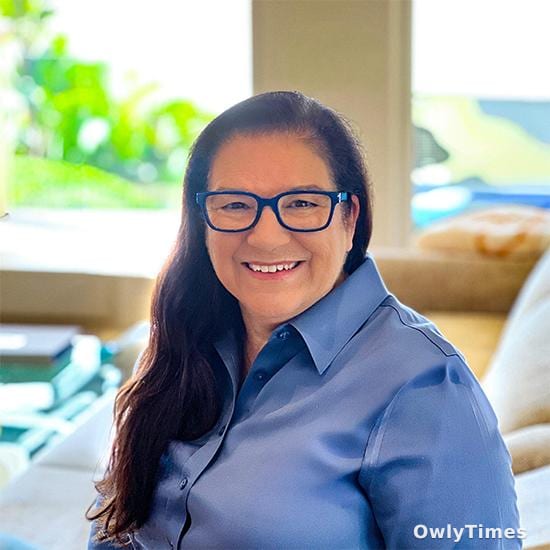

Beyond the Fortune 500: A Physician’s Vision for Principled Leadership
The announcement of Martha Molina Bernadett as Pepperdine Graziadio Business School’s Distinguished Alumna isn’t simply a recognition of business success; it’s a pointed statement about the evolving expectations for corporate leadership. While many alumni honors celebrate financial performance, Bernadett’s story highlights a deliberate integration of healthcare expertise, family business stewardship, and a commitment to values-driven decision-making – a combination increasingly vital as companies navigate complex ethical and social challenges. The timing is particularly relevant, as public trust in institutions, including both healthcare and business, remains fragile, demanding a renewed focus on integrity and purpose.
Bernadett’s path is unusual, even within the landscape of successful physician-executives. She began her career practicing medicine in rural California, a formative experience that instilled a deep understanding of access barriers and systemic inequities in healthcare. This direct patient care informed her later role as executive vice president and chief innovation officer at Molina Healthcare, a company founded by her father, C. David Molina. Headlines often focus on Molina Healthcare’s growth – becoming a Fortune 500 company after its 2003 IPO, seven years after Molina’s death – but the study of Bernadett’s career reveals a consistent thread: leveraging data and technology not just for efficiency, but to address fundamental healthcare disparities. Her leadership in implementing data tools like Palantir Foundry wasn’t about maximizing profits; it was about improving outcomes for vulnerable populations, a goal she’d already begun to address as a practicing physician.
The distinction awarded by Pepperdine, and echoed by previous recognitions like the Waves of Service George Award, isn’t solely about Bernadett’s professional achievements. Deborah Crown, dean of Graziadio Business School, specifically emphasized Bernadett’s “true passion lies in family business and the development of values-centered leaders.” This is where the story moves beyond a typical corporate success narrative. Bernadett, alongside her husband Faustino Bernadett, has actively invested in cultivating this leadership model through the Drs. Martha & Faustino Bernadett Faculty Fellows Program at Graziadio. This isn’t merely philanthropic giving; it’s a strategic effort to embed ethical considerations and a service-oriented mindset into the core curriculum of a business school. The program directly supports faculty engaged in research and teaching that champions “principled business leaders,” a phrase that feels deliberately chosen in an era of frequent corporate scandals.
Source material: pepperdine.edu.
However, it’s important to acknowledge the limitations of focusing solely on individual leadership. While Bernadett’s influence within Molina Healthcare is undeniable, the company, like all large organizations, operates within a complex regulatory and market environment. The success of Molina Healthcare, and the impact of its innovations, are also shaped by government policies, insurance market dynamics, and broader economic forces. Attributing positive outcomes solely to leadership vision risks overlooking these crucial contextual factors. Furthermore, the very definition of “principled leadership” can be subjective and open to interpretation, requiring ongoing critical evaluation.
Bernadett’s commitment extends beyond the business world through the Molina Foundation, launched in 2004. The foundation’s work distributing books to over 11 million children and families speaks to a deeply held belief in the power of education as a pathway to opportunity, a value instilled by her parents, both elementary school teachers. Her involvement with organizations like the 4-H National Council Board and First Book further demonstrates a consistent pattern of service. This holistic approach – integrating healthcare, business, and education – is what sets Bernadett’s story apart. The question now is whether this model can be scaled and replicated. Will other business schools prioritize values-centered leadership to the same degree as Pepperdine’s Graziadio School? And, more importantly, will future generations of business leaders embrace a definition of success that extends beyond financial metrics to encompass genuine social impact?





