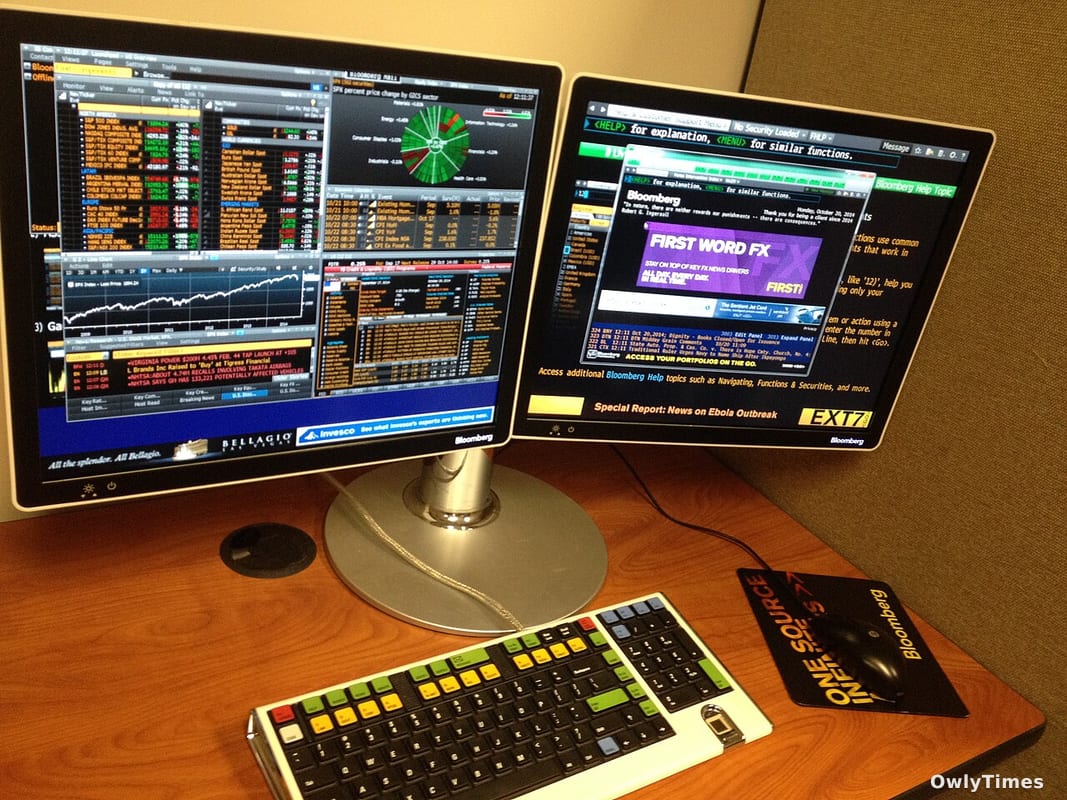

Is the future of finance actually about faster algorithms and decentralized ledgers, or is it just a really, really expensive screensaver? We’re all obsessing over fintech disruption, but overlooking the quiet, iron grip Bloomberg’s Terminal still has on the world’s money. The real story here isn't the flashy new apps promising to democratize investing – it’s the enduring power of a $30,000-a-year subscription that’s become utterly indispensable to the people actually moving markets. It’s a paradox: in an industry supposedly built on innovation, the most critical piece of technology looks remarkably…stable.
The Cost of Entry: Beyond the Monthly Fee
Walk onto any trading floor in New York, London, or Hong Kong and you’ll see it glowing in black and amber. That’s the Bloomberg Terminal, and it costs roughly $25,000 per year, per user. That number alone should be a flashing red sign for anyone claiming to disrupt finance. Consider that the average household income in the US is around $74,580. A single Terminal subscription represents over a third of that. This isn’t about access to information; it’s about erecting a financial caste system. Michael Bloomberg didn’t build a data provider, he built a gatekeeper. And while newer competitors like Refinitiv (now part of the London Stock Exchange Group) exist, they haven’t meaningfully dented Bloomberg’s dominance – a testament to the network effect at play.
This piece references the Yahoo Finance report.
More Than Data: The Ritual of the Terminal
The Terminal isn’t just software – it’s infrastructure. It’s not about what information it provides, but how it’s delivered and, crucially, how ingrained it is in the daily routines of financial professionals. Thousands of keyboard shortcuts, proprietary functions, and the ubiquitous “Bloomberg chat” have created a unique professional culture. It’s a language, a ritual, a shared experience. Try telling a seasoned trader to switch to a different platform; you’re not just asking them to learn new software, you’re asking them to relearn their job. This isn’t about efficiency; it’s about fluency. The speed at which information is processed and acted upon is directly tied to this ingrained muscle memory.
The Identity Embedded in the Code
The Terminal doesn’t just provide data; it provides identity. Your Bloomberg handle isn’t just a username, it’s a signal of status. It’s how you’re recognized, how you’re contacted, how you’re perceived within the financial ecosystem. Instant messaging through the Terminal is the primary communication channel for deals, rumors, and everything in between. It’s a closed network, fostering a sense of exclusivity and control. This is where the real value lies – not in the raw data feeds licensed from exchanges, but in the network of relationships and the flow of information within that network. This is why attempts to replicate the Terminal have consistently failed; you can copy the data, but you can’t copy the community.
The Cracks in the Amber Glow
Despite its seemingly unshakeable position, Bloomberg isn’t immune to pressure. The rise of alternative data sources – satellite imagery, social media sentiment, credit card transactions – is challenging the Terminal’s traditional monopoly on information. Younger traders, accustomed to collaborative platforms like Slack and Discord, are less enamored with the Terminal’s archaic interface and closed ecosystem. Furthermore, the cost remains a significant barrier, particularly for smaller firms and individual investors. Bloomberg has responded by expanding its offerings beyond the Terminal, including data analytics tools and financial news services, but the core product remains stubbornly expensive and complex. In 2023, Bloomberg reported record revenue, but growth is slowing, and the company is facing increasing scrutiny over its pricing practices.
Here’s what to watch for: within the next five years, a major investment bank will publicly announce a significant, and costly, initiative to reduce its reliance on Bloomberg Terminals. It won’t be a complete exodus, but a deliberate effort to build internal tools and integrate alternative data sources, driven not by a desire for innovation, but by a cold, hard calculation of cost versus control. The amber glow won’t disappear overnight, but the cracks are starting to show, and the future of finance may depend on who can exploit them.