
The Bitter Irony of the Milan Olympics: Celebrating Gender Balance While Excluding Women in Nordic Combined
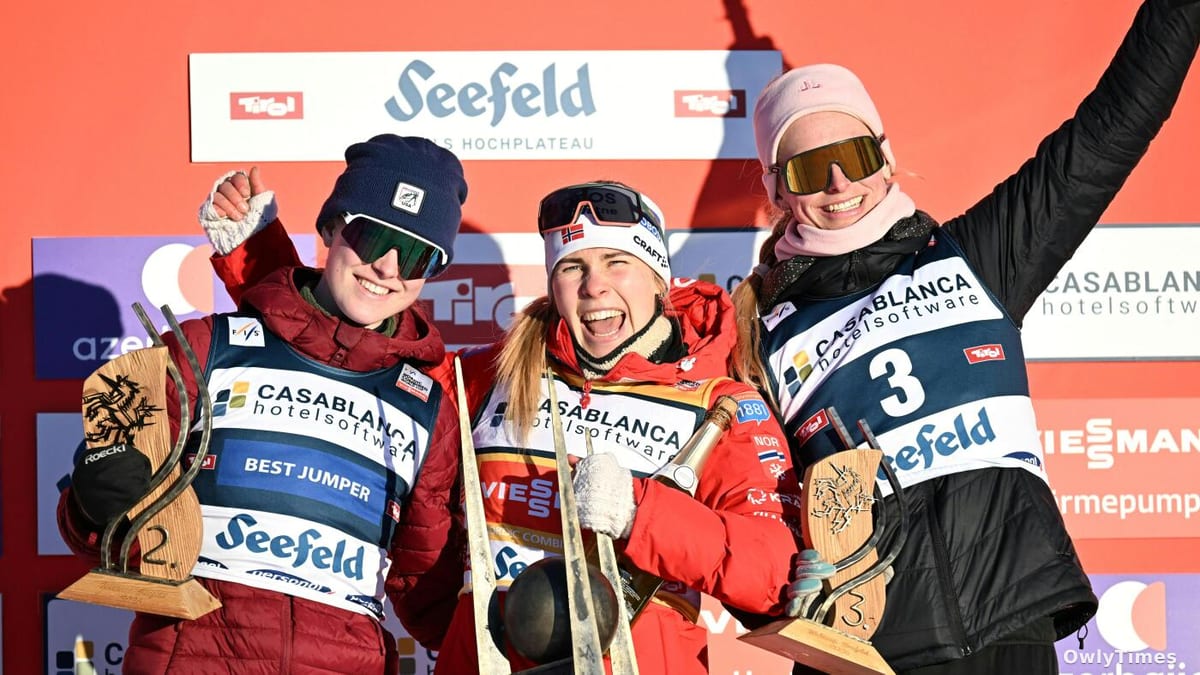
The 2026 Milan Cortina Winter Olympics are being heralded as the “most gender-balanced” in history. Yet, amidst this push for inclusivity, a glaring contradiction exists: Annika Malacinski, a world-ranked Nordic combined skier, will be in Italy, not to compete, but to watch her brother. This isn’t a heartwarming family story; it’s a stark illustration of systemic gender inequality within the Olympic movement, and a potential death knell for a niche but growing sport. The exclusion of women’s Nordic combined, despite its progress on the World Cup circuit, exposes a troubling disconnect between the IOC’s stated values and its actions, raising fundamental questions about fairness and the future of the discipline.
Background & Context: A Century of Male Dominance, A Decade of Change
Nordic combined, a grueling test of athleticism combining ski jumping and cross-country skiing, debuted at the Winter Olympics in 1924 – exclusively for men. For over a century, this remained the status quo. The sport’s inherent complexity – requiring mastery of two distinct disciplines – likely contributed to a slower development of women’s participation. However, the landscape began to shift in recent years. Women’s Nordic combined was integrated into the World Cup circuit in 2020 and the World Championships in 2021, demonstrating a growing base of female athletes and increasing competitive viability. Inclusion in the Youth Winter Olympic Games since 2020 further signaled momentum.
Source material: NPR.
Despite this progress, the IOC rejected bids for inclusion in both the 2022 and 2026 Games. This isn’t simply a case of slow adoption; it’s a repeated denial of opportunity. The IOC’s reasoning – low viewership and limited global participation – feels particularly hollow given the organization’s simultaneous promotion of gender balance. This represents a shift from a historical exclusion based on perceived lack of interest, to a justification rooted in marketability, effectively prioritizing profit over principle. The fact that Tara Geraghty-Moats, the inaugural World Cup title winner, was told by agents in 2020 that she could earn a million dollars if her sport were Olympic-eligible underscores the financial implications of this exclusion.
The IOC’s Calculus: Viewership, Participation, and a Potential Existential Threat
The IOC’s concerns aren’t entirely unfounded. Nordic combined remains a niche sport, even within the Winter Olympics. At the last three Winter Games, medals were awarded to athletes from only four countries, and viewership numbers were demonstrably lower than other events. However, the IOC’s focus on these metrics overlooks the potential for growth. A Nielsen Sports survey revealed a 25% increase in viewership for women’s Nordic combined during the 2024-2025 World Cup season, suggesting a rising interest.
More concerning is the IOC’s upcoming evaluation of Nordic combined itself after the 2026 Games. The discipline faces the very real possibility of being removed from the Olympic program altogether, regardless of gender. This decision, expected in June, is framed as a response to low participation and viewership, but it feels like a self-fulfilling prophecy. By denying women the opportunity to compete, the IOC actively limits the sport’s potential for expansion and marketability. The situation has evolved from advocating for women’s inclusion to actively fighting for the sport’s survival, as Annika Malacinski poignantly states, “The problem is not [just about] adding women anymore. It's about saving the sport.”
What This Means: Ripple Effects for Athletes, Advocacy, and Olympic Values
The IOC’s decision has far-reaching consequences. For athletes like Malacinski and Geraghty-Moats, it represents a devastating blow to their careers and a denial of their hard-earned achievements. The lack of Olympic inclusion significantly impacts their earning potential and limits their access to sponsorship opportunities. Beyond the individual level, the exclusion undermines the credibility of the IOC’s commitment to gender equality. It sends a message that women’s sports are valued less, and that market forces trump principles of fairness.
This situation also galvanizes advocacy groups and athletes to push for change. The online petition garnering tens of thousands of signatures, and the letter from Sens. Michael Bennet and John Hickenlooper demonstrate growing public awareness and political pressure. The support from male athletes, like cross-country skier Zak Ketterson, who criticized the IOC’s spending priorities, highlights a growing solidarity within the Olympic community. However, the IOC’s stance also risks alienating potential future generations of athletes, discouraging participation in a sport that appears to offer limited opportunities for advancement.
Looking Ahead: A Critical Juncture for Nordic Combined and Olympic Inclusivity
The next few months are critical. The IOC’s decision in June will determine not only the fate of women’s Nordic combined, but potentially the entire discipline. Viewership numbers during the current Olympic events will be scrutinized, and advocacy efforts will intensify. The most likely scenarios range from full inclusion of both men’s and women’s Nordic combined in 2030, to complete removal of the sport from the Olympic program. A compromise – perhaps a limited number of quota spots for women – is also possible, but feels unlikely given the IOC’s current position.
What’s often overlooked is the symbolic weight of this decision. The IOC has an opportunity to demonstrate genuine commitment to gender equality, or to reinforce a legacy of exclusion. The future of Nordic combined, and the integrity of the Olympic Games, hang in the balance. Readers should watch for the IOC’s June announcement, and continue to support athletes and advocacy groups fighting for a more inclusive and equitable Olympic movement. The story of Annika Malacinski isn’t just about one athlete’s dream deferred; it’s a test of the Olympic spirit itself.