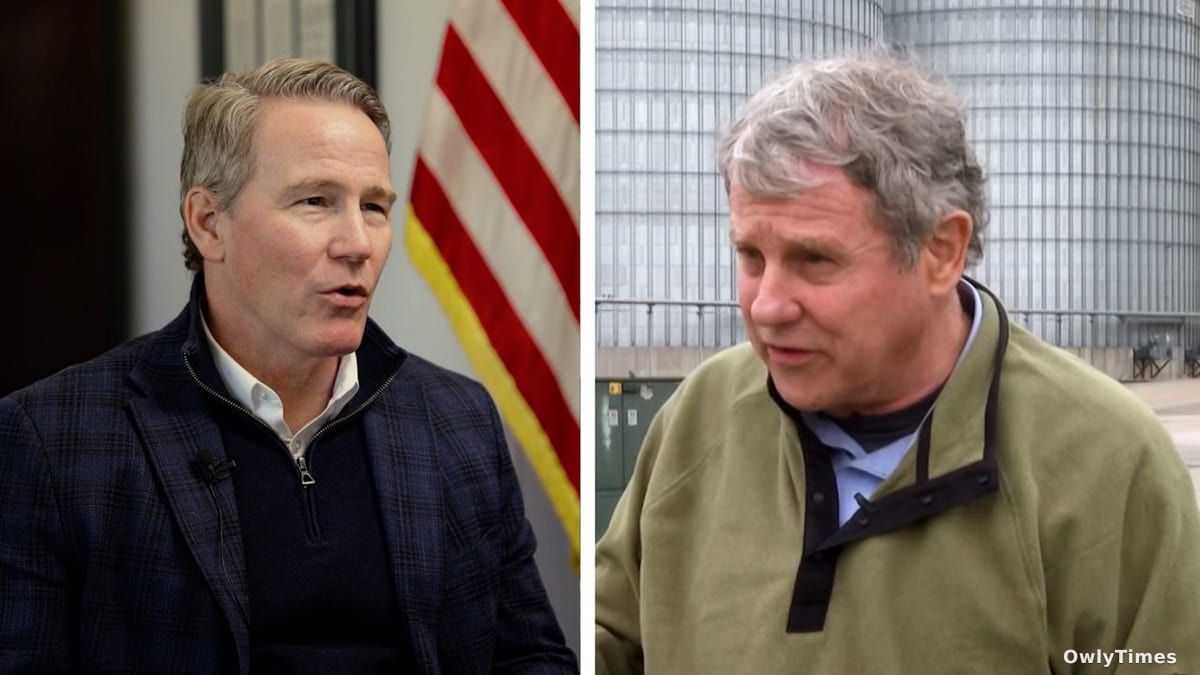

The strategic calculus for Sherrod Brown in his bid to reclaim his former seat is built on a simple premise: out-hustling the incumbent through financial dominance and a full-time campaign schedule. By raising $10.1 million in the first quarter of this year—a figure that triples the $2.9 million raised by Republican Sen. Jon Husted—Brown is attempting to leverage the structural advantages of a seasoned veteran to overcome the state’s recent shift toward the GOP. This disparity in capital, leaving Brown with $16.5 million in his account compared to Husted’s $8.2 million, suggests that the former senator is betting on a high-velocity ground game to re-establish his footing in a state that has trended reliably red.
Financial Disparity and the Incumbent’s Dilemma
Who benefits from this current trajectory? In the short term, Brown’s campaign gains the ability to dominate the airwaves and reach voters in every corner of Ohio, a luxury he lacked during his 2024 bid against Bernie Moreno. Conversely, Husted finds himself on the defensive, forced to rely on external reinforcements rather than solely his own fundraising prowess. The primary loser here is the stability of the GOP’s position in Ohio; the fact that a Republican super-PAC has felt compelled to commit $79 million to this race indicates that internal party polling likely mirrors the tightening dynamics noted by the Cook Political Report, which recently downgraded the contest from "leans Republican" to "toss up."
The Weight of Historical Precedent
Brown faces an uphill battle that extends beyond current fundraising totals. The historical data is unforgiving: since 1946, only six of the 30 defeated senators who attempted a comeback succeeded in their efforts. While Brown possesses the name recognition and donor network of a three-term incumbent, he is swimming against the tide of a state that delivered a 12-point victory to Donald Trump in 2024. The contradiction here is stark: while Brown enjoys a massive financial edge, the political reality of Ohio has drifted significantly since his initial 18-year tenure began, making his attempt to paint the current landscape as a backlash to national policies a high-stakes gamble.
The Margin of Error and Voter Sentiment
The volatility of this race is best captured by the tension between campaign spending and voter polling. A Bowling Green State University poll released this week shows Husted leading Brown by three points, a lead that sits within the survey's 3.9% margin of error. This effectively renders the race a dead heat, validating Brown’s assertion that his ability to "go to every corner of the state" is necessary to break through. Brown frames this as a struggle against institutional interests, naming Wall Street, drug companies, and the oil and insurance industries as the primary drivers behind the heavy GOP spending, positioning himself as the populist alternative to Husted’s established Republican platform.
Watching the Momentum Shifts
The political chess move to watch next will be the deployment of the $79 million in super-PAC funds announced earlier this month. As this massive influx of capital hits the Ohio market, the next reading of public polling will indicate whether Husted’s three-point lead is a floor for the Republican campaign or a ceiling that is beginning to crack under the weight of Brown’s concentrated spending. Whether Brown’s fundraising success can effectively translate into the swing voters needed to overcome his historical disadvantage will be determined by how these funds shape the final narrative in the months ahead.





