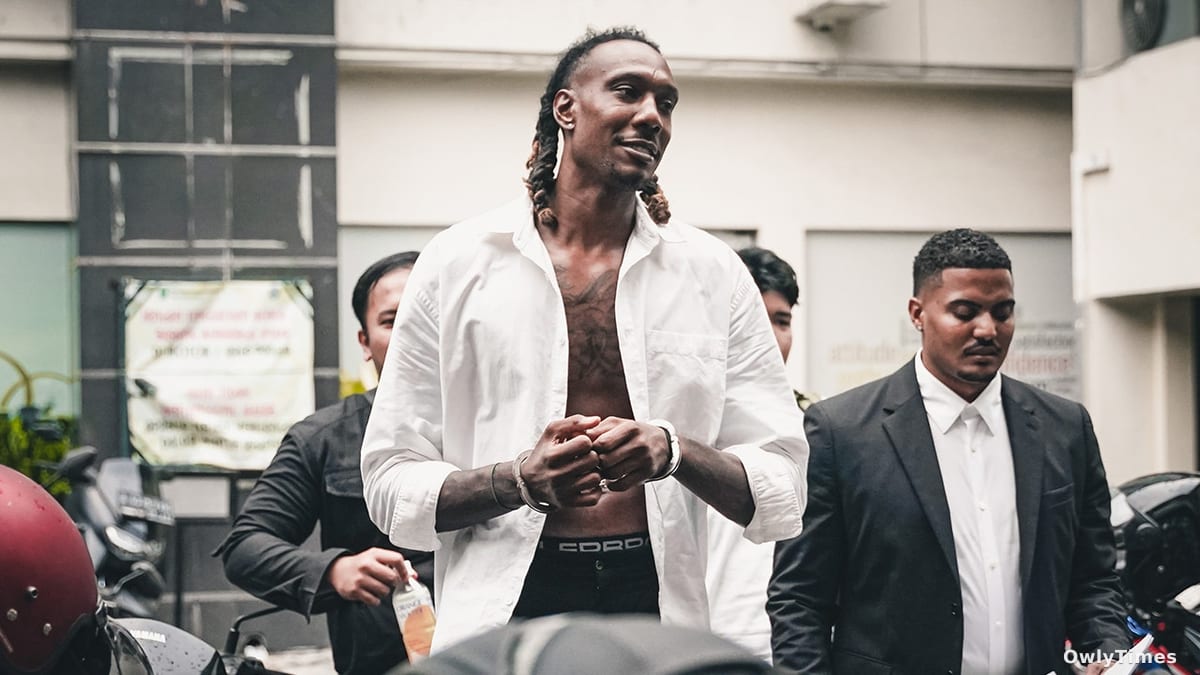

The chipped orange paint of the Indonesian prison cell seems to mock Jarred Shaw with every sunrise. A former star for Oklahoma State and Utah State, the 35-year-old now spends his days crammed into a space “no bigger than a typical New York City studio apartment” with eleven other inmates, his 6’10” frame slowly shrinking as his health deteriorates. This isn’t a story about a basketball player’s fall from grace, though that’s certainly part of it. It’s a stark illustration of how drastically globalized lives collide with deeply entrenched cultural and legal divides, and the agonizing consequences when a “stupid mistake” – as Shaw calls it – intersects with a nation’s uncompromising drug laws.
The “mistake” was a package of 132 cannabis gummies, ordered online while Shaw was living in Thailand, where cannabis is legal, during the offseason from his Indonesian Basketball League team. He’d been using cannabis to manage Crohn’s disease, a chronic inflammatory bowel condition that’s already cost him 40 pounds of his 245-pound playing weight. The package, however, was shipped to his Indonesian address. Indonesia, with roughly 276,000 people imprisoned for drug offenses, treats cannabis with the same severity as heroin and methamphetamine. The resulting public shaming – a parade in front of Indonesian media in an orange prison shirt – felt like a modern-day stoning, a public spectacle designed to reinforce the nation’s zero-tolerance policy. While he avoided the death penalty, the ordeal has become a slow-motion medical crisis.
See the original Fox News story for the full account.
What’s unfolding isn’t simply a legal battle, but a collision of medical realities and geopolitical realities. Shaw’s case highlights the growing tension between increasingly liberalized cannabis laws in the West and the rigid, often draconian, policies still prevalent in many parts of the world. The United States, and a growing number of European nations, are grappling with the potential benefits of cannabis for medicinal purposes, while Indonesia remains steadfast in its prohibitionist stance. This isn’t a new phenomenon – the disparity in laws has long created risks for travelers and expats – but the scale of cannabis legalization globally is amplifying those risks. In 2023, the US cannabis market generated over $30 billion in revenue, a figure that underscores the widening gap between cultural acceptance and legal frameworks in places like Indonesia.
The details of Shaw’s declining health are particularly harrowing. A November 2025 assessment revealed abdominal pain, mild anemia, and an E. coli infection. Crucially, the doctor recommended a colonoscopy, an intestinal ultrasound, and other tests – tests that, four months later, remain unperformed. He’s subsisting on fried food, exacerbating his Crohn’s symptoms, and desperately pleading for access to basic medical care. “I can wake up any moment and be hospitalized,” he told USA TODAY. His legal team is now petitioning Indonesia’s minister of health for a compassionate release, emphasizing his cooperation with authorities and his clean record. Donte West, founder of The Forgotten Prisoner, has already secured a sentence reduction to 26 months, but time is running out.
The involvement of organizations like The Vlasic Classic Foundation, committed to aiding non-violent cannabis prisoners, and the attention from the State Department – who affirmed that Americans’ safety is their “no higher priority” – are glimmers of hope. But the bureaucratic hurdles and cultural barriers remain immense. The State Department’s statement, while reassuring, feels almost formulaic, a standard response to a situation that demands more than just “consular assistance.” The fact that Shaw’s case requires fundraising efforts – the Vlasic Classic Golf Tournament in Missouri is dedicated to raising funds for his return – speaks volumes about the limitations of official channels.
Beyond the headlines of a basketball player’s misfortune, Jarred Shaw’s story is a warning. It’s a cautionary tale for athletes, travelers, and anyone navigating a world where legal landscapes shift dramatically across borders. It’s a challenge to the international community to address the inconsistencies in drug laws and the human cost of those inconsistencies. And it raises a critical question: as cannabis legalization continues to spread, what responsibility do governments have to protect their citizens from the repercussions of laws that are increasingly at odds with global trends? Will we see more cases like Shaw’s, or will this moment catalyze a broader conversation about international legal harmonization and compassionate release policies for non-violent cannabis offenses? The answer, unfortunately, remains to be seen, but the urgency of Jarred Shaw’s situation demands it be addressed now.





