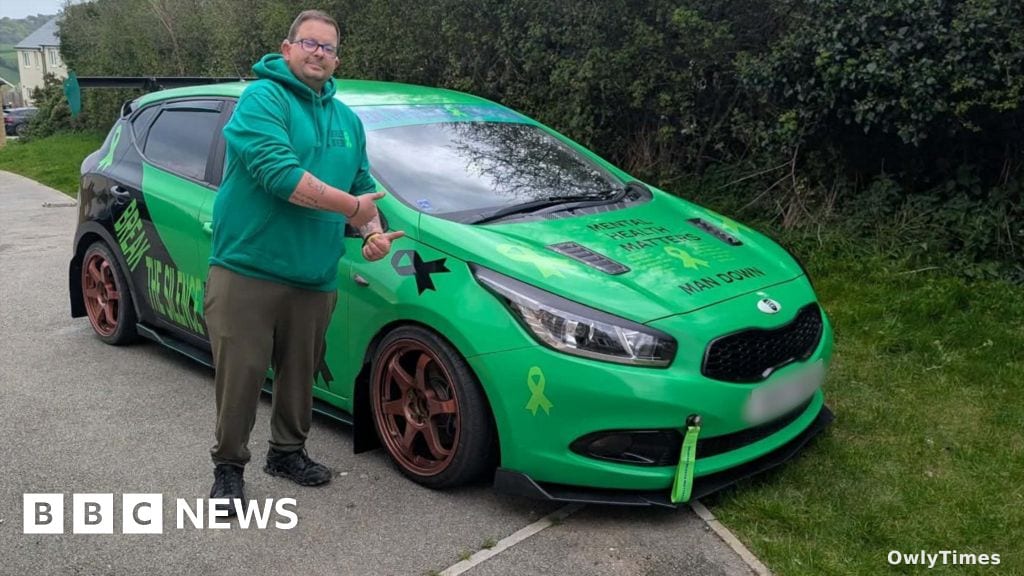

How do we translate the private, often invisible burden of mental health crises into a public conversation that feels accessible rather than clinical? For Ben Drew, a resident of Truro, Cornwall, the answer arrived not through a traditional healthcare initiative, but by transforming his Kia Ceed into a "mobile billboard" for suicide prevention. By rebranding his vehicle in April 2025 to feature branding for the charity Man Down UK, Drew has initiated a grassroots experiment in public health awareness that relies on visibility to dismantle social barriers.
Bridging the Gap Between Isolation and Outreach
The core objective of Drew’s project is to "break the silence" and "end the stigma" that frequently prevents men from seeking support. After experiencing the personal loss of two friends to suicide, Drew sought a way to encourage others to speak up before a crisis point is reached. While clinical data often focuses on institutional intervention, this effort highlights the role of ambient public messaging in providing a gentle, non-confrontational prompt for individuals who might otherwise remain silent.
Headlines surrounding this story may frame the vehicle as a simple act of charity, but the underlying mechanism is one of peer-to-peer engagement. Drew reports that the car serves as a catalyst for interaction, with strangers leaving thank you bracelets on the green-colored vehicle as a gesture of support. By positioning the message in a mundane, everyday space—the road—the project effectively lowers the barrier to entry for those who might feel intimidated by formal mental health services.
Assessing the Reach of Community-Led Initiatives
It is important to maintain a measured perspective on what this type of outreach can realistically achieve. While Drew’s effort has led to an increase in people reaching out to Man Down UK, it is not a replacement for professional psychological care. The methodology here is purely awareness-based; it functions as a bridge to existing services rather than a diagnostic or treatment tool. The success of such a model is difficult to quantify with precision, as it relies on the cumulative effect of visibility rather than a controlled clinical trial.
Limitations to this approach involve the transient nature of the engagement. A car provides a fleeting moment of contact, and there is no guarantee that an individual who feels encouraged by the message will be able to navigate the next steps toward professional help. Furthermore, the efficacy of this "mobile billboard" depends entirely on the continued commitment of an individual volunteer, making it a fragile link in the chain of support compared to established, funded health infrastructures.
Moving Toward Sustained Engagement
The true value of this initiative lies in its ability to spark dialogue in spaces where mental health is rarely discussed. Drew’s personal narrative—moving from a place of isolation to one of proactive communication—serves as a model for how individuals can influence the culture of their local communities. By demonstrating that it is acceptable to speak up, the project aims to influence the upward trend of suicide rates, a metric that remains a critical concern for public health officials in Cornwall and beyond.
Future developments will be measured by the sustained volume of inquiries directed toward Man Down UK. The organization’s capacity to handle increased outreach will serve as the primary indicator of whether this community-led model can effectively translate awareness into long-term mental health support. Monitoring the number of people who cite the mobile awareness campaign as their reason for seeking contact will determine if this model can be replicated as a viable strategy for public mental health advocacy.