
The recent wave of preprimary campaign finance reports filed with the Federal Elections Commission (FEC) reveals more than just a ledger of political support; it maps a high-stakes alignment between institutional capital and legislative strategy. For candidates in the Cincinnati area, the April 23 deadline for filing served as a public audit of their policy positioning. When billionaires and powerful political action committees (PACs) pour capital into these coffers, they are not merely funding campaigns—they are hedging against shifting federal priorities.
The Billionaire-Legislator Nexus
The financial footprint left by Stephen Schwarzman, CEO of Blackstone, and his wife, Christine Schwarzman, underscores a strategic investment in Rep. Warren Davidson. By each donating $14,000, the couple has signaled a significant commitment to the Congressman’s platform. For an individual worth $38.3 billion, according to Forbes, such a contribution functions as a down payment on legislative access, particularly within a regulatory environment where private equity remains under constant scrutiny.
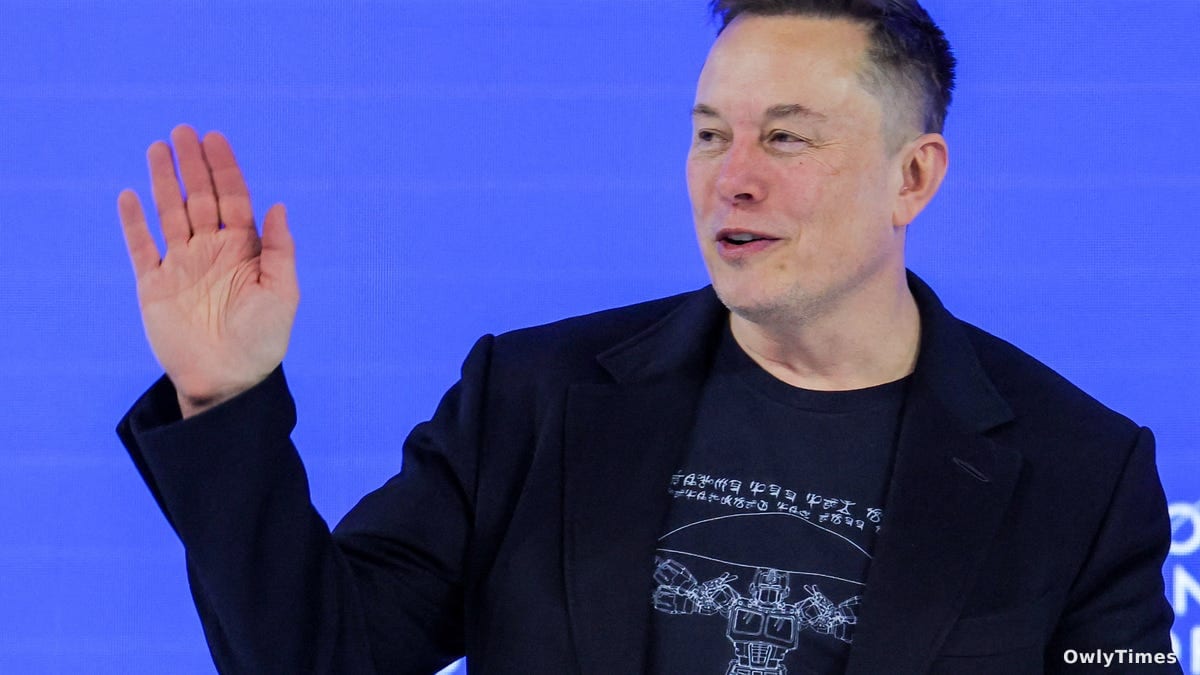
The calculus becomes more complex with Elon Musk, who contributed $6,600 to Davidson in March 2025. The move presents a distinct contradiction: Musk has maintained a notoriously turbulent relationship with President Donald Trump since the start of the President’s second term, specifically opposing the administration’s spending agenda. Davidson’s own legislative record mirrors this tension, having initially voted against the "One Big Beautiful Bill" due to national deficit concerns, only to flip his vote to a "yes" in July. The fact that Musk’s donation predates his public vow to back primary challengers against those who supported the bill suggests that ideological alignment is a fluid commodity in modern primary politics.
Institutional Backing and Local Interests
While Davidson courted individual billionaire donors, Rep. Greg Landsman leaned heavily on organized fundraising power. His campaign’s primary financial engines—ActBlue and the American Israel Public Affairs Committee (AIPAC)—represent the dual pillars of modern Democratic fundraising: grassroots digital mobilization and institutional lobbying. The involvement of donors like Phil de Toledo, former president of The Capital Group Companies, and Barbara Karplus, founder of the Woka Foundation, highlights how Landsman successfully bridges the gap between traditional investment management circles and environmental advocacy groups.
Meanwhile, in the Republican primary, Eric Conroy has leveraged local influence to build his war chest. With his father, Gary Conroy, and former George W. Bush finance chair Mercer Reynolds listed among his top individual donors, Conroy’s campaign reflects a strategy rooted in legacy political networks. Notably, Conroy also injected $287,500 of his own capital into the campaign, a self-funding move that often signals a candidate’s attempt to bypass traditional party gatekeepers by demonstrating personal skin in the game.
The Influence of Regional Power Brokers
The donor lists for Rep. Dave Taylor reveal a different, more localized power dynamic. By securing $10,500 from Carl H. Lindner III, Frances Lindner, and S. Craig Lindner, alongside a $5,500 contribution from Cincinnati Reds owner Bob Castellini, Taylor has effectively locked in support from the city’s established business aristocracy. These families, synonymous with regional economic pillars like United Dairy Farmers, prioritize stability and predictable fiscal policy.
The political ecosystem also remains prone to unconventional alliances. The $250 donation from Democratic candidate Damon Lynch IV to Republican Rosemary Oglesby-Henry in October 2025 serves as a reminder that personal history often disrupts partisan math. While Lynch characterized the donation as an act of friendship, it underscores how local relationships can complicate the clear-cut, binary narratives typically expected in federal races. The next reading of campaign finance reports will show whether these billionaire-backed and institutionally funded candidates maintain their momentum, or if the primary season will see a shift in donor confidence as the legislative cycle progresses.





