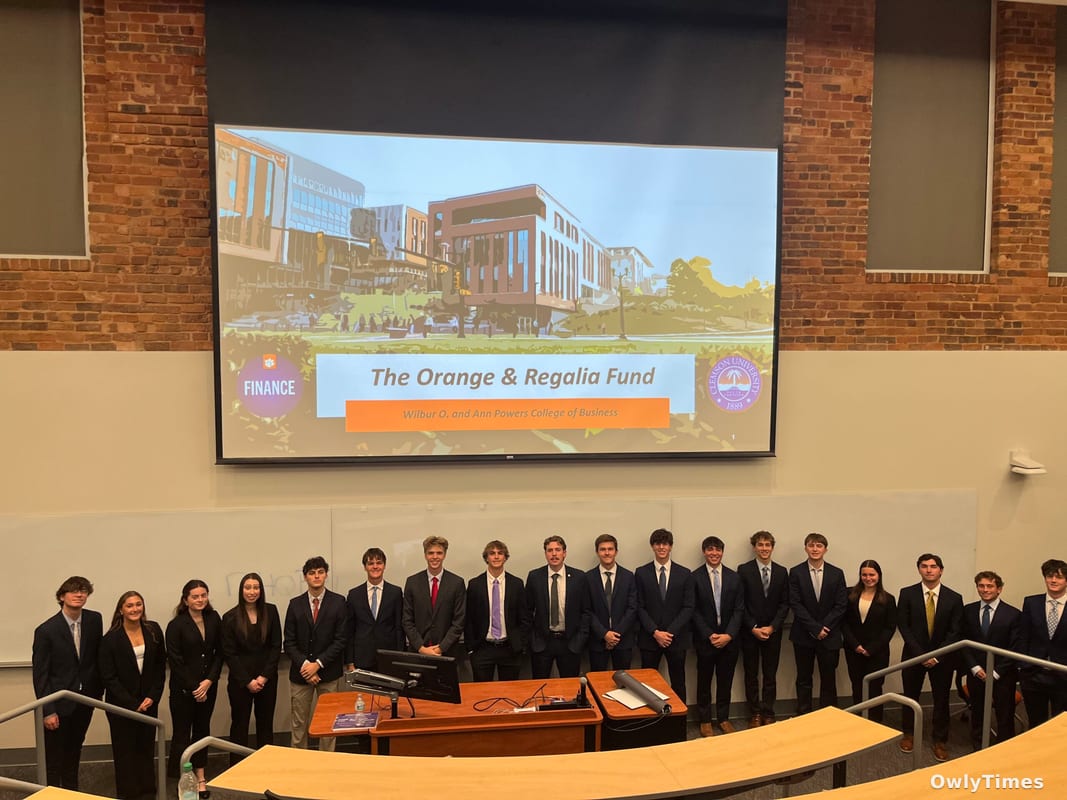

$178,000 – that’s the median starting salary for a financial analyst role in 2024, a figure that’s drawing increasing attention to the pipeline feeding talent into Wall Street. While headlines focus on market volatility, a quieter story is unfolding at Clemson University, where a focused approach to undergraduate mentorship and experiential learning is demonstrably accelerating students into opportunities typically reserved for graduate-level candidates. The success of students like Ava Hester and Morgan Harvey isn’t simply a Clemson feel-good story; it’s a case study in how universities can strategically address the ongoing demand for skilled financial professionals and, crucially, diversify a historically homogenous field.
The narrative isn’t about exceptional talent emerging in a vacuum. It’s about a deliberate system. Both Hester and Harvey, sophomores double-majoring in finance and accounting at the Wilbur O. and Ann Powers College of Business, have secured spots in highly competitive programs like Girls Who Invest and The Wharton School’s Fundamentals of Corporate Finance and Valuation program – achievements usually attained by juniors and seniors. This accelerated trajectory isn’t accidental. It’s a direct result of Clemson’s emphasis on early professional development, a strategy that’s yielding quantifiable results in a market where competition for top talent is fierce. Consider that acceptance rates for Girls Who Invest hover around 15%; Clemson is effectively pre-positioning its students to outperform national averages.
Girls Who Invest, a national nonprofit, aims to address the gender imbalance in investment management. While the organization’s impact is significant – aiming to increase the percentage of women managing assets – the Clemson story highlights a complementary dynamic: proactive university engagement. Hester notes the program is “building accounting fundamentals and skills that will be crucial no matter what area of finance we go into.” This isn’t simply about filling a diversity quota; it’s about recognizing that a broader talent pool, equipped with foundational skills, benefits the entire industry. Harvey’s experience underscores this, stating the program “helped clarify her career path” and secure internships for 2026 and 2027 – a two-year head start on typical internship timelines.
This piece references the news.clemson.edu report.
The key differentiator isn’t the prestige of the external programs themselves, but the internal catalyst at Clemson: Professor Bill Tumblin. Teaching Business 1010, Tumblin serves as a crucial point of access, directly introducing students to opportunities like Girls Who Invest. This isn’t a passive recommendation; both Hester and Harvey explicitly credit Tumblin with actively encouraging their applications. The impact of a single, accessible mentor cannot be overstated. Data from LinkedIn reveals a 37% higher retention rate for employees who report having a mentor, and a 20% increase in promotion rates – suggesting Tumblin’s influence extends beyond program applications to long-term career success.
Beyond mentorship, Clemson is investing in practical skill-building. Students are completing certifications in financial modeling, Excel, and market analysis through organizations like Wall Street Prep and the Charter Financial Analyst Institute. This isn’t theoretical coursework; it’s equipping students with the exact tools used by professionals at firms like Bank of America, Truist, Lazard, and Jefferies Financial Group – institutions Clemson actively facilitates visits to, fostering alumni connections and internship pipelines. The university’s Melvin and Dollie Younts Trading Room, complete with Bloomberg terminals, provides a simulated real-world environment, allowing students to build “market awareness” and “speak confidently,” as Harvey puts it. This hands-on approach is particularly valuable given that 68% of employers prioritize practical skills over GPA when hiring for entry-level finance roles, according to a recent survey by the National Association of Colleges and Employers.
Hester’s acceptance of a 2027 investment banking internship and participation in Wharton’s valuation program further exemplifies this momentum. These aren’t simply resume builders; they’re concrete commitments from leading financial institutions, validating Clemson’s approach. Moreover, both students are actively “lifting others up,” with Harvey serving as a peer mentor and Hester becoming president of the Clemson University Investment Banking Club. This cyclical effect – successful students mentoring incoming classes – reinforces the supportive culture and perpetuates the pipeline of talent.
What this means for your wallet: The Clemson model suggests a potential shift in the competitive landscape for finance internships and entry-level positions. Expect to see increased competition from students with earlier, more robust experience. For consumers, this could translate to more sophisticated financial advice and potentially more innovative financial products as a new generation of analysts enters the market. The key question for investors and aspiring finance professionals alike is whether other universities will replicate Clemson’s proactive approach to mentorship and experiential learning – and if so, how quickly. Will this become the new benchmark for finance education, or will Clemson maintain a distinct advantage?