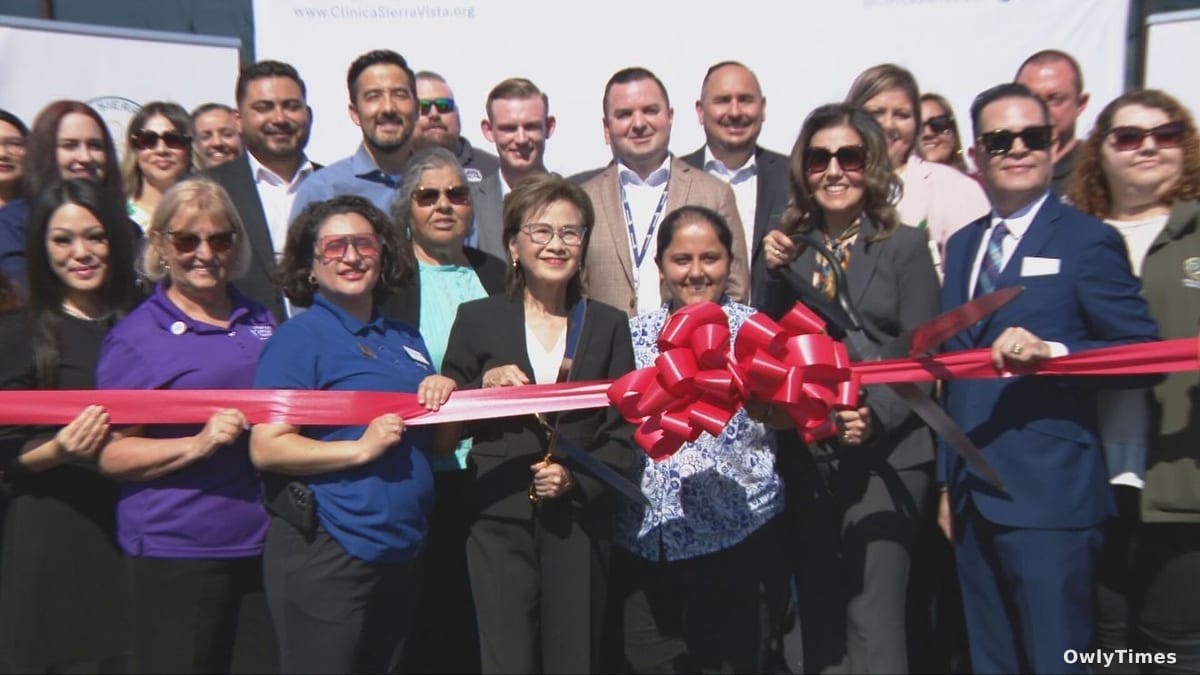

The expansion of healthcare access often feels reactive, a constant chase to catch up with population shifts. But the opening of the new Clinica Sierra Vista health center in northwest Bakersfield, celebrated with a ribbon-cutting on Thursday, February 26th, represents something more proactive: an attempt to anticipate and address healthcare disparities before they become entrenched in a rapidly growing community. While the headlines focus on a new building at 8307 Brimhall Road, Suite 1702, the real story is about a calculated response to a specific demographic need, and a model other healthcare providers in similarly expanding cities should be watching closely.
Addressing a Geographic Imbalance in Care
The core issue isn’t simply that Bakersfield is growing – many cities are. It’s where the growth is happening. As Olga Meave, M.D., CEO of Clinica Sierra Vista, stated, the city’s westward expansion is “exponential.” This isn’t a gradual creep; it’s a significant population relocation. And, crucially, Dr. Meave identifies a gap in service for “underserved patients” specifically on the west side. This isn’t a vague concern about overall access; it’s a pinpointed recognition that existing healthcare infrastructure isn’t keeping pace with the needs of a specific geographic area and, by extension, the likely socioeconomic profile of its residents. The choice of a location easily accessible from Westside Parkway isn’t about convenience for everyone, it’s about intentional accessibility for a population that might otherwise face transportation barriers to care. This is a deliberate strategy to mitigate existing health inequities, not just offer another clinic.
This article draws on reporting from bakersfieldnow.com.
Beyond Primary Care: A Holistic Approach to Underserved Populations
Clinica Sierra Vista isn’t simply replicating existing services in a new location. The center will offer same-day appointments for primary care, but also integrates dental services and behavioral health. This is a critical distinction. For individuals facing socioeconomic challenges – the very population Dr. Meave identifies as underserved – healthcare needs are rarely compartmentalized. A toothache can prevent someone from seeking employment, and untreated mental health concerns can exacerbate chronic physical conditions. Offering these services under one roof, and accepting all insurance including Medi-Cal, removes multiple layers of obstacles to care. Consider that nationally, individuals with limited access to dental care are 2.5 times more likely to report overall poor health, and that untreated mental health conditions cost the U.S. economy an estimated $283 billion annually. Clinica Sierra Vista’s model acknowledges these interconnected realities.
What the Opening Doesn’t Tell Us: Capacity and Long-Term Impact
While the opening is a positive step, it’s important to understand what this announcement doesn’t reveal. The clinic’s capacity – the number of patients it can realistically serve – isn’t specified. Bakersfield’s westward growth is substantial, and a single new center, even with integrated services, may only address a fraction of the need. Furthermore, the long-term impact on health outcomes remains to be seen. Simply opening a clinic doesn’t automatically translate to improved health; consistent engagement, culturally competent care, and ongoing community outreach are all essential. It’s also worth noting that the success of this model relies heavily on adequate staffing, a challenge facing healthcare systems nationwide. The current national physician shortage is projected to reach over 124,000 by 2034, potentially limiting the clinic’s ability to fully meet demand.
Looking Ahead: Tracking Access and Health Indicators
The opening of the Clinica Sierra Vista center on Brimhall Road is more than a local news item; it’s a test case. Over the next two years, researchers and policymakers should be tracking key indicators in the surrounding area. Specifically, we need to see data on appointment wait times, the proportion of patients utilizing all three service areas (primary care, dental, and behavioral health), and, most importantly, measurable improvements in health outcomes for the west Bakersfield population. Are rates of preventable hospitalizations decreasing? Are chronic disease management indicators improving? Are there demonstrable shifts in access to mental healthcare? These are the questions that will determine whether this expansion truly fills the identified gap, or simply adds another brick to a system still struggling to reach those who need it most. The real story won’t be written on February 26th, 2026, but in the data collected in the years that follow.





