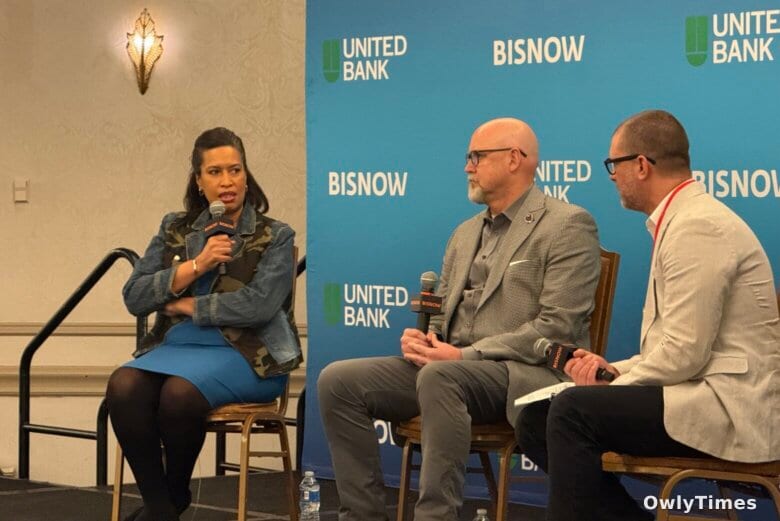

The echo of a collapsing stadium still hangs in the air over the RFK Stadium site, a ghostly reminder of past glories and a potent symbol of what Washington D.C. is betting on for its future. But Wednesday’s Bisnow conference wasn’t about nostalgia; it was a full-throated call to action, a signal flare to the city’s business community that the future – a future anchored by the Washington Commanders and a brand new, roofed stadium – is being built now. It wasn’t a presentation about a stadium, it was a pitch for a transformation, and a surprisingly candid glimpse into how D.C. is attempting to redefine itself beyond the gravitational pull of federal spending.
Beyond Bricks and Mortar: D.C.’s Economic Pivot
Mayor Muriel Bowser didn’t shy away from framing the stadium project as a critical step in diversifying the city’s economic base. For decades, Washington has been uniquely reliant on the federal government – a stable employer, certainly, but one that doesn’t necessarily foster the kind of dynamic, private-sector growth seen in other major cities. “People thought I was crazy, maybe still do, when I just called us the ‘sports capital,’” she declared, a statement met with enthusiastic applause. This isn’t just about football; it’s about leveraging the economic engine of major sporting events – the World Series, the Stanley Cup, MLB and MLS All-Star games, the upcoming NFL Draft, and the coveted Super Bowl – to attract investment and create a more resilient economy. The city’s dependence on federal employment has long been a point of concern, with fluctuations in government spending directly impacting the local economy. In 2023, the federal government accounted for roughly 30% of D.C.’s GDP, a figure significantly higher than the national average of around 20%. Bowser’s vision, and the stadium project, is a calculated attempt to lower that percentage.
Drawn from wtop.com.
The 2030 Timeline: A False Urgency?
The official target date is 2030, but Mark Clouse, President of the Commanders, was quick to point out that the real work is happening today. “Sometimes, people get fixated on 2030,” Bowser echoed, “But these contracts are going out right now.” This emphasis on immediate action isn’t just about keeping the project on schedule; it’s a strategic move to generate momentum and attract early investment. However, the relentless focus on 2030 feels, at times, like a manufactured urgency. Large-scale infrastructure projects are rarely completed on time or within budget, and the sheer complexity of redeveloping the RFK site – a historically and environmentally sensitive area – suggests that delays are almost inevitable. The question isn’t if there will be setbacks, but how the city and the team will manage them.
The Roof and the Promise of Year-Round Employment
One detail consistently highlighted by both Bowser and Clouse was the inclusion of a roof on the new stadium. This wasn’t merely a matter of comfort for fans; it was presented as a key component of the project’s economic impact. “The roof not only enables all of the great year-round activations and concerts and things we’ve talked about, but it also allows us to employ people at the stadium year-round,” Clouse explained, contrasting this with the largely part-time workforce at FedEx Field. This is a significant point. The promise of “careers,” not just seasonal jobs, is a powerful selling point, particularly in a city grappling with income inequality. Currently, the average wage for part-time stadium workers in the D.C. area is around $15 per hour, while the average wage for full-time positions in the hospitality industry is closer to $30 per hour. The Commanders’ commitment to year-round employment could represent a substantial boost to the local economy and a pathway to economic mobility for many residents.
Building a “Campus” – And a Community Gathering Space
Beyond the stadium itself, both Bowser and Clouse repeatedly emphasized their vision for a broader “campus” – a vibrant, mixed-use development that would serve as a community gathering space even on non-game days. “I want people to want to go have a picnic at the stadium on non-game days,” Clouse said, articulating a desire to create a destination that transcends the spectacle of professional football. This ambition reflects a broader trend in stadium design, moving away from isolated sporting arenas towards integrated entertainment districts. However, the success of this vision hinges on creating a space that is genuinely accessible and welcoming to all residents, not just those attending events. The challenge will be to avoid the pitfalls of gentrification and ensure that the benefits of the development are shared equitably across the city.
The stakes are high. This isn’t just about building a stadium; it’s about reshaping D.C.’s identity and economic future. The question now is whether the Commanders and the city can deliver on their ambitious promises, and whether this grand vision will ultimately benefit all Washingtonians – or simply become another monument to the allure of big-league sports and the complexities of urban development. Will the RFK site truly become a community hub, or will it remain a symbol of a city still searching for its post-federal identity? That’s the story to watch unfold over the next seven years, and beyond.




