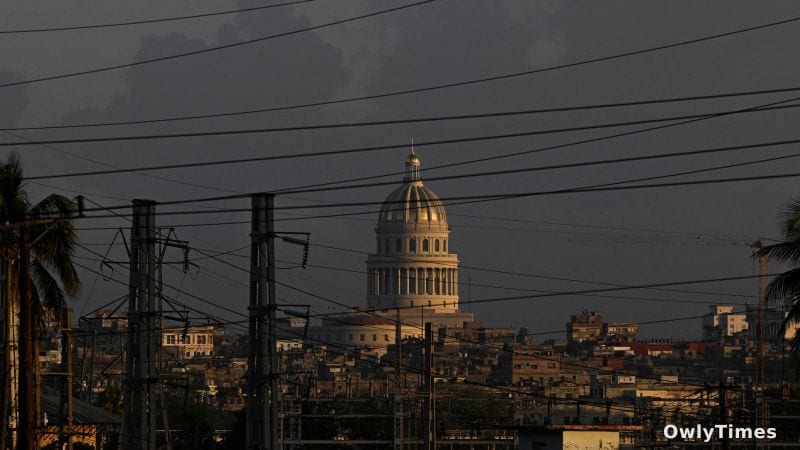

The recent arrival of a senior US State Department delegation on Cuban soil represents a pivot from the "maximum pressure" doctrine toward a high-stakes, transactional ultimatum. By landing a government aircraft in Havana—the first such occurrence since Barack Obama’s 2016 diplomatic thaw—the administration is signaling that the era of containment is shifting toward a demand for structural capitulation. The strategic calculus is clear: leverage the island’s acute economic desperation to force a transition that aligns Cuba’s internal governance with American geopolitical interests before the White House considers more kinetic options.
The Calculus of Economic and Digital Encroachment
The delegation’s proposal to introduce Elon Musk’s Starlink satellite internet into the country is not merely a technological gesture; it is an attempt to bypass the state’s monopoly on information. By pairing this with demands for compensation for confiscated assets and the release of political prisoners, the US is attempting to build a domestic constituency for change within the Cuban diaspora and the island’s nascent private sector. For the Cuban government, these terms represent an existential threat to the party’s control.
The primary beneficiary of this approach is the Trump administration, which gains domestic political capital by appearing to replicate its success in Venezuela, where it claimed the capture of Nicolás Maduro in January. Conversely, the Cuban leadership—represented by President Miguel Díaz-Canel—finds itself in a narrowing corridor. If they accept the reforms, they risk internal collapse; if they refuse, they face the ongoing "economic chokehold" that has already necessitated a reliance on foreign-flagged oil shipments, such as the Russian-flagged tanker allowed into Cuban waters in March.
Mapping the Power Dynamics
The delegation’s decision to meet separately with the grandson of Raul Castro suggests a calculated effort to identify potential fissures within the existing power structure. This mirrors the classic diplomatic tactic of courting the next generation of leadership while simultaneously isolating the current hardliners. The administration is betting that the promise of "private sector-led growth" and the end of economic sanctions will appeal to younger elites who recognize that the current revolutionary model is unsustainable.
However, the contradictions in this approach are stark. While the US demands "political freedoms" and an end to foreign intelligence operations just 100 miles from the American homeland, it continues to maintain a blockade that forces Havana into the arms of the very foreign powers the US seeks to exclude. Cuban official Alejandro García del Toro underscored this tension, labeling the "energy blockade" the primary obstacle to any professional dialogue. The administration’s assertion that allowing Russian fuel into the country was "not a policy change" reveals that Washington is willing to manage the island's survival only insofar as it serves their leverage strategy.
The Shadow of Military Precedent
The current standoff is defined by the specter of military intervention, a narrative President Donald Trump has amplified by linking the future of Cuba to the recent regime change in Venezuela. When the President declares a "new dawn for Cuba" following his administration's actions against Nicolás Maduro, he is not speaking in metaphors; he is setting a benchmark for success that requires either a total policy surrender from Havana or a military escalation. Díaz-Canel’s public vows to "open fire" on any invasion attempts demonstrate that the Cuban leadership has opted for a "no-surrender" posture, at least in the short term.
The political chess move to watch next will be the status of the "key US backed reforms" requested by the delegation. Whether Havana allows the technical or financial footprint of these proposals—specifically the integration of Starlink or the formalization of asset compensation—will serve as a measurable signal. If the next reading of the official discourse from the Cuban state media shifts from "respectful and professional" to outright rejection, it will indicate that the window for a negotiated transition has closed, and the administration’s "new dawn" may manifest as a far more volatile confrontation.





