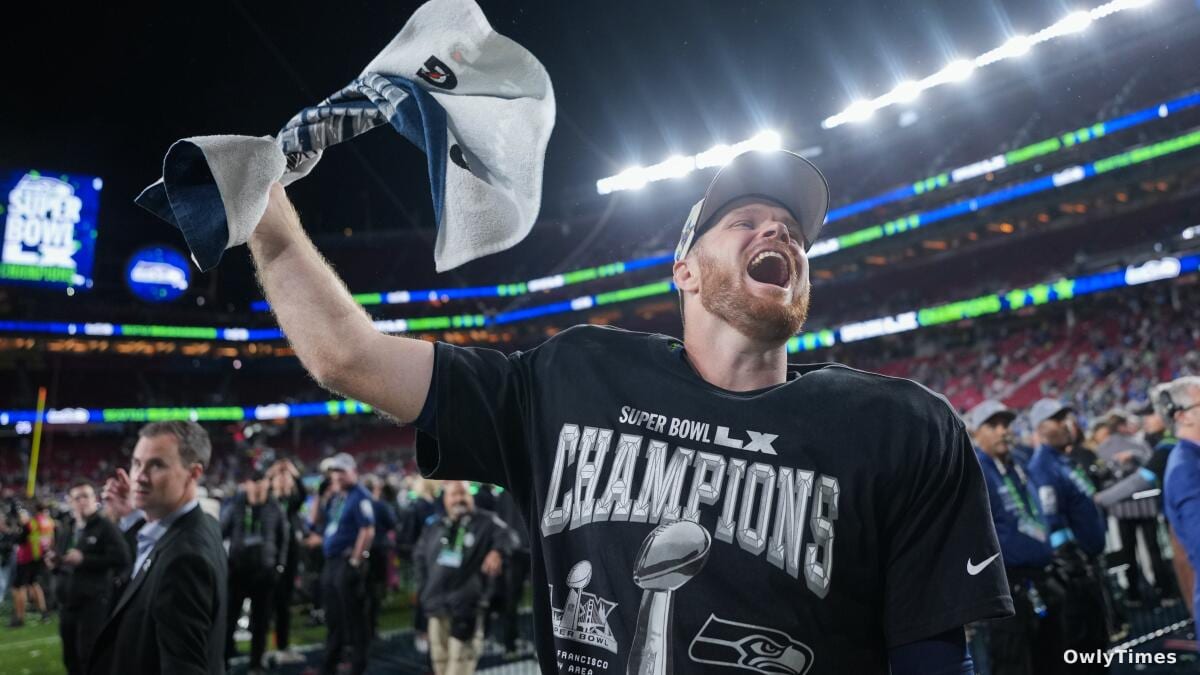

From Bust to Brilliance: Sam Darnold’s Super Bowl Win Signals a Changing NFL Narrative
The confetti has settled, and the narrative is set: Sam Darnold, formerly branded a first-round bust, is a Super Bowl champion. This victory, secured on February 14, 2026, isn’t just a personal triumph for the quarterback; it’s a seismic shift in how we evaluate NFL talent and a pointed commentary on the league’s evolving landscape. While the legacy of USC quarterbacks failing to capture the ultimate prize – a list including names like Pat Haden, Vince Evans, Carson Palmer, and even the highly touted Caleb Williams – loomed large, Darnold has broken the mold. The significance here is that Darnold has now surpassed the collective Super Bowl success of his entire 2017 draft class – Baker Mayfield, Josh Allen, and Lamar Jackson – combined. This isn’t merely a feel-good story; it’s a statistical anomaly that demands deeper examination.
See the original the Los Angeles Times story for the full account.
Background & Context: The Rise and Fall (and Rise Again) of a Quarterback
Darnold’s journey has been anything but conventional. Drafted third overall in 2017, expectations were sky-high. His dazzling performance in the 2017 Rose Bowl against Penn State, even as a redshirt freshman, foreshadowed potential greatness. However, his early years with the New York Jets were plagued by inconsistency, coaching changes, and a perceived lack of development. The “bust” label stuck, a harsh indictment in a league obsessed with instant gratification. What’s often overlooked is the context of those early struggles. Darnold entered a chaotic organization, lacking the stability and support system necessary for a young quarterback to thrive. His subsequent stints with the Carolina Panthers and San Francisco 49ers were similarly marked by uncertainty. This recent Super Bowl win, therefore, represents a remarkable turnaround – a testament to resilience, adaptability, and a late-career blossoming under the right circumstances. It’s a stark reminder that initial draft position doesn’t guarantee success, and that player development is a complex, multi-faceted process.
Beyond the Gridiron: Halftime Controversy and the NFL’s Global Ambitions
The Super Bowl wasn’t solely defined by Darnold’s victory. The halftime show, featuring Bad Bunny, sparked considerable backlash, as highlighted by reader responses. While some, like David Tulanian, criticized Roger Goodell’s push for globalization, viewing the all-Spanish performance as a betrayal of the NFL’s American roots, others, like Mark S. Roth, drew parallels to the initial resistance faced by Elvis Presley for challenging societal norms. This tension reveals a fundamental conflict within the NFL: balancing its domestic fanbase with its ambitions for international expansion. The league’s desire to tap into new markets is understandable, given the finite nature of the American audience, but alienating its core supporters risks undermining its success. The debate surrounding Bad Bunny’s performance isn’t just about music; it’s about identity, cultural appropriation, and the evolving definition of “American” entertainment.
What This Means: Implications for Players, Franchises, and the Future of Evaluation
Darnold’s success has profound implications. For players labeled as “busts,” it offers a beacon of hope, demonstrating that redemption is possible. It challenges the conventional wisdom that early failures are indicative of a player’s ultimate potential. For franchises, it underscores the importance of patience, strategic player development, and creating a supportive environment. The fact that a kicker, Jason Myers, achieved a remarkable 17-point performance in Super Bowl LX without receiving MVP consideration, as noted by readers like Stephen A. Silver, further highlights a systemic undervaluation of specialized positions. This signals a potential shift in how teams approach roster construction and player evaluation. The broader conversation about salary caps and floors in baseball, as raised by Bill Shaikin and John Merryman, also resonates with the NFL’s ongoing efforts to maintain competitive balance.
Looking Ahead: Scrutiny, Sustainability, and the 2028 Olympics
The coming months will be crucial. Can Darnold sustain this level of performance? Will his Super Bowl win lead to a re-evaluation of his career trajectory and a surge in endorsement opportunities? Beyond the football field, the controversy surrounding Casey Wasserman’s ties to Ghislaine Maxwell, as highlighted by Jack Wolf, casts a shadow over the upcoming 2028 Olympics in Los Angeles. This scandal demands thorough investigation and accountability, as the integrity of the Games hinges on ethical leadership. Furthermore, the NFL will likely continue to navigate the complexities of globalization, seeking to broaden its appeal without alienating its core fanbase. The league’s next steps in this arena will be closely watched, as the Super Bowl LXI halftime show will undoubtedly be a litmus test for its commitment to both inclusivity and its American identity.

