
The strategic calculus behind the new congressional map in Florida is not merely a defensive maneuver; it is an aggressive re-engineering of the state’s electoral architecture. By finalizing SB 8-D, the Republican-controlled legislature is moving to insulate its majority against broader national headwinds, effectively immunizing the party against the political volatility currently facing the administration of President Donald Trump. This is a precise exertion of legislative power designed to convert favorable administrative control into a durable structural advantage.
Engineering a Partisan Buffer
The math driving this redistricting effort is stark. The redrawn district lines, which Governor Ron DeSantis is poised to sign into law, are projected to facilitate a net gain of as many as four U.S. House seats for the Republican party in the November elections. When viewed through the "who benefits and who loses" framework, the beneficiaries are clear: Republican incumbents and candidates in competitive districts who gain safer margins. The losers, conversely, are the Democratic caucus members whose districts have been fundamentally reshaped to dilute their influence, creating a scenario where their seat retention is no longer a matter of voter persuasion, but of geometric exclusion.
The Collision of Ambition and Geography
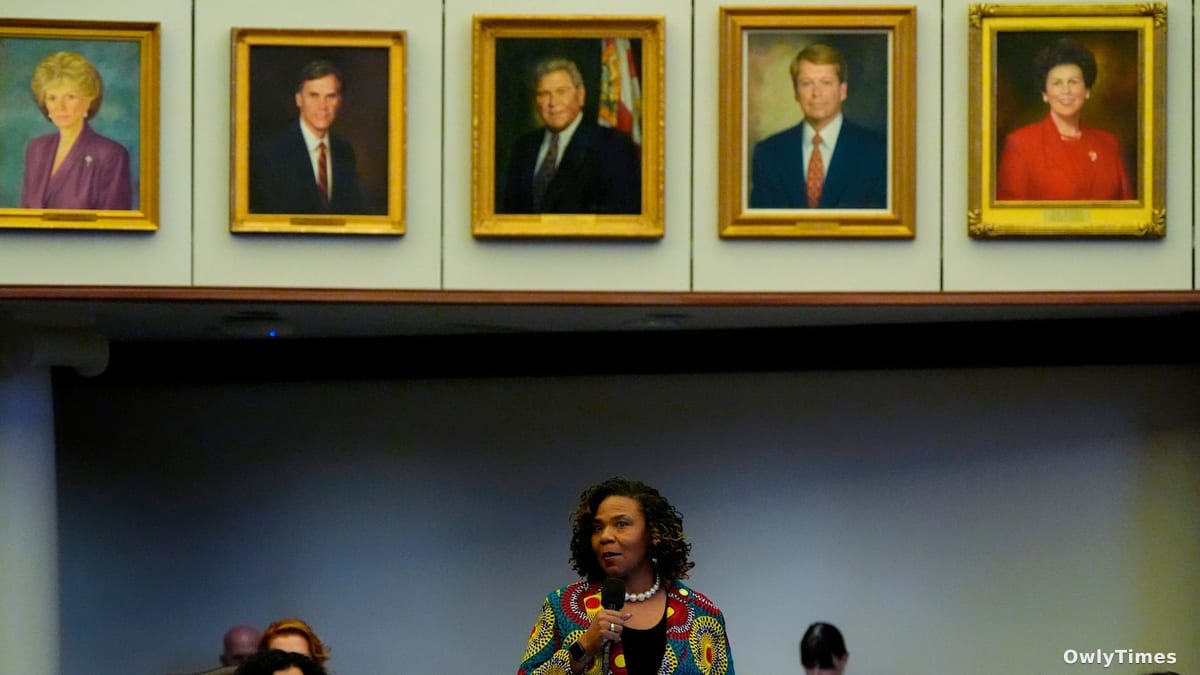
The intensity of the debate surrounding this bill was captured on Wednesday, April 29, 2026, when Senator Tracie Davis addressed the floor in Tallahassee, Fla., during the special legislative session. Her opposition highlights the primary contradiction of the move: while the Republican-led legislature frames this as a necessary administrative update, the outcome directly undermines the competitive prospects of the Democratic party. For Florida Democrats, who entered this cycle eyeing potential gains as the President's poll numbers faltered, the map represents a sudden shift from potential expansion to defensive survival.
This redistricting effort mirrors historical moments where legislative bodies have utilized redistricting cycles to counteract national polling trends, effectively insulating state-level power from federal-level unpopularity. By shifting the lines now, the GOP is essentially creating a firewall that renders the national political environment secondary to the specific configurations of these new districts.
Legislative Velocity and Future Projections
The urgency behind the passage of SB 8-D underscores a tactical preference for pre-emptive action. By locking in these lines well ahead of the midterms, the party ensures that candidates and organizers can mobilize within known boundaries, removing the uncertainty that typically accompanies late-cycle litigation or judicial intervention.
The political chess move to watch next is the official signing of the bill by Governor Ron DeSantis. His signature will serve as the final trigger for the implementation of these lines, moving the focus from the legislative chamber to the logistical reality of the November ballot. The subsequent electoral performance within these four specific districts will ultimately serve as the primary metric to determine whether this aggressive restructuring successfully neutralized the threat of a shifting national electorate.





