
Beyond Deep Blue: The Resurgence of Physical AI in Chess
For three decades, the image of artificial intelligence conquering chess has remained largely digital – a screen displaying moves, a calculation of probabilities. The landmark 1997 match between Garry Kasparov and IBM’s Deep Blue cemented this perception, demonstrating a computer’s capacity to think strategically, even if it couldn’t physically manipulate the pieces. But a recent project by online maker Joshua Stanley Robotics is subtly shifting that narrative, reminding us that AI isn’t just about software; it’s about embodied intelligence, about bridging the gap between computation and the physical world. Stanley’s self-playing chessboard isn’t aiming to dethrone Stockfish, the dominant chess engine, but rather to demonstrate a compelling integration of hardware and software, a return to the tangible expression of AI prowess.
Original reporting: popsci.com.
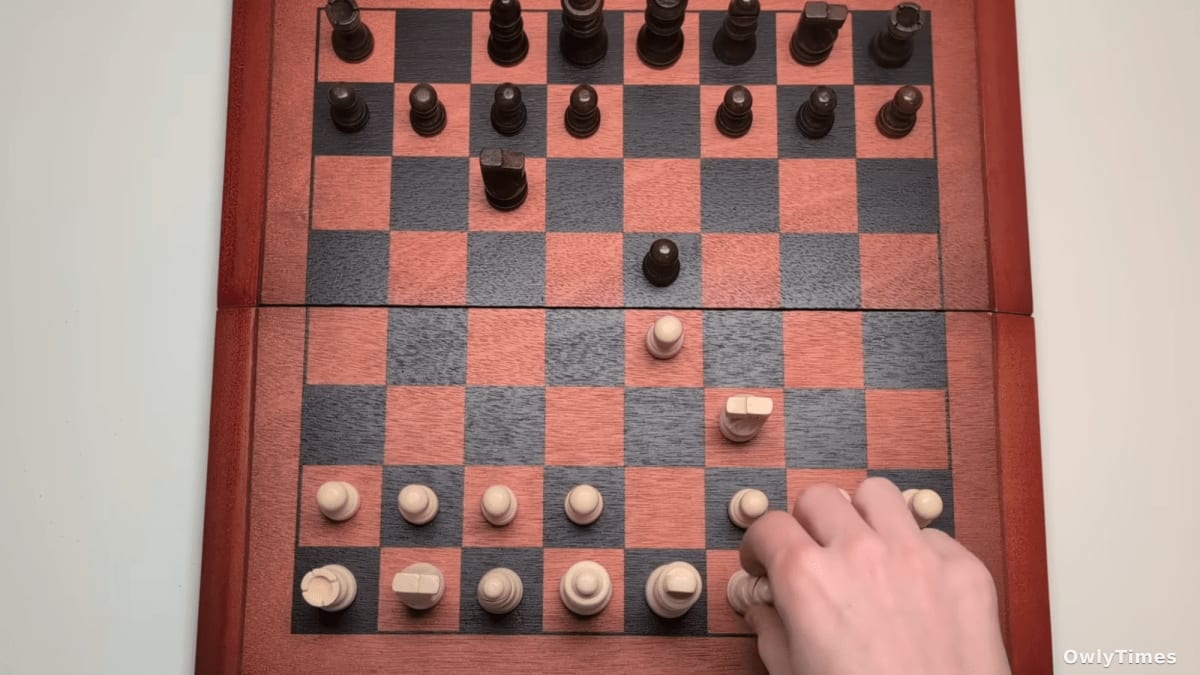
Stanley, a YouTuber documenting his builds, tackled a deceptively complex problem: how to translate the abstract logic of a chess engine into the concrete actions of moving pieces on a board. This isn’t simply a matter of automating existing technology. While chess engines on smartphones routinely defeat grandmasters, they still require a human intermediary to execute the moves. Stanley’s innovation lies in closing that loop, creating a system that can both decide and act. He breaks down the challenge into three core components – detecting moves, calculating the optimal response, and physically manipulating the pieces – and addresses each with a blend of 3D printing, magnetic sensors, and a surprisingly elegant mechanical system. The core of his design relies on custom 3D-printed chess pieces, each containing a small magnet, and a chessboard constructed from a printed circuit board (PCB) embedded with magnetic sensors.
The ingenuity of the design isn’t necessarily in inventing entirely new technologies, but in the resourceful combination of existing ones. The use of magnets, for example, isn’t novel in robotic chessboards – commercial models like the Miko-Chess Grand and the Phantom also employ magnetic systems. However, Stanley’s approach is distinctly DIY, prioritizing accessibility and demonstrating the power of open-source tools. He initially considered a robotic arm for piece manipulation, but found it lacked the necessary precision. The magnet-based system, guided by an electromagnet beneath the board, proved more reliable and kept the overall build lightweight. Crucially, Stanley leveraged the open-source chess engine Stockfish, sidestepping the need to develop complex AI algorithms from scratch. He then wrote a Python script to act as a translator, converting the physical data from the board into a format Stockfish could understand, and vice versa. This highlights a growing trend in robotics: utilizing pre-existing AI frameworks and focusing on the physical embodiment of intelligence.
It’s important to clarify what Stanley’s project achieves versus what headlines might suggest. This isn’t a new Deep Blue; it’s not about surpassing the computational power of existing chess engines. In fact, Stanley readily admits he isn’t a chess aficionado himself, and built the board partly to create an opponent capable of consistently defeating him. The value lies in the engineering challenge, the demonstration of a functional, self-contained system. The board isn’t without its quirks – knight moves can sometimes result in toppled pieces, and a human player still needs to remove captured pieces – but Stanley considers it “playable,” a significant accomplishment given the project’s scope. The $497 Miko-Chess Grand and the app-integrated Phantom offer more polished experiences, but they lack the transparency and open-source ethos of Stanley’s build.
Limitations to Consider: The Human in the Loop
While Stanley’s chessboard is a compelling demonstration of DIY robotics, it’s crucial to acknowledge its limitations. The reliance on manual piece removal after captures, and the occasional instability during knight moves, indicate areas for refinement. The magnetic system, while effective, isn’t perfect. Furthermore, the project’s success hinges on the pre-existing power of Stockfish. Stanley didn’t create a chess-playing AI; he integrated one into a physical system. This isn’t a criticism, but a necessary distinction. The board’s capabilities are ultimately limited by the capabilities of the underlying engine. The project also doesn’t address the broader implications of AI in chess – the ongoing debate about engine-assisted cheating, or the potential for AI to fundamentally alter the game itself.
Looking ahead, the most compelling research direction isn’t simply improving the mechanics of the board, but exploring more sophisticated methods of human-robot interaction. Could future iterations incorporate computer vision to automatically identify and remove captured pieces? Could haptic feedback be used to provide a more immersive playing experience? Perhaps the most intriguing question is how these physical AI systems can be used to teach chess, providing a tangible and interactive learning environment. Stanley’s project, and others like it, are paving the way for a future where AI isn’t just a disembodied intelligence, but a physical presence in our lives, capable of engaging with us in meaningful and tactile ways. We should watch for developments in sensor technology and robotic manipulation that could lead to fully automated chessboards – systems that require no human intervention beyond initiating the game. Will these advancements democratize access to advanced AI, or will they remain niche products for enthusiasts? The answer will likely depend on the continued embrace of open-source principles and a focus on accessibility, mirroring the spirit of Stanley’s innovative build.