
The release of the Democratic National Committee’s (DNC) 192-page post-mortem on the 2024 election functions less as a strategic roadmap and more as an institutional act of distancing. By affixing a red-ink disclaimer to every page, DNC chair Ken Martin has effectively weaponized the report’s own lack of verification to neutralize its findings. The strategic calculus here is clear: acknowledge the demand for an autopsy to appease an agitated base, while simultaneously delegitimizing the results to protect the party’s existing power structure from internal culpability.
Who benefits and who loses? The party establishment emerges as the primary beneficiary, as they can now dismiss critical findings—such as the failure to address President Joe Biden’s age or the internal fractures over the conflict in Gaza—as mere hearsay. Conversely, the rank-and-file voter loses, as the party’s official position remains anchored in a refusal to engage with the substantive critiques contained within the document, according to the KSAT report.
The Anatomy of a Muted Campaign
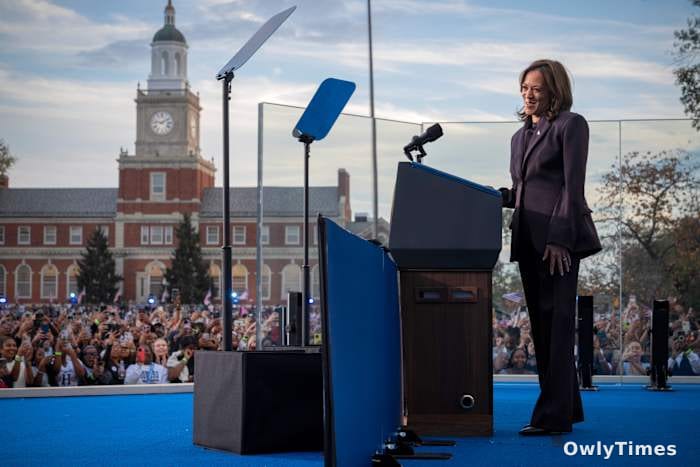
The report highlights a fatal lack of agility, particularly regarding Vice President Kamala Harris. When Biden stepped aside in July, the campaign was forced into a frantic scramble for public opinion data that should have been established years prior. The findings reveal a campaign "boxed" in by the Donald Trump campaign’s messaging on transgender issues, specifically regarding taxpayer-funded surgeries for inmates. Because the candidate refused to shift her position, the campaign found itself in a defensive crouch, unable to pivot, while the Republican "Kamala is for they/them, President Trump is for you" narrative dominated the airwaves.
This tactical paralysis echoes the historical precedent of candidates struggling to define themselves in a compressed timeline. Much like the rapid transitions seen in past mid-cycle candidate replacements, the Harris campaign lacked the "negative firepower" to define its opponent. By assuming Trump’s electoral weaknesses were "baked in" to the electorate’s consciousness, Democratic leadership failed to account for the reality that political capital is a depreciating asset if not constantly reinforced.
Shifting Coalitions and the Rural Deficit
The document is particularly scathing regarding the party’s reliance on "identity politics," suggesting that this framework has actively alienated younger Latino men and male voters of color. The report suggests that the path forward requires a departure from traditional Spanish-language media buys in favor of granular economic messaging. By pointing to successful statewide campaigns in Arizona, Nevada, and North Carolina, the authors argue that cost-of-living concerns are the only effective antidote to the current demographic bleeding.
Perhaps the most damning assessment is the indictment of the campaign’s geographic strategy. The report explicitly states that Harris "wrote off" rural America, erroneously banking on urban and suburban margins to compensate for massive losses in the heartland. This is a rejection of the "math" that has governed Democratic campaigns for the last decade. The message to the party is stark: presence is a prerequisite for persuasion.
A Stalled Internal Reconciliation
The DNC’s decision to annotate the report with claims that it "contradicts claims elsewhere" and lacks evidence suggests that the battle for the party's future has only just begun. By highlighting these internal contradictions, the DNC is signaling that it will not accept the narrative of a flawed campaign. Instead, the leadership is attempting to frame the report as a rogue document rather than a reflection of systemic failure.
The next political chess move to watch will be the DNC’s upcoming policy shift—or lack thereof—in response to the report’s directive on Latino and rural outreach. Specifically, the next reading of the party’s mid-cycle fundraising and staffing allocations for rural field offices will show whether this autopsy was a genuine call for reform or merely a performative ritual to bury the mistakes of 2024.





