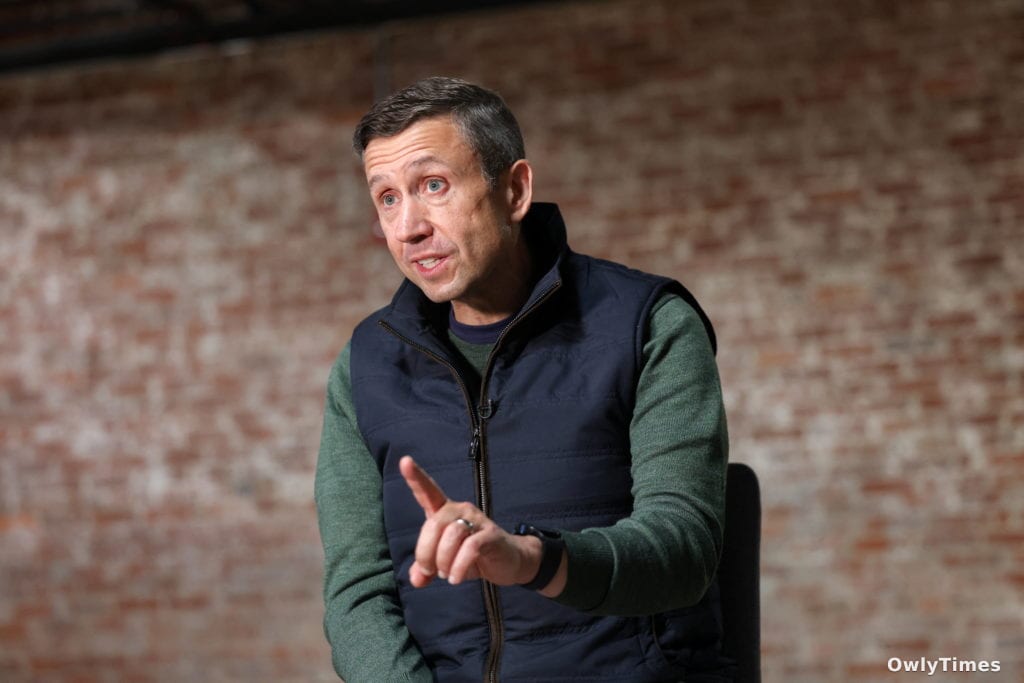

The strategic calculus behind the mounting disquiet within the Democratic Party leadership is a fascinating study in political paradox: how can a party that "keeps winning at the ballot box" simultaneously face a "crisis of confidence" in its top organizational official? This is precisely the dilemma confronting Ken Martin, the man at the helm of the Democratic National Committee (DNC), barely a year into his term. The concern among party officials is not merely about optics; it speaks to deeper anxieties about the long-term health and operational efficacy of the Democrats' political machine, even as electoral victories accumulate.
Unpacking the Crisis of Confidence
The core tension lies in distinguishing between electoral success and organizational robustness. While individual candidates may secure victories, a crisis of confidence in the DNC chair, as reported by the Associated Press, suggests that many within the party believe the underlying infrastructure—fundraising, grassroots mobilization, strategic communication, and data management—is not performing optimally, or is failing to capitalize on the very wins it is meant to support. For a political analyst, this immediately begs the question: are these victories happening because of the DNC, or in spite of it? The timing, "barely a year into his term," indicates that these concerns are not a slow burn but rather an acute, early assessment of Martin's leadership and the direction he has set for the party apparatus.
Who Benefits and Who Loses from Internal Strife
The "who benefits and who loses" framework illuminates the internal power dynamics at play. On the losing side is, unequivocally, Ken Martin himself, whose authority and ability to unite the party behind his vision are being openly questioned. More broadly, the entire Democratic Party stands to lose if internal strife saps organizational energy, diverts resources from critical electoral efforts, or creates an impression of disunity. A weakened DNC can struggle to attract top talent, raise necessary funds, and coordinate campaigns across diverse states and districts. This ultimately diminishes the party's capacity to convert public sentiment into sustained political power.
Conversely, who benefits? For starters, rival factions or ambitious individuals within the party who might aspire to greater influence or even Martin’s position could see an opportunity in this perceived vulnerability. A leadership vacuum or ongoing internal debate can open doors for new voices and strategic directions. Ironically, the most significant beneficiary might be the opposition party, which can exploit any public signs of Democratic disarray to paint a picture of an unstable or unready governing party. The ability of a national party committee to project strength and cohesion is paramount, and any crack in that façade serves as an opening for adversaries.
Echoes of Past Party Challenges
Historically, periods of electoral success have not always guaranteed internal party harmony. Indeed, history shows that even periods of public triumph can mask significant internal vulnerabilities and leadership challenges. Major parties, whether Democrat or Republican, frequently grapple with the perennial challenge of translating top-line electoral wins into durable, institutional strength and unified purpose. The DNC, as a central organizing body, is tasked with knitting together disparate state parties, fundraising networks, and ideological wings. Failures in this regard, regardless of ballot box outcomes, can lead to the kind of "crisis of confidence" now facing Martin. Such internal struggles can divert attention and resources from the critical work of preparing for future electoral cycles, a point of concern for party officials, according to a report by PBS NewsHour. The health of a political machine, as the officials describe it, is not solely measured by immediate wins but by its long-term resilience and adaptive capacity.
The operational effectiveness of the Democratic National Committee, which plays a crucial role in coordinating national strategy and supporting state parties, is paramount, as outlined on its official website, democrats.org. The underlying concern is that the current leadership may not be adequately strengthening the party's institutional muscle, leaving it vulnerable to future challenges.
The next political chess move to watch will be the DNC's upcoming fundraising reports and the initial organizational efforts for the next election cycle's primaries. These metrics will offer the clearest quantitative signals of whether the current "crisis of confidence" is translating into tangible operational slowdowns or if Ken Martin can pivot to demonstrate a renewed organizational vigor capable of assuaging internal critics.





