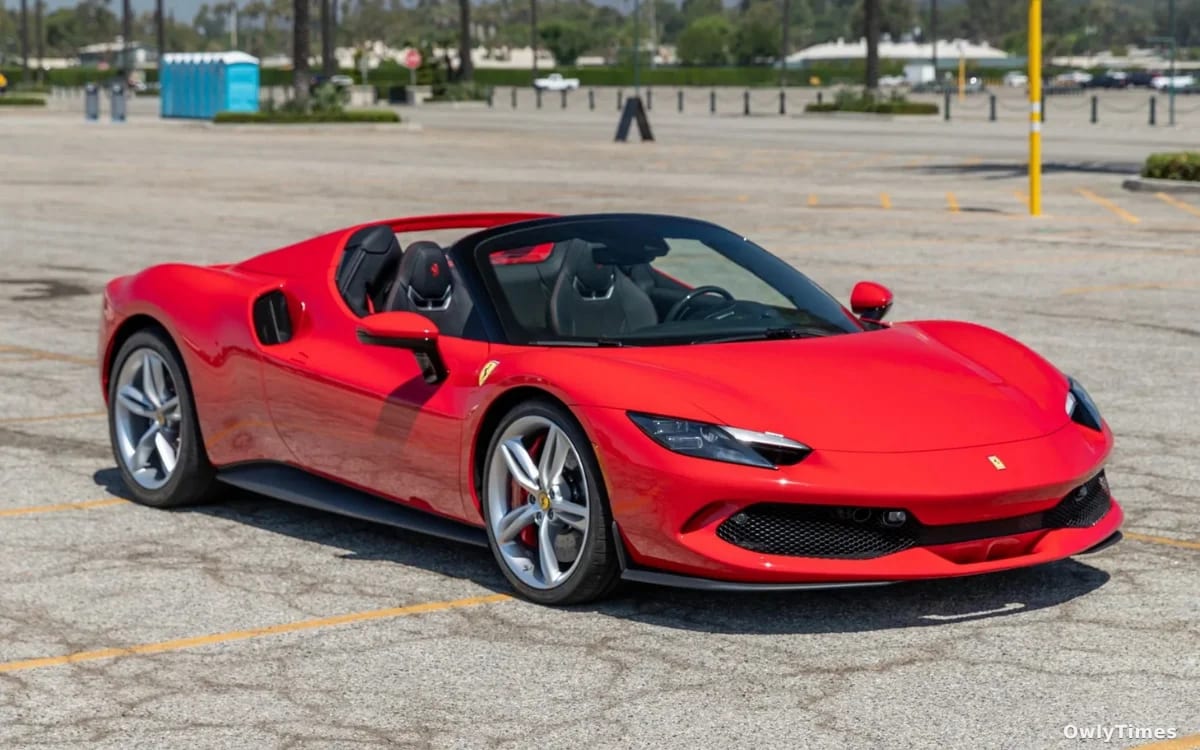

Is the supercar bubble finally deflating, or are we witnessing a new kind of automotive exclusivity? The recent refusal of a California dealer to sell a 2025 Ferrari 296 GTS for $348,000 – a price significantly below its original $452,476 MSRP – isn’t just a quirky auction result. The real story here isn't the failed sale of a single exotic car, it’s a potential shift in power dynamics within the luxury automotive market, and what that means for the rest of us, even those who aren’t dropping half a million on a vehicle.
The 296, lauded by critics for its innovative 3.0-liter twin-turbocharged V6 engine producing a combined 818 horsepower with its electric motor, represents Ferrari’s push towards hybridization. It’s a technically impressive machine, boasting near-identical performance to the hard-top version despite being 150lbs heavier, and dripping with desirable options like carbon-ceramic brakes and a front suspension lift. This particular model, finished in Rosso Corsa with a Nero leather interior and nearly $80,000 in extras, had only accumulated under 700 miles since its delivery from Maranello to Ferrari of Los Angeles last year. Yet, it couldn’t find a buyer willing to meet the dealer’s undisclosed reserve price, even after hitting a substantial $348,000 bid.
Based on the original supercarblondie.com report.
This isn’t an isolated incident. The auction platform DISCOVER SBX CARS, powered by Supercar Blondie, has observed a growing trend: Ferrari 296 units are increasingly failing to sell at auction. This is particularly jarring considering the broader market. Last year, the luxury car market saw a 13.8% increase in sales, according to Statista, fueled by pent-up demand and a perceived hedge against inflation. The fact that a relatively new, well-equipped 296 is struggling suggests something more complex is at play than simple economic downturn. It’s not that people can’t afford these cars; it’s that they’re less willing to overpay for them.
The dealer’s refusal to sell is the key. It wasn’t a lack of interest – the $348,000 bid demonstrates that. It was a calculated decision to hold out for a higher price, betting that demand will eventually catch up. This speaks to a new level of confidence, or perhaps arrogance, among dealerships. For years, the narrative was that scarcity drove prices. Now, it appears some dealers believe they can create scarcity, artificially inflating value by simply refusing to sell. This tactic relies on the assumption that buyers will eventually succumb to the allure of exclusivity, regardless of the price. It’s a dangerous game, and one that could backfire if buyers simply shift their attention to other brands.
This situation also highlights the evolving role of the auction market. Platforms like Bring a Trailer were once seen as a way to find deals on desirable cars. Now, they’re increasingly used as marketing tools by dealerships, allowing them to gauge market interest and set prices accordingly. The failed sale of the 296 suggests that dealerships are now using auctions not to sell cars, but to validate their pricing strategies. This is a subtle but significant shift, transforming the auction process from a transparent marketplace into a carefully controlled exercise in brand management.
What happens next? Watch for dealerships to become even more selective about which cars they offer at auction, and to set increasingly aggressive reserve prices. The days of finding a bargain on a desirable supercar may be numbered. More broadly, expect to see a tightening of supply in the luxury automotive market, as dealers attempt to maintain exclusivity and control prices. The question isn’t whether the 296 will eventually sell for its MSRP – it almost certainly will. The question is whether this tactic will become the new normal, and whether buyers will ultimately accept a world where even “failed” auctions are just part of the price of admission.