
$120 Billion Question: Why FinTech’s Promise to Small Business Isn’t Fully Delivering
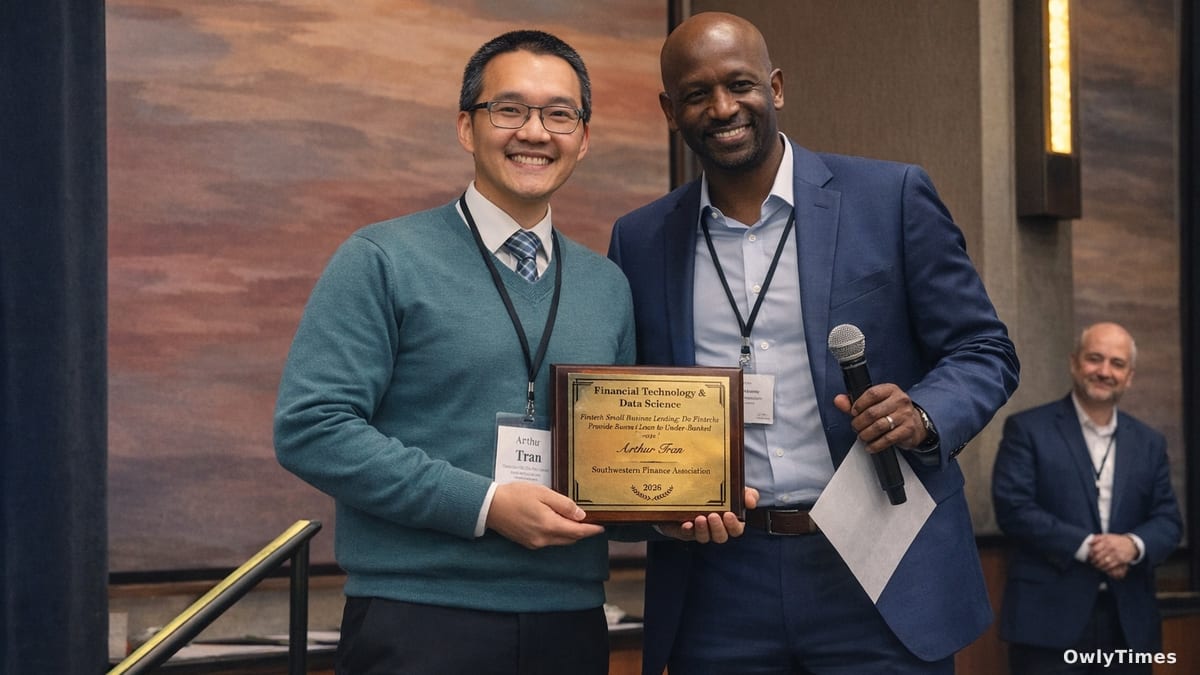
A mere 3.2% difference – that’s the average loan approval rate gap between FinTech lenders and large traditional banks for minority-owned small businesses, according to new research presented at the 65th Annual Meeting of the Southwestern Finance Association on April 2nd. While FinTech was widely touted as a disruptor poised to democratize access to capital, the data suggests the reality is far more nuanced, and in some cases, actively less equitable than existing systems. The study, authored by Dr. Arthur Tran of Southeastern Oklahoma State University and Dr. Drew Winters of Texas Tech University, meticulously dissects loan application data, revealing a critical tension between FinTech’s marketing narrative and its actual lending practices.
Reporting from se.edu informs this analysis.
The core question driving Tran and Winters’ research – “Do FinTechs Provide Business Loans to Under-banked Groups?” – is particularly urgent given the $120 billion small business lending market. For years, traditional banks have faced criticism for systemic biases in lending, disproportionately denying loans to minority-owned businesses. FinTechs, unburdened by legacy infrastructure and promising algorithmic objectivity, were positioned to fill this gap. However, the findings indicate that for minority entrepreneurs, FinTechs don’t consistently outperform large banks, and frequently lag behind community banks in approval rates. This isn’t a marginal difference; it represents potentially billions of dollars in unrealized economic opportunity for underserved communities.
The Female Entrepreneur Exception: Where FinTech Gains Traction
The research isn’t uniformly negative. While FinTechs struggle to improve lending access for minority-owned businesses, they do demonstrate a statistically significant advantage in lending to female entrepreneurs. This divergence is crucial. The study doesn’t delve into the “why” behind this disparity, but it’s likely tied to the algorithms FinTechs employ. Traditional banking often relies on factors like years in business and established credit histories – metrics where women-owned businesses historically face disadvantages due to societal factors. FinTechs, utilizing alternative data points like social media activity or online sales, may be circumventing these traditional barriers, albeit unintentionally. This suggests FinTech’s value isn’t necessarily in broad-based disruption, but in targeted solutions for specific demographic groups.
Community Banks Remain a Critical Lifeline
The study’s comparison to community banks is particularly telling. While large banks approved loans for 28.3% of minority-owned businesses, FinTechs only managed 25.1%. Crucially, community banks achieved a 31.7% approval rate. This highlights a critical, often overlooked, segment of the financial landscape. Community banks, deeply embedded in their local economies, possess a nuanced understanding of their borrowers and are often more willing to take calculated risks on businesses that might be overlooked by larger institutions. The data suggests that policies aimed at strengthening community banks – rather than solely focusing on promoting FinTech – may be a more effective strategy for addressing systemic lending disparities. The 2026 SWFA conference, attended by researchers from the Federal Reserve Board and Federal Reserve Banks, underscores the growing recognition of this dynamic within the regulatory community.
Follow the Money: Venture Capital and Algorithmic Bias
To understand why FinTech isn’t living up to its promise, “follow the money.” The vast majority of venture capital funding in the FinTech space is directed towards platforms targeting high-growth, scalable businesses – not the “micro-businesses” that disproportionately comprise minority-owned enterprises. This funding bias incentivizes FinTechs to prioritize profitability over social impact. Furthermore, the algorithms themselves, while presented as objective, are built on historical data that reflects existing biases. If past lending patterns discriminated against certain groups, the algorithm will likely perpetuate those patterns, even without explicit discriminatory intent. Dr. Tran’s research emphasis on FinTech and community banking positions him as a key voice in navigating these complex issues.
What This Means for Your Wallet
The implications are clear: don’t assume FinTech automatically equals equitable access to capital. Minority-owned small businesses should continue to explore all lending options, including community banks and SBA-backed loans. For investors, this research should prompt a critical re-evaluation of FinTech’s social impact claims. Are valuations justified if the technology isn’t demonstrably benefiting the communities it purports to serve? The key question moving forward is this: will FinTech lenders proactively address algorithmic bias and prioritize inclusive lending practices, or will they continue to reinforce existing inequalities, leaving a $120 billion opportunity – and a significant portion of the American dream – out of reach?