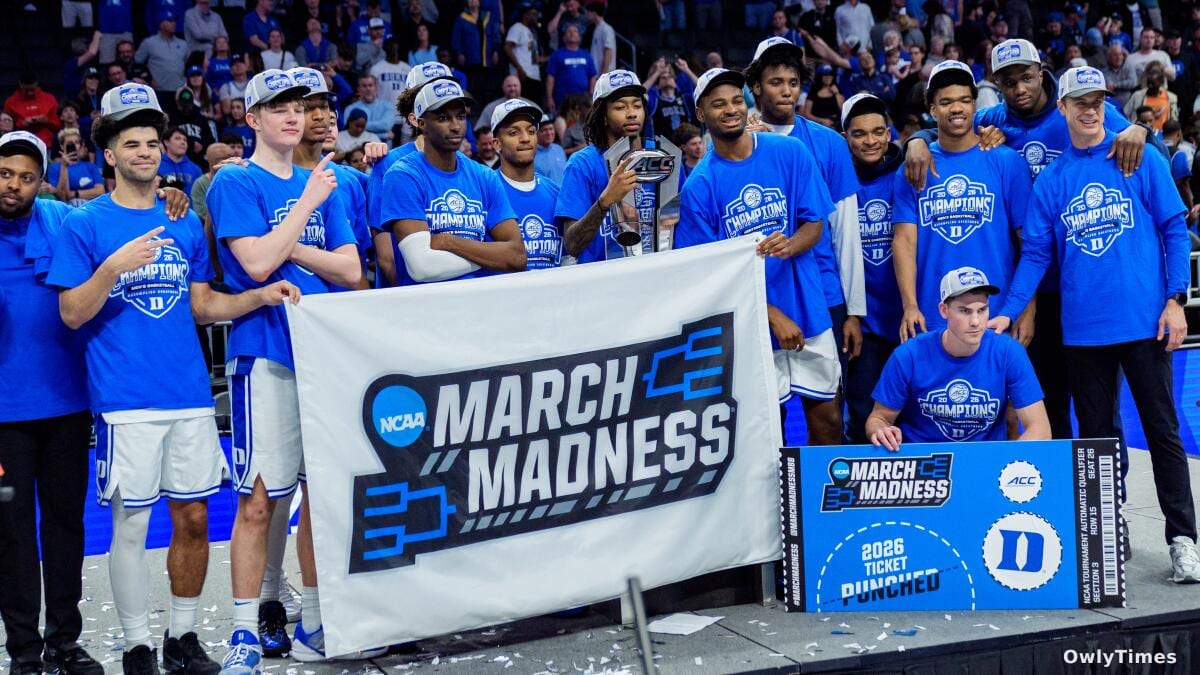

The air in Dayton, Ohio already crackles with a particular kind of desperation. Not the kind born of losing, not yet, but the kind that comes with knowing your season hangs on 40 minutes, maybe 48, of absolute perfection. Tuesday marks the start of the NCAA Men’s Basketball Tournament’s “First Four,” a tradition that’s become both a lifeline for bubble teams and a lightning rod for debate about the tournament’s bloated size. This year, eleven teams – Texas, North Carolina State, Miami (Ohio), Southern Methodist, Maryland Baltimore County, Howard, Prairie View A&M, Lehigh – are fighting just to get to the real bracket, a 68-team behemoth unveiled Sunday with Duke, Arizona, Michigan, and Florida claiming the coveted No. 1 seeds. But beyond the headlines of bracketology and upset potential, the expansion of March Madness reflects a fundamental shift in the landscape of college athletics, one increasingly driven by revenue and accessibility, even at the cost of exclusivity.
The 68-team format, fully implemented in 2011, wasn’t born out of a pure love of the game. It was a calculated move, a response to pressure from conferences eager to secure bids and the ever-growing demand for content in a 24/7 sports cycle. Back in 1985, just 64 teams competed, a number that felt sacrosanct for decades. Now, the First Four generates significant revenue for the NCAA – an estimated $100 million in television rights alone in 2024, according to a report by the Sports Business Journal – but at what cost to the integrity of the tournament? Critics argue that including teams with losing records (Prairie View A&M entered at 18-17) dilutes the field and diminishes the accomplishments of those who earned at-large bids with consistently strong performances. This year’s inclusion of Miami (Ohio) with a stunning 31-1 record feels almost like a corrective measure, a nod to a team that would have been a lock in a smaller field.
Based on the original the Los Angeles Times report.
UCLA, landing as a No. 7 seed in the East Region, will face Central Florida on Friday. For the Bruins, the path feels…familiar. They’re a team capable of making a deep run, boasting a 23-11 record, but consistently find themselves navigating a tricky bracket. This isn’t necessarily a reflection of their talent, but a symptom of the increasingly competitive nature of college basketball and the sheer number of teams vying for attention. The Pac-12’s implosion looms large here; UCLA’s future conference affiliation remains uncertain, adding another layer of instability to a program already navigating the complexities of the NIL era and the transfer portal. The tournament isn’t just about wins and losses anymore; it’s about brand building, recruiting leverage, and navigating a rapidly changing financial landscape.
The contrast between the men’s and women’s tournaments is also striking. While the men’s bracket expands, the women’s tournament is gaining momentum with increased viewership and media coverage. UConn, a dominant force with a perfect 34-0 record, heads into the women’s bracket as a clear favorite. The women’s tournament, historically undervalued, is finally receiving the attention it deserves, fueled by star power and compelling storylines. This disparity highlights a broader cultural conversation about gender equity in sports, and the NCAA’s attempts to address these imbalances – albeit slowly – are being closely watched. The women’s tournament is proving that quality, not quantity, can drive engagement and build a passionate fanbase.
The 2026 NCAA Men’s Basketball Tournament isn’t just a three-week spectacle of buzzer-beaters and bracket busters. It’s a microcosm of the larger forces reshaping college athletics. The expansion of the tournament, the rise of the transfer portal, the influence of NIL deals, and the ongoing fight for gender equity are all converging to create a new era of uncertainty and opportunity. As we fill out our brackets and place our bets, we should be asking ourselves: is the pursuit of revenue and accessibility ultimately enhancing or eroding the spirit of March Madness? And, more importantly, what will college basketball look like five years from now if these trends continue unchecked? Will the tournament become a 100-team free-for-all, or will the NCAA finally prioritize quality over quantity, preserving the magic of a truly elite competition?