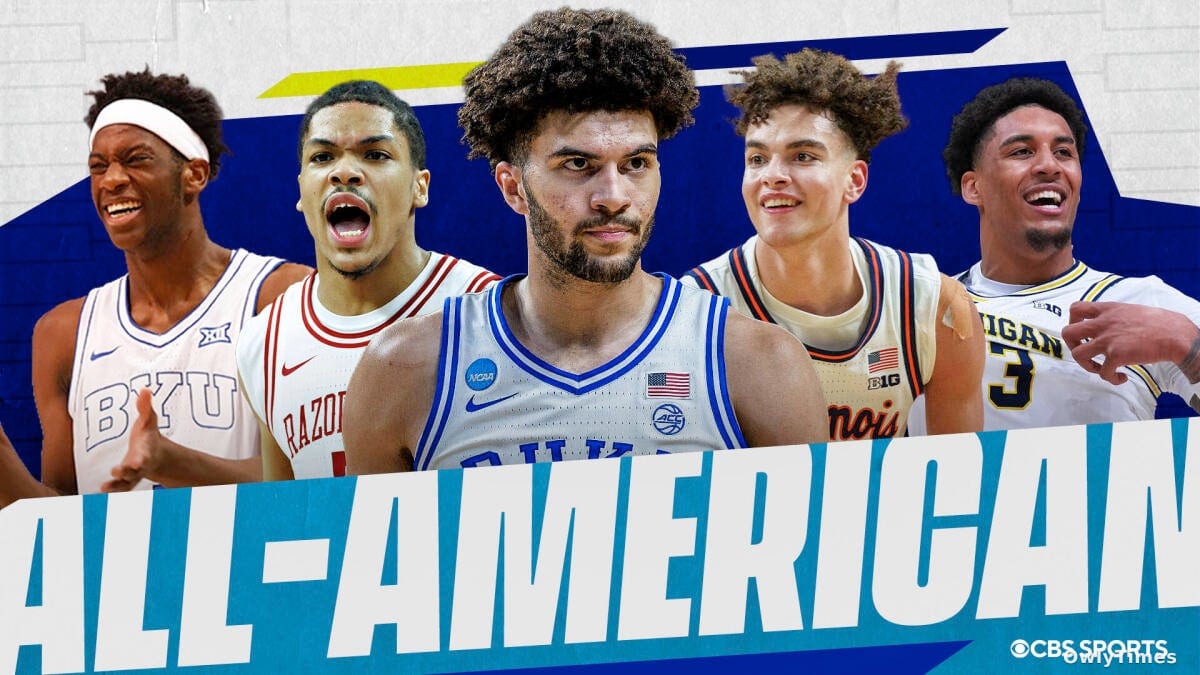

The roar inside Lucas Oil Stadium in Indianapolis wasn’t just for the impending Final Four showdown between Michigan and Arizona. It was a sound echoing a seismic shift in college basketball, a coronation of the freshman class of 2026. While Yaxel Lendeborg, the veteran transfer powering Michigan’s improbable run, soaked in the atmosphere, the real story wasn’t just who was playing for a championship, but how young they were. The CBS Sports First Team All-Americans list, finalized Monday, confirmed what many suspected: this isn’t just a good year for freshmen, it’s a rewriting of the rules. Four of the five honorees – Cameron Boozer (Duke), AJ Dybantsa (BYU), Darius Acuff Jr. (Arkansas), and the surprise star Keaton Wagler (Illinois) – are players who will likely only experience a single season of college hoops before heading to the NBA.
This isn’t simply about talent flowing to the professional ranks earlier; it’s a reflection of a rapidly evolving ecosystem where the line between college and the NBA is blurring. The rise of NIL (Name, Image, Likeness) deals and the transfer portal have fundamentally altered the landscape, creating a situation where elite prospects can maximize their earning potential and accelerate their careers. Wagler’s story is particularly striking. Ranked 150th in his class, he blossomed into a projected top-10 NBA draft pick in a single season, fueled by a remarkable 25-point performance in Illinois’s Elite Eight victory over Iowa that propelled them to their first Final Four since 2005. His ascent isn’t just a testament to individual development, but to the power of opportunity and the changing calculus for these young athletes. It begs the question: are we witnessing the end of the traditional four-year college basketball career for the truly elite?
The dominance of freshmen isn’t happening in a vacuum. It’s occurring alongside a surge in transfers, exemplified by Lendeborg’s impact on Michigan. The CBS Sports All-Transfer team highlights players like Lendeborg, who averaged 15.2 points, 7.0 rebounds, and 3.3 assists, transforming a program and becoming a First Team All-American after beginning his collegiate journey at UAB. This dual trend – the influx of one-and-done freshmen and seasoned transfers – is creating a hyper-competitive environment where programs are built less on sustained recruiting classes and more on assembling immediate-impact talent. It’s a system that rewards quick turnaround and prioritizes winning now, potentially at the expense of long-term program development. The fact that Lendeborg is the sole non-freshman on the First Team underscores this shift. He’s not just a great player; he’s a representative of a different path, one where experience is still valued, but increasingly overshadowed by the allure of immediate NBA potential.
Source material: CBS Sports.
Beyond the individual accolades, the statistical achievements of this class are staggering. Dybantsa led the nation in scoring with 25.5 points per game, joining only Jason Conley and Trae Young as freshmen to achieve that feat. Boozer posted impressive averages of 22.5 points and 10.2 rebounds, drawing comparisons to Blue Devil legends like Zion Williamson and Cooper Flagg. Acuff, meanwhile, etched his name into the SEC record books by leading the conference in both scoring (23.5 ppg) and assists (6.1 apg) – a feat not accomplished since Pete Maravich. These aren’t just numbers; they’re indicators of a generational talent pool that is reshaping the game. The fact that John Calipari, a coach renowned for identifying and developing one-and-done players, considers Acuff among his top five recruits in two decades speaks volumes.
But what does this all mean for the future of college basketball? The current model, fueled by NIL and the transfer portal, is clearly benefiting these elite players, allowing them to maximize their earning potential and accelerate their NBA dreams. However, it also raises concerns about the long-term health of the sport. Will the focus on immediate gratification erode the traditional rivalries and program building that have defined college basketball for generations? Will the gap between the “haves” – programs that can consistently attract top talent – and the “have-nots” continue to widen? As we watch these freshmen compete for a national championship, and then inevitably transition to the NBA, the question isn’t just about who wins on the court, but whether college basketball can adapt and thrive in this new era of accelerated talent and shifting priorities. Will the NCAA be forced to fundamentally rethink its rules and regulations to maintain a semblance of competitive balance, or will we continue to witness the rise of a professionalized college game where the primary purpose is player development for the NBA?