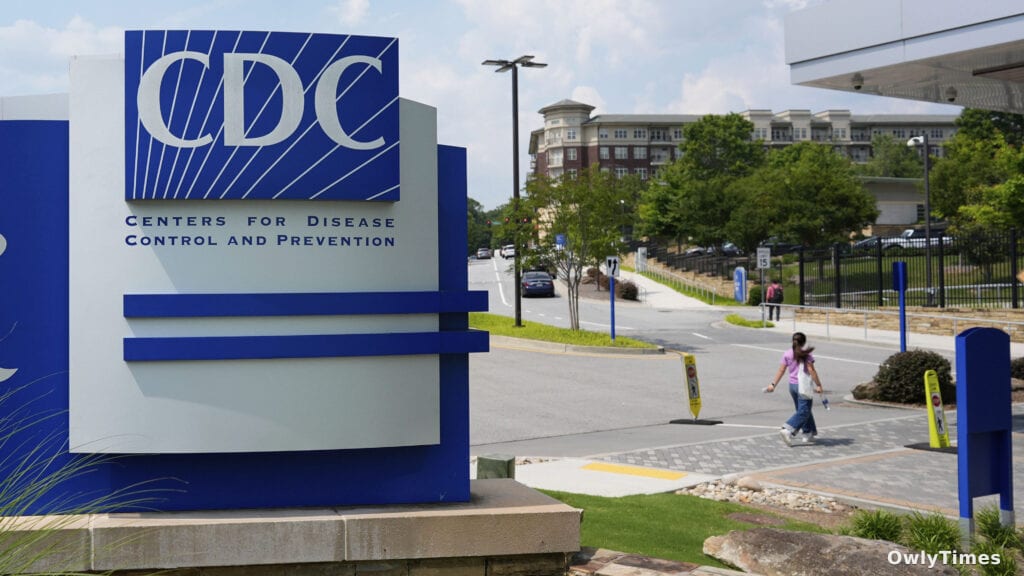

A Public Health Lifeline: How the Injury Center Survived a Targeted Assault
The near-elimination and subsequent full funding of the Centers for Disease Control and Prevention’s (CDC) National Center for Injury Prevention and Control (Injury Center) in the fiscal year 2026 represents far more than a budgetary skirmish. It’s a stark illustration of the ongoing, deliberate undermining of public health infrastructure and a crucial case study in how to effectively fight back. As Sharon Gilmartin, executive director of the Safe States Alliance, details, the reversal of the White House’s initial proposal to defund the Injury Center wasn’t a spontaneous act of benevolence, but the result of a concerted, multi-pronged advocacy effort. This incident signals a new reality for public health agencies: constant vigilance and proactive defense are now prerequisites for survival.
See the original STAT story for the full account.
Background & Context: A History of Targeted Cuts
The attempt to eliminate the Injury Center didn’t emerge in a vacuum. It’s part of a broader pattern of attacks on the CDC and other public health institutions, escalating since 2020. While the specific motivations vary, a consistent thread has been a questioning of the agency’s authority and a desire to curtail its scope. The Trump administration, and continuing under the current administration, has repeatedly proposed budget cuts impacting core public health functions, often framed as streamlining government or reducing bureaucratic overreach. This latest attempt, however, was particularly alarming given the Injury Center’s unique role. For over three decades, the Center has served as the central hub for injury and violence prevention, distributing approximately 80% of its funding directly to states and localities. This localized impact – funding car seat safety programs, concussion protocols for young athletes, and overdose prevention initiatives – is precisely what made it a target. The timing is also significant; 2024 saw a 27% decline in overdose deaths in the U.S., a statistic directly attributable, in part, to the Injury Center’s work. To target the agency during a period of demonstrable success is a particularly cynical move.
The Anatomy of a Save: Beyond Washington Politics
The successful defense of the Injury Center wasn’t a typical Washington lobbying effort. While engaging with lawmakers was crucial, the Keep America Safe Coalition, comprised of over 50 organizations, understood that the Center’s strength lay in its grassroots impact. The coalition strategically shifted the narrative away from abstract budgetary concerns and towards concrete stories of lives saved and communities strengthened. Highlighting initiatives like the Peer Initiative in Louisiana, the Claire Bear Foundation in Washington, and the Brain Injury Center in Nebraska, demonstrated the tangible benefits of Injury Center funding to individual constituents. This approach, as Gilmartin emphasizes, allowed legislators to “see how federal funding is impacting their constituents’ lives and health.” What’s often overlooked is the power of localized narratives in countering national-level political agendas. By amplifying the voices of those directly impacted, the coalition effectively personalized the stakes and made the Injury Center’s value undeniable. The bipartisan support garnered from figures like Reps. Tom Cole (R-Okla.) and Rosa DeLauro (D-Conn.), and Sens. Shelley Moore Capito (R-W. Va.) and Tammy Baldwin (D-Wis.) further underscores the broad appeal of the Center’s mission.
What This Means: Implications for Public Health and Advocacy
The near-demise and subsequent rescue of the Injury Center carries significant implications. For the public, it highlights the fragility of essential public health services and the constant need for advocacy. The fact that a program responsible for preventing overdose, suicide, and other injuries could be so easily targeted underscores the vulnerability of these vital functions. For the public health industry, it’s a wake-up call. The experience demonstrates that relying solely on technical expertise and data is insufficient; proactive communication, coalition building, and a willingness to engage in public advocacy are now essential skills. The inclusion of regulatory protections in the final appropriations bill – safeguards against unnecessary grant delays and independent review of CDC reorganizations – is a particularly important win. This represents a shift from simply securing funding to actively protecting the agency’s operational autonomy. However, the incident also reveals a tension: the Injury Center’s nonpartisan nature, while facilitating bipartisan support, also makes it susceptible to being perceived as less politically valuable than programs with more visible, politically charged agendas.
Looking Ahead: A Perpetual Battle for Public Health
The fight to protect the Injury Center is unlikely to be a one-time event. The administration’s past actions, coupled with a continuing skepticism towards public health interventions, suggest that future challenges are inevitable. Advocates should anticipate further attempts to curtail funding or restrict the agency’s authority. Moving forward, it will be crucial to continue building and strengthening the Keep America Safe Coalition, expanding its reach, and diversifying its membership. Monitoring potential “reorganizations” within the CDC will also be paramount, as these can often be veiled attempts to diminish the Injury Center’s influence. The success of this campaign offers a valuable blueprint for defending other public health programs facing similar threats, but it also serves as a sobering reminder that safeguarding public health is now a perpetual battle, demanding constant vigilance and unwavering advocacy.





