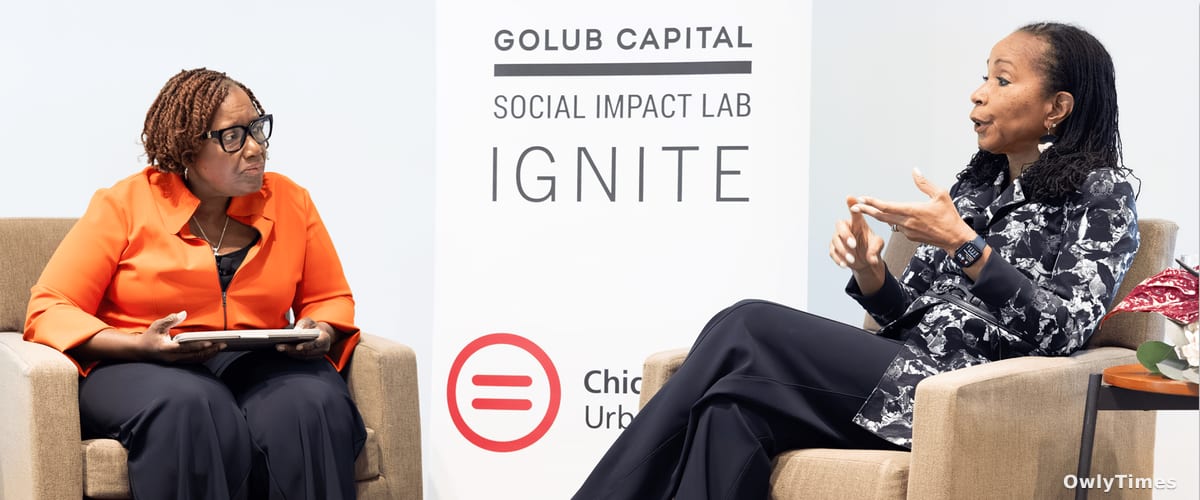

How do we begin to measure the success of a healthcare system when the primary drivers of patient well-being exist entirely outside the walls of a clinic? This central question defined the recent Golub Capital Social Impact Lab Annual Lecture, titled "Health, Wealth, and Opportunity: The Systems That Shape Our Lives." While conventional medical discourse often prioritizes clinical intervention, the conversation between Helene Gayle, president emerita of Spelman College, and Karen Freeman-Wilson, president and CEO of the Chicago Urban League, argued for a radical pivot toward systemic reform.
The Limits of Clinical Intervention
Gayle, drawing on her 17 years at the Centers for Disease Control and Prevention, underscored a stark reality: medical care accounts for only a fraction of health outcomes. According to Gayle, approximately 80 percent of health disparities are rooted in social determinants, such as safe housing, environmental quality, and access to education. For the average reader, this figure highlights the disconnect between the high cost of modern medicine and the actual health status of the population.
The study presented in this discourse suggests that the Affordable Care Act—often referred to by Gayle as Obamacare—functioned more as an insurance mechanism than a true health system. While it expanded coverage, it failed to bridge the silos that keep nutrition, housing, and medical care separated. The tension here lies in the definition of "healthcare"; if we continue to view health as a payment structure rather than a holistic environment, we will likely continue to see the same persistent health disparities despite technological advancements in medicine.
Housing and Education as Economic Engines
The conversation extended into the tangible mechanics of wealth creation, with both leaders identifying education and housing as the primary levers for stability. Freeman-Wilson and Gayle emphasized that educational funding is not merely a social good but an economic imperative, noting that trade schools and internships are essential for closing the employability gap.
Housing represents a more complex challenge. Gayle identified homeownership as the bedrock of wealth building in the United States, yet she acknowledged that rising prices have made this entry point increasingly inaccessible. Her observation that "you can't do anything without an address" points to the fundamental link between physical stability and the capacity to participate in the economy. The data here is clear: when housing is precarious, the ability to build intergenerational wealth is effectively severed.
Bridging the Gap Through Stakeholder Engagement
For nonprofit leaders and policymakers, the path forward requires a shift in how these problems are framed to stakeholders. During her tenure as former president and CEO of The Chicago Community Trust, Gayle found that advocacy succeeded only when the economic cost of inequality was made visible. Her assertion that a city cannot move forward if two-thirds of its population is struggling serves as a metric for systemic health that goes beyond traditional balance sheets.
The limitations of this approach, however, remain significant. While the focus on systemic reform is intellectually rigorous, the practical application is hampered by deeply entrenched, fragmented bureaucratic structures. Changing these systems requires not just policy shifts but a realignment of market priorities.
As we look toward the future, the next reading of the national wealth gap and health disparity metrics will likely serve as the primary indicators of whether these systemic, holistic approaches are gaining traction or if the current siloed model will persist. For now, the imperative remains clear: as Gayle advised, markets have a role to play, but long-term prosperity depends on how effectively that capital is utilized to support the foundational systems of health and opportunity.





