
$16.8 Billion in Losses: Why Google Is Stepping Back From Fiber
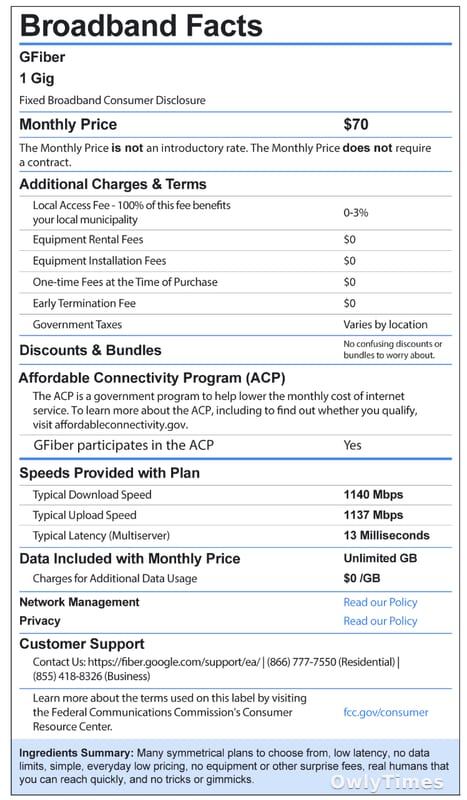
$16.8 billion. That’s the operating loss racked up by Google’s “Other Bets” segment – which includes Google Fiber – in 2025, a figure that underscores why the tech giant is now spinning off its fiber internet unit. The move, announced Wednesday, sees GFiber combining with Astound Broadband to form an independent provider, with Google retaining only a minority stake. This isn’t a story about technological triumph; it’s a calculated retreat from a capital-intensive endeavor that consistently failed to deliver returns commensurate with its ambition, and a strategic pivot timed to capitalize on the burgeoning demand for bandwidth driven by artificial intelligence.
The genesis of Google Fiber in 2010 was a bold challenge to the established broadband order. Launching with a gigabit-speed rollout in Kansas City in 2012, Google aimed to redefine internet access in the U.S. – a market notoriously underserved compared to global peers. However, the initial vision of a nationwide fiber network quickly ran into the realities of infrastructure costs and regulatory hurdles. Planned expansions were scrapped, and the company narrowed its focus to select markets. This scaling back wasn’t a technical failure, but a financial one; the cost of digging trenches and laying fiber proved far greater than anticipated, especially when weighed against the relatively slow subscriber growth.
Reporting from CNBC informs this analysis.
Follow the money and the picture becomes clearer. While GFiber and Astound combined generated $1.54 billion in revenue in 2025, this represented a mere 0.5% of Alphabet’s total sales. That revenue figure, while substantial in absolute terms, simply couldn’t justify the ongoing $16.8 billion loss. The transaction, expected to close in the fourth quarter, hands majority ownership to infrastructure investment firm Stonepeak, which previously acquired Astound Broadband for $8.1 billion in 2021. Stonepeak’s involvement signals a belief in the long-term potential of fiber infrastructure, but crucially, it shifts the financial burden away from Google.
The timing of this spin-off is no accident. Demand for high-capacity networks is surging, fueled not just by streaming and cloud computing, but increasingly by the computational demands of artificial intelligence. Google itself is a major player in the AI space, and recognizes the need for robust infrastructure to support its services. However, the company has clearly decided that owning and operating that infrastructure directly isn’t the most efficient path forward. Instead, by providing a minority investment and leveraging the expertise of GFiber’s existing team, Google can benefit from the network’s expansion without bearing the full financial risk. This mirrors a broader trend among U.S. tech giants, who are also investing heavily in transcontinental subsea cables to meet growing bandwidth needs.
This deal isn’t just about Google’s bottom line. It’s a test case for the future of broadband investment. Stonepeak’s success in scaling the combined GFiber and Astound network will be closely watched by other investors considering similar ventures. The question now is whether Stonepeak can unlock the profitability that eluded Google, and whether the promise of faster, more reliable internet access will finally reach a wider audience. What this means for your wallet: expect to see increased competition in select markets as the new entity expands, potentially leading to lower prices and faster speeds – but don’t anticipate a nationwide fiber revolution overnight. The real indicator to watch is whether Stonepeak can demonstrate a clear path to profitability within three years, or if GFiber will remain a money pit, even under new ownership.