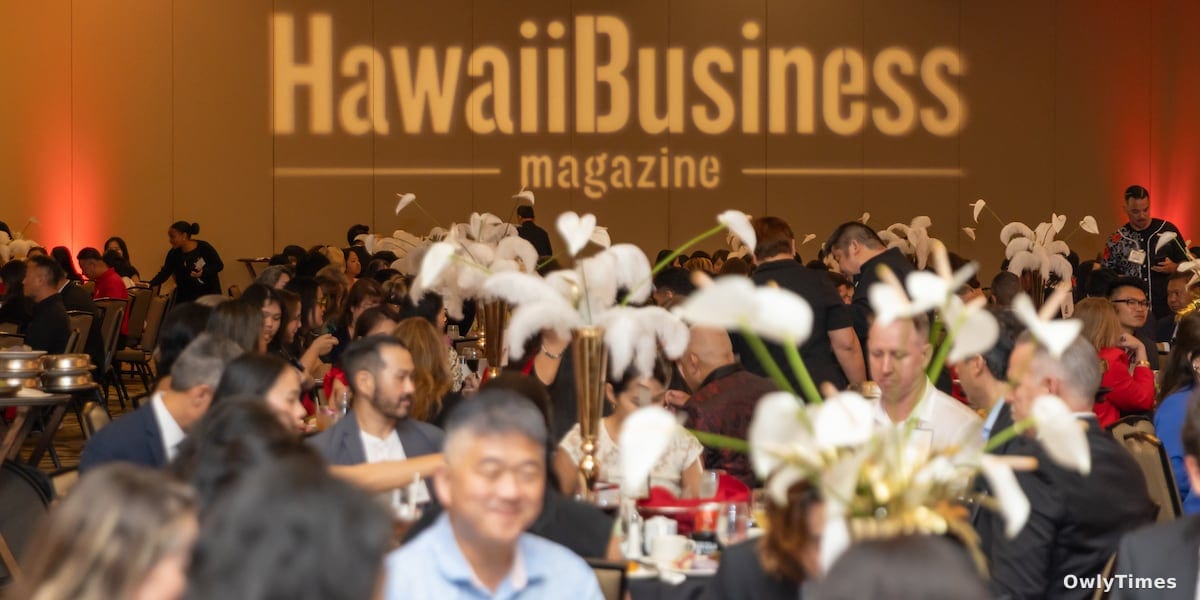

A 19-Year Streak: What Hawaii’s “Best Places to Work” Reveals About Economic Resilience
Nineteen years. That’s how long Bowers + Kubota Consulting has consistently appeared on Hawaii Business Magazine’s “Best Places to Work” list, and for the last three years, they’ve held the top spot among large companies. This isn’t simply a feel-good story about employee perks; it’s a quantifiable indicator of a firm successfully navigating Hawaii’s unique economic pressures – and a potential blueprint for others. Follow the money: companies investing in workplace culture are demonstrably retaining talent, and in a state grappling with a high cost of living and outward migration, talent retention is directly linked to economic stability.
Source material: hawaiinewsnow.com.
The Employee Feedback Engine Driving Recognition
The “Best Places to Work” list, now in its 22nd year, isn’t decided by executive opinion. According to Kent Coules, publisher of Hawaii Business Magazine, 80% of the ranking is based on anonymous employee feedback. This weighting is crucial. It signals a shift in power dynamics, where employer branding is less about marketing promises and more about delivering on the lived experience of employees. This approach is particularly relevant in Hawaii, where the labor market is tight and employees have more options than in many mainland states. The remaining 20% considers company policies and demographics, but the employee voice is clearly the dominant factor. This data-driven approach contrasts sharply with many “best employer” lists that rely heavily on subjective criteria or company self-reporting.
Beyond Perks: The ROI of Workplace Culture
The categories awarded by Hawaii Business Magazine – Most Family-Friendly Workplace (sponsored by Aloha Pacific Federal Credit Union), Best Places to Work for Women (sponsored by ProService Hawaii), Healthiest Company (sponsored by UHA), and LGBTQ+ inclusive workplaces – aren’t simply about ticking boxes for diversity and inclusion. They represent specific areas where investment in employee well-being translates to measurable business outcomes. For example, family-friendly policies reduce employee turnover, lowering recruitment and training costs. A focus on employee health reduces healthcare premiums and absenteeism. These aren’t just “nice to haves”; they’re direct impacts on the bottom line. Brian Bowers, president of Bowers + Kubota, didn’t detail specific financial gains in the HawaiiNewsNow interview, but the firm’s sustained success on the list suggests a strong correlation between culture and profitability. Consider that the average cost to replace an employee can range from half to twice their annual salary; consistent recognition on this list implies significant savings in recruitment expenses.
Training Day Signals a Broader Industry Focus
The inaugural “Best Places to Work Training Day” on April 23rd, featuring keynote speaker Peter Burke, president of Workforce Research Group, is a telling development. It’s not enough to recognize good employers; the industry is now actively seeking to replicate their success. This training, held at the Japanese Cultural Center of Hawaii, suggests a growing awareness that workplace culture is a competitive advantage. The fact that this is the first such training event after 22 years of recognizing top employers indicates a recent acceleration in the focus on employee engagement. Workforce Research Group specializes in employee engagement and organizational performance, suggesting the training will be grounded in data and best practices, not just anecdotal evidence.
What This Means for Your Wallet
Hawaii’s economy is heavily reliant on tourism and government spending, sectors vulnerable to external shocks. A workforce that feels valued and engaged is more resilient, more productive, and less likely to seek opportunities elsewhere. For consumers, this translates to more consistent service quality and a more stable local economy. But the broader takeaway is this: watch for increased investment in employee well-being across all sectors. Will companies beyond the current “Best Places to Work” winners begin to prioritize culture as a strategic imperative? And, crucially, will those investments translate into tangible benefits for employees – such as wage increases, affordable healthcare, and genuine opportunities for advancement – or remain superficial gestures? The success of the April 23rd training day, and the subsequent adoption of its principles, will be a key indicator.





