
$217 Million Intersection Redesign Signals Shift in Columbia’s Development Priorities
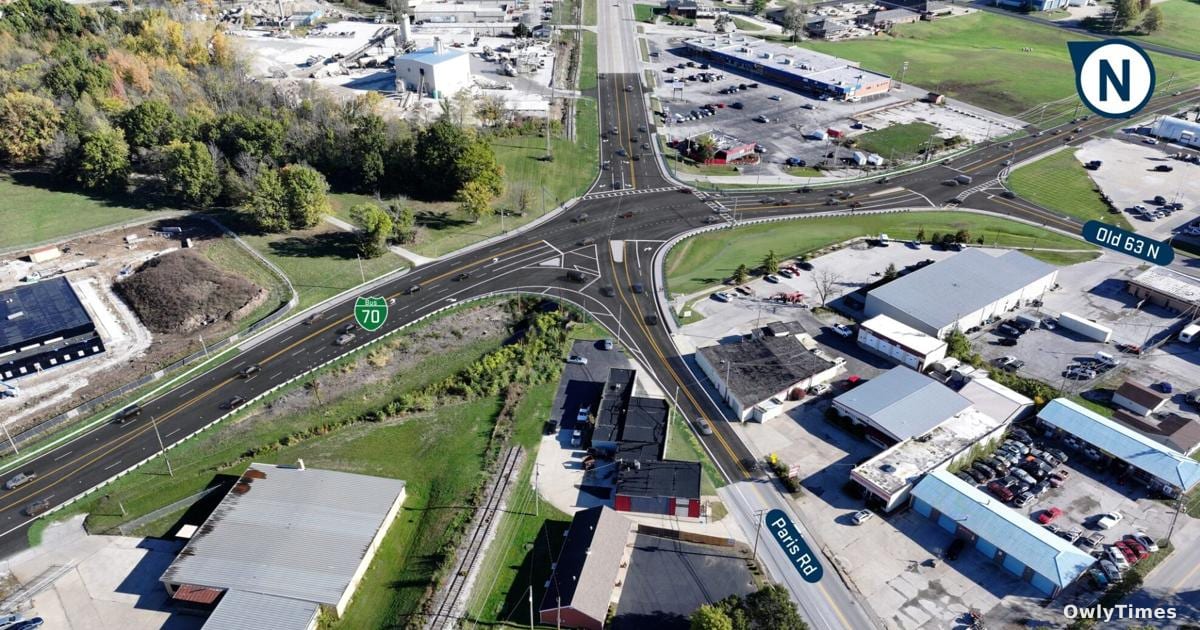
A projected $217 million price tag – the estimated cost of the Improve I-70: Rocheport to Columbia project – isn’t simply about adding a third lane to the interstate. Buried within the larger initiative is a proposed overhaul of the Business Loop 70 and Paris Road intersection, a change that reveals a calculated bet by the Missouri Department of Transportation (MoDOT) on Columbia’s future economic development and a potential reshaping of the city’s urban core. While presented as a traffic improvement, the plan to elevate Business Loop 70 and remove existing rail infrastructure represents a significant transfer of value, prioritizing pedestrian-friendly development over existing freight capacity.
The core of the proposal, detailed in a recent blog post by The Loop Community Improvement District, involves raising Business Loop 70 to meet Paris Road at grade, effectively eliminating the current overpass and the adjacent COLT railroad bridge. This isn’t a minor adjustment; it’s a complete reconfiguration of a key transportation node. MoDOT’s stated justification centers on creating space for sidewalks and bike lanes, aligning with broader city planning goals. However, the removal of the rail line, even with the Columbia Parks and Recreation Department exploring a “rails-to-trails” railbanking project, raises questions about the long-term impact on local businesses reliant on freight transport. The railbanking concept, while offering recreational benefits, inherently limits future rail capacity, a trade-off that hasn’t been fully quantified in public discourse.
Drawn from komu.com.
The timing of this decision is crucial. Construction on the entire Rocheport to Columbia project is slated to begin this spring and continue until late 2029, a six-year period of disruption. This extended timeline means that any business currently benefiting from rail access along that corridor faces a six-year window to adapt or relocate. The cost of adaptation – switching to truck transport, for example – will likely be borne entirely by those businesses, while the benefits of improved pedestrian access accrue to a wider range of stakeholders, including developers and potential new businesses attracted to the area. This dynamic highlights a classic case of infrastructure investment creating winners and losers, and the current plan appears to heavily favor the former.
The financial implications extend beyond the immediate construction costs. Removing the rail line, even with the possibility of future restoration through railbanking, effectively devalues the land. While the Parks and Recreation Department’s railbanking proposal offers a public amenity, the economic value of a functioning rail line – even a low-use one – is demonstrably higher than that of a walking trail. This devaluation isn’t reflected in MoDOT’s publicly stated project costs, suggesting a deliberate underestimation of the true economic impact. The Loop CID stands to benefit significantly from increased foot traffic and potential for redevelopment along the widened Business Loop 70, a scenario that aligns with their stated mission of community improvement, but also raises concerns about gentrification and displacement.
MoDOT is actively soliciting public feedback at meetings scheduled for March 2nd and 4th, but the fundamental design appears largely finalized. The open-house format, while intended to be inclusive, risks becoming a formality if key concerns about freight access and economic impact aren’t addressed directly. Investors and residents should be watching closely to see if MoDOT incorporates a comprehensive cost-benefit analysis that accounts for the long-term economic consequences of removing the rail line. What this means for your wallet: anticipate potential increases in the cost of goods transported by rail in the Columbia area, and a possible shift in property values along Business Loop 70 as development pressures intensify. The critical question now is whether the long-term benefits of a pedestrian-friendly corridor outweigh the immediate economic disruption and the potential loss of freight capacity.





