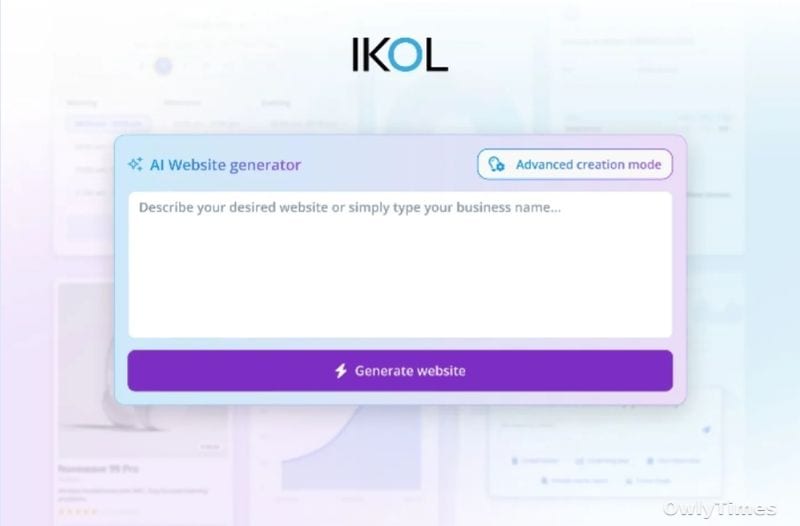

On April 25, 2026, Boston-based IKOL initiated a pivot in its development cycle that signals a fundamental shift in how small and medium-sized businesses (SMBs) will approach digital infrastructure. By announcing a new development phase for its AI-driven website builder, the company is moving to address the "trade-off trap" that has long plagued the sector: the historical requirement that business owners choose between comprehensive, complex platforms and simplified, rigid tools.
Bridging the Gap Between Complexity and Customization
For the past decade, the market for website creation has been characterized by a binary struggle. Businesses have generally been forced to sacrifice either deep customization capabilities for the sake of simplicity, or comprehensiveness for the sake of ease of use. IKOL is positioning its platform to break this cycle by introducing more adaptive digital tools.
Follow the money in the SMB software sector, and you will see a clear trend: companies are moving away from fragmented, disconnected software suites toward centralized, all-in-one workspaces. By allowing for a more fluid response to individual business contexts—rather than forcing users into predefined workflows—IKOL is betting that the winning product will be the one that minimizes the technical learning curve while maximizing the brand’s ability to evolve.
Reducing Friction in Digital Operations
The primary friction point for many SMB owners is the maintenance phase that follows the initial website launch. IKOL’s strategy is to mitigate this by revamping its user experience (UX) to be more intuitive, effectively turning the platform into a guide for web management.
This move is a direct play for the "do-it-yourself" entrepreneur who wants to maintain direct control over their digital brand without relying on external, costly support. As the platform integrates more AI-driven features, the goal is to shift from simple task automation toward a comprehensive assistant that handles analytics, marketing, and content adjustments. The technical burden on the business owner is being offloaded to the software, allowing entrepreneurs to redirect their limited resources toward core operations like product development and market expansion.
The Balancing Act of AI Integration
While the promise of AI-driven website management is high, IKOL is entering a phase of development where it must navigate the industry’s increasing scrutiny of automated systems. The company has explicitly identified the need to prioritize the reliability of automated processes, user privacy, and the originality of generated content.
This caution is well-founded. As platforms move toward more autonomous features, they are being tasked with a dual mandate: innovating with new AI capabilities while maintaining transparency and "naturalness" in the output. The industry is currently moving toward a standard where AI tools are judged not just by their efficiency, but by their responsible use and data integrity.
What This Means for Your Wallet
For the small business owner, these developments suggest a tightening of the digital overhead. By consolidating website creation, management, and marketing assistance into a single, adaptive platform, the total cost of ownership for a business's online presence stands to decrease.
The next reading of the platform’s performance will be determined by its ability to maintain this balance between ease of use and professional-grade functionality. As IKOL rolls out these software updates, watch for how effectively the system handles complex content updates—if the platform can truly eliminate the need for external web developers for routine site changes, it will represent a permanent reduction in the operational budget for SMBs that are currently paying a premium for technical maintenance.





