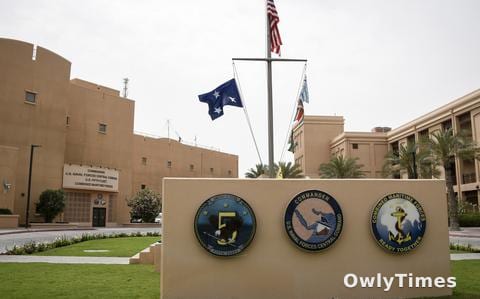

The coordinated strikes against U.S. Naval Forces Central Command in Bahrain and simultaneous attacks on civilian infrastructure reveal a calculated Iranian strategy: to demonstrate both reach and restraint. While the targeting of the naval base is a direct response to the U.S.-led strikes within Iran – dubbed “Operation Epic Fury” by President Trump – the inclusion of residential buildings in Manama isn’t simply collateral damage. It’s a signal to Bahrain, a key U.S. ally, that it too is vulnerable, and a deliberate attempt to raise the cost of hosting American forces. This isn’t a war of annihilation, as President Trump’s rhetoric suggests, but a carefully calibrated escalation designed to force a re-evaluation of the U.S. military presence in the region.
The immediate aftermath – air raid sirens, evacuations of Manama’s high-rise apartments, and the frantic firefighting efforts at The Breaker and Era View residential towers – underscores the precarious position of both military personnel and civilians. The fact that no U.S. casualties have been reported as of Saturday afternoon, according to a U.S. official, doesn’t diminish the severity of the situation. Instead, it suggests a level of precision in the Iranian targeting, likely intended to avoid triggering an immediate, overwhelming response. The investigation into whether the fires at The Breaker were caused by a direct drone strike or falling debris from intercepted missiles, as reported by Abdullah Alameeri of Bahrain Police, is a critical detail. It will determine whether Iran is operating under a policy of minimizing civilian harm or is willing to accept it as a consequence of targeting strategic assets.
This escalation echoes the dynamics of the Tanker War (1987-1988) during the Iran-Iraq War. Then, as now, Iran sought to project power beyond its borders, targeting economic and military infrastructure to pressure its adversaries without triggering a full-scale conventional conflict. The attacks on shipping in the Persian Gulf were designed to disrupt oil flows and demonstrate Iran’s ability to inflict economic pain. Similarly, the current strikes aim to disrupt U.S. operations and demonstrate the vulnerability of its regional allies. The key difference is the direct targeting of U.S. assets on land, a significant escalation that raises the stakes considerably. The interception of attacks by Qatar and Jordan, while demonstrating their defensive capabilities, also highlights the regional ripple effect of the conflict and the potential for wider escalation.
Who benefits and who loses from this unfolding crisis? Iran gains leverage in negotiations, demonstrating its capacity for retaliation and its willingness to challenge U.S. dominance in the region. President Trump’s administration, despite its aggressive rhetoric, faces the challenge of responding in a way that deters further attacks without spiraling into a wider war. Bahrain, as the host nation, is caught in the crossfire, facing both the threat of Iranian attacks and the potential for increased instability. U.S. allies in the region, particularly Saudi Arabia and the UAE, are forced to reassess their security arrangements and consider the long-term implications of a more assertive Iran. The 8,300 sailors stationed in Bahrain, and their families, are the most immediately vulnerable, as evidenced by the cancellation of classes at the Defense Department school and preparations for remote learning.
See the original stripes.com story for the full account.
The decision to surge military assets into Jordan and Saudi Arabia in recent weeks, coupled with increased activity at the Navy’s installation at Souda Bay in Greece, reveals a pre-emptive attempt to bolster regional defenses and prepare for a protracted conflict. However, these deployments also signal a commitment to escalation, potentially reinforcing the cycle of retaliation. The fact that President Trump acknowledged the possibility of U.S. casualties, stating “the lives of courageous American heroes may be lost,” is a tacit admission that the risks are substantial and that the operation is not without cost. This contrasts sharply with previous statements minimizing the potential for conflict with Iran.
The political chess move to watch next isn’t whether the U.S. will launch further strikes against Iran – that seems almost inevitable. It’s whether President Trump will attempt to open a diplomatic channel with Tehran, even indirectly, to de-escalate the situation. The question is whether the administration can reconcile its stated goal of “annihilating” Iran’s navy and missile industry with the practical realities of a prolonged conflict and the potential for regional instability. Will the administration prioritize a decisive military victory, or will it seek a face-saving solution that allows both sides to step back from the brink? The answer will determine the future of U.S. policy in the Middle East for years to come.





