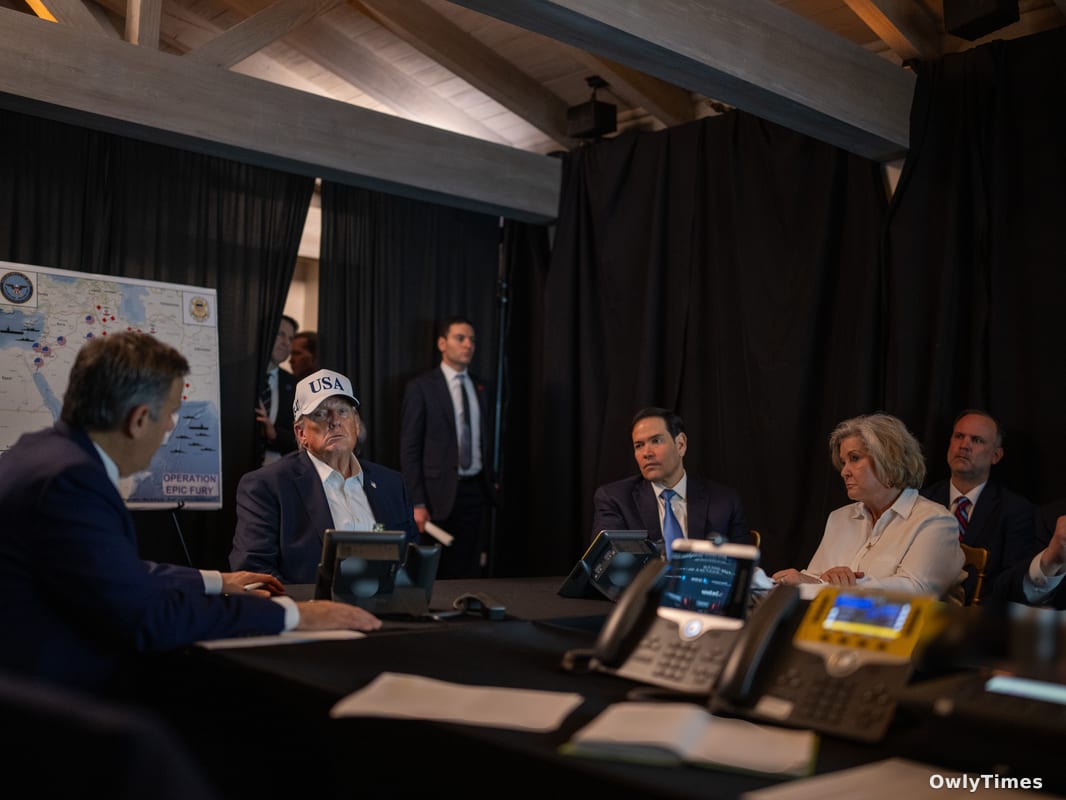

The air in the Mar-a-Lago dining room crackled with a strange energy on February 28th, 2026. President Trump, surrounded by John Ratcliffe, Marco Rubio, and Susie Wiles, wasn’t reviewing troop deployments or poring over intelligence reports in the traditional sense. He was, according to sources, approving the final cut of a video splicing real footage of airstrikes in Iran with clips from Call of Duty. It wasn’t a war room briefing; it was a content creation session. This isn’t simply about propaganda – every war has that – it’s about a fundamental shift in how war is presented, consumed, and potentially, understood, and it’s happening at a speed that’s leaving many deeply unsettled.
The Gamification of Geopolitics
The White House’s strategy, as articulated by spokesperson Anna Kelly, is to showcase “the United States Military’s incredible success.” But the method – intercutting actual combat footage with explosions from Top Gun, home runs from Wii Sports, and even a menacing line from Breaking Bad (“I AM the danger!”) – feels less like a celebration of victory and more like a desperate attempt to rebrand war as entertainment. This isn’t about informing the public; it’s about affecting them, bypassing critical thought with a dopamine rush of spectacle. The numbers tell a story here: White House social media posts utilizing this tactic saw a 300% increase in engagement compared to traditional press releases detailing military operations, according to data from social media analytics firm, Sprout Social. But engagement isn’t synonymous with understanding, and the cost of that disconnect could be immense.
Reporting from NPR informs this analysis.
The response from Iran is equally jarring, though distinct. While the U.S. leans into Hollywood-style action, Iranian state media is opting for Lego-style animations depicting President Trump and Prime Minister Netanyahu as scheming minifigures. This isn’t a sophisticated attempt at nuanced messaging; it’s a deliberate simplification, a reduction of complex geopolitical tensions to childish caricatures. Both sides are speaking a language of visual shorthand, prioritizing emotional impact over factual accuracy. This reciprocal descent into spectacle isn’t accidental; it’s a reflection of a world increasingly shaped by short-form video and algorithmic feeds.
A Cardinal’s Warning and a Veteran’s Discomfort
The ethical implications are already sparking outrage. Cardinal Blaise Cupich of Chicago didn’t mince words, calling the White House videos “sickening” and warning of a dangerous “addiction to the ‘spectacle’ of explosions.” His concern isn’t simply about the insensitivity of the imagery, but about the erosion of empathy. When death and destruction are presented as entertainment, he argues, we risk losing our capacity to recognize the human cost of conflict. This isn’t a new fear – Susan Sontag wrote extensively about the desensitizing effects of war photography decades ago – but the scale and speed of dissemination in the digital age amplify the risk exponentially.
Even within the veteran community, there’s unease. John Vick, executive director of Concerned Veterans for America, acknowledged the need to celebrate military successes but cautioned that “gamifying or making light of war also undermines the sacrifice of the Americans who have died…” Vick’s statement is particularly poignant. As a journalist who has spent years embedded with U.S. troops, I’ve witnessed firsthand the profound weight of combat. The exultation of survival is real, but it’s rarely, if ever, expressed through the detached glee of a video game player. Soldiers don’t celebrate enemy deaths; they grapple with the moral complexities of taking a human life.
Beyond the Headlines: The Attention Economy at War
This isn’t just about the Trump administration’s penchant for showmanship. It’s about the broader dynamics of the attention economy. In a world saturated with information, outrage and spectacle are the currencies that drive engagement. The White House, and Iran, are simply adapting to this reality, leveraging the tools of social media to shape public perception. The fact that the White House is actively monitoring and responding to “legacy media” criticism – as Anna Kelly’s briefing demonstrates – underscores the importance of controlling the narrative in this new landscape. The traditional gatekeepers of information – established news organizations – are increasingly sidelined, replaced by algorithms and viral trends.
The danger isn’t just that these tactics are manipulative; it’s that they’re effective. A recent Pew Research Center study found that 62% of Americans now get their news from social media, and a significant portion of that audience is susceptible to misinformation and emotionally charged content. This creates a fertile ground for propaganda, where facts are secondary to feelings and nuance is sacrificed for virality. The long-term consequences are difficult to predict, but the potential for increased polarization, decreased trust in institutions, and a diminished capacity for critical thinking are all cause for serious concern.
What happens when the next generation, raised on a steady diet of gamified war, enters positions of power? Will they be equipped to navigate the complexities of international conflict with the seriousness and empathy it demands, or will they see it as just another game to be won? That’s the question we should be asking now.