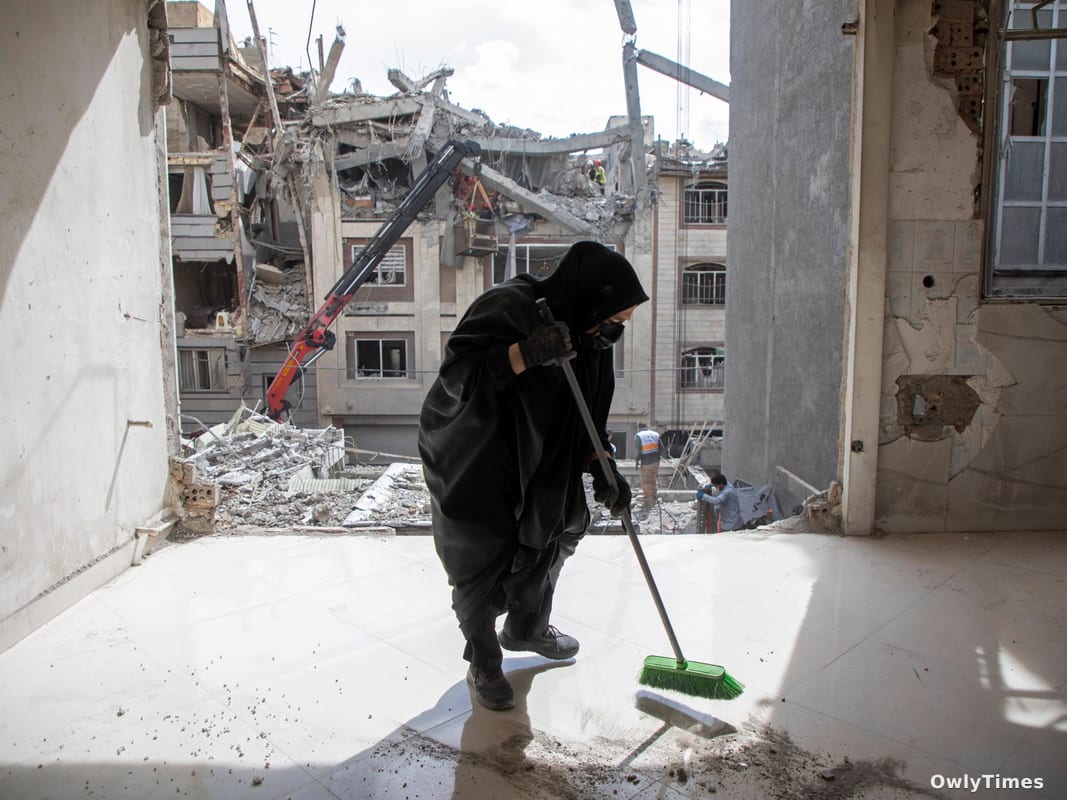

The air in Tehran hangs thick not with the scent of Nowruz, the Persian New Year, but with the metallic tang of fear. Even as families attempt a semblance of normalcy, returning to gyms and cautiously visiting loved ones, the city is a pressure cooker. Checkpoints, manned by masked IRGC forces and plainclothes officers, are ubiquitous – not static barriers, but mobile units shifting through tunnels, under bridges, and along highways, a constant reminder of a war entering its second month with no clear resolution. This isn’t simply a military conflict; it’s a meticulously orchestrated campaign to control not just territory, but the very pulse of Iranian society, a chilling demonstration of power that reveals a regime bracing for internal dissent as much as external attack.
The official narrative, relentlessly broadcast from loudspeakers and state television, is one of unified resistance against US and Israeli aggression. Residents report being actively invited to mosques and public squares to denounce Washington and Tel Aviv, a carefully curated display of loyalty. But this manufactured solidarity exists alongside a starkly contradictory message: the same powers urging Iranians to remain home, awaiting a “clear signal” to overthrow the Islamic Republic. This duality – a call for both unwavering support and preparation for regime change – speaks to a desperate gamble by external forces, attempting to exploit existing discontent while simultaneously destabilizing the current government. It’s a high-stakes game of psychological warfare, and ordinary Iranians are caught in the crossfire.
See the original Al Jazeera story for the full account.
The most disturbing element emerging from Tehran isn’t the drone strikes, though those are escalating, but the increasingly blatant mobilization of civilians, including children. Rahim Nadali, the IRGC’s deputy for cultural affairs, casually announced on state television that the age limit for participation in security patrols has been lowered to 12. Twelve-year-olds, he stated, are now being integrated into the surveillance network. This isn’t about bolstering defenses; it’s about indoctrination, about embedding loyalty to the regime in the next generation, and about creating a network of informants within communities. The image of children armed and participating in security operations is a chilling echo of past conflicts, a deliberate attempt to blur the lines between civilian and combatant, and to weaponize innocence.
This isn’t happening in a vacuum. The economic strain on Iran is immense. With an inflation rate hovering around 70 percent and a nearly month-long, total internet shutdown – the longest recorded in the country’s history – the population is reeling. President Masoud Pezeshkian’s highly publicized visit to a Tehran hypermarket, ostensibly to ensure essential goods are available, feels less like a gesture of concern and more like a carefully staged performance, a desperate attempt to project an image of stability. The small cash subsidies being distributed are a band-aid on a gaping wound, a temporary measure to quell unrest rather than address the underlying economic crisis. The internet blackout, in particular, is a critical tool of control, preventing the organization of protests and stifling dissenting voices.
Beyond the headlines of strikes and potential ground offensives lies a brutal crackdown on dissent. The Iranian judiciary is actively seizing the assets of dissidents, both inside and outside the country. The case of Ali Sharifi Zarchi, a former professor at Sharif University of Technology, is particularly telling. Targeted for his criticism of the regime on social media, his assets were confiscated under the label of being an “anti-Iran element” and “supporter of the Zionist regime.” His defiant response – framing his confiscated belongings as a “small sacrifice” compared to the lives lost during past protests – encapsulates the simmering anger and resentment that the regime is desperately trying to suppress. The government’s warning that anyone protesting will be treated as an “enemy,” coupled with reports of executions and mass arrests, paints a grim picture of a regime willing to use any means necessary to maintain its grip on power.
The situation in Tehran isn’t simply about military strategy or geopolitical maneuvering. It’s about a regime facing an existential threat, responding not with strength, but with a desperate attempt to control its own population. The mobilization of children, the internet blackout, the asset seizures, and the brutal suppression of dissent are all symptoms of a system on the verge of collapse, clinging to power through fear and intimidation. The question now isn’t just whether the US and Israel will launch a ground attack, but whether the internal pressure within Iran will finally reach a breaking point. Will the “clear signal” from abroad be enough to overcome the pervasive fear and the regime’s iron grip, or will Tehran descend further into a state of controlled chaos? The world is watching, but the fate of Iran rests with its people – and the courage they find to navigate a war fought not just on battlefields, but in the streets, mosques, and homes of their own nation.





