
Is Anyone Actually Listening to Trump on Iran?
Let’s be honest: when a politician declares a war will end “any time I want it to end,” it’s less a strategic assessment and more a performance. President Donald Trump’s recent comments to Axios about the ongoing conflict with Iran fall squarely into that category. The real story here isn't Trump’s optimistic pronouncements—it’s the stark reality that this war, sparked by American and Israeli airstrikes, is likely to be far more protracted and complex than anyone in Washington seems willing to admit, and it’s already impacting everyday consumers through rising oil prices.
Original reporting: time.com.
Why Memphis Manufacturers Are Watching Closely
The initial rationale for the conflict, and the shifting goals of the Trump Administration, have been a moving target, oscillating between preventing Iran from developing nuclear weapons and a maximalist push to topple the Islamic Republic. This inconsistency, coupled with the resilience of the Iranian government, suggests a prolonged engagement. Data from the Correlates of War project reveals that most interstate wars over the past two centuries have lasted less than five months. The 12-day war between America, Israel, and Iran in June 2025 serves as a brief outlier, but the eight-year Iran-Iraq War of the 1980s—a brutal conflict that claimed over a million lives—offers a far more sobering precedent. Tehran, a deeply institutionalized network fueled by oil revenues and decades of political maneuvering, isn’t likely to crumble easily. The swift transition of power following the death of Ayatollah Ali Khamenei and the subsequent selection of his son, Mojtaba Khamenei, as the new Supreme Leader, demonstrates a remarkable stability within the regime.
The IRGC: More Than Just a Military Target
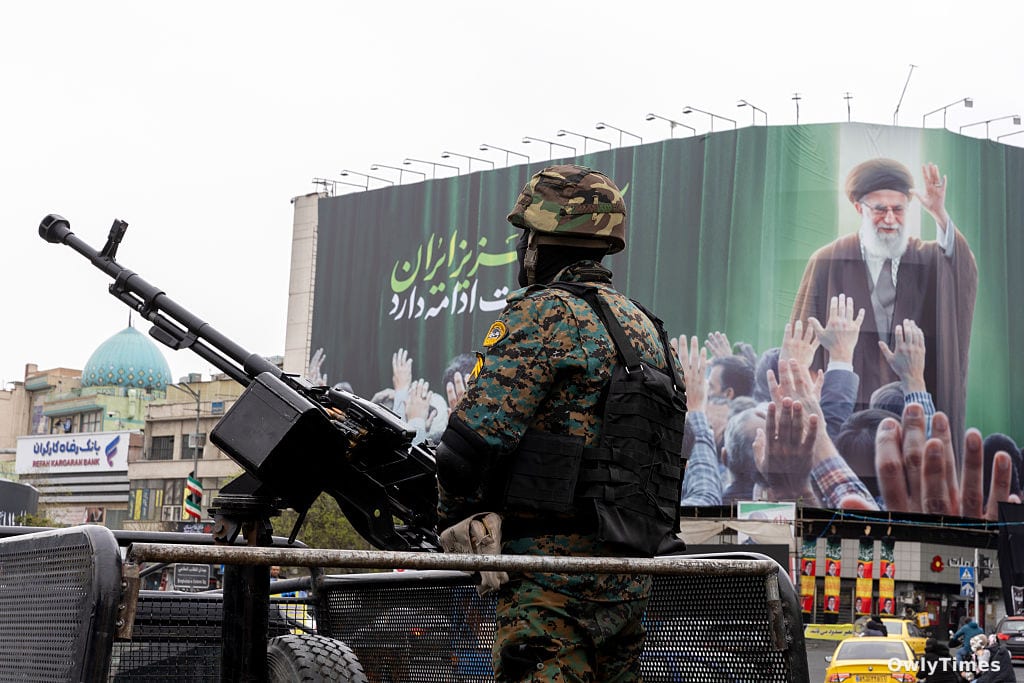
The focus on dismantling the Islamic Revolutionary Guards Corps (IRGC) as a path to victory is a fundamental miscalculation. The IRGC, and its affiliated Basij forces, aren’t simply a military arm; they are the bedrock of the regime’s ideological and security apparatus. Years of intense vetting and institutional consolidation have produced a force deeply committed to defending the Islamic Republic, and an air campaign, while damaging, won’t shatter that resolve. Iran has already learned from the brief 2025 conflict, rebuilding capabilities and preparing for a broader confrontation. This isn't about a quick knockout blow; it's about a grinding, asymmetrical struggle.
The Strait of Hormuz and Your Gas Bill
The economic consequences are already rippling outwards. The Strait of Hormuz, through which roughly one-fifth of the world’s oil supply passes, has become a central point of contention, sending oil prices soaring despite efforts to release strategic reserves. This isn't just about Wall Street; it translates directly to higher fuel prices at the pump and increased inflation for everyday consumers. Even the perception of instability in the Gulf can disrupt global supply chains, impacting everything from the cost of groceries to the price of electronics. Iran’s ability to weaponize the Strait of Hormuz creates a constant pressure point, incentivizing the U.S. to signal restraint while maintaining military pressure.
Entanglements and Escalation: A Global Web
The situation is further complicated by the involvement of other global powers. Reports of Russia sharing intelligence with Iran, and potential economic and technological support from China, create a multi-layered geopolitical chessboard. Washington’s reported request for Ukraine’s assistance in countering Iranian drones—now being used by Russia against Ukrainian forces—highlights the increasingly tangled nature of the conflict. Even the discussion of arming Kurdish groups within Iran risks backfiring, potentially galvanizing nationalist sentiment and strengthening the regime’s grip on power. The specter of external powers fueling ethnic tensions within Iran could easily transform popular discontent into a rallying cry for the state.
The Endgame: A Question of Cost
Ultimately, Trump’s hedging strategy—simultaneously projecting a swift victory while preparing for a protracted conflict—reflects a recognition of the complexities involved. But ambiguity doesn’t solve the fundamental problem: American and Israeli officials must confront the uncomfortable question of whether achieving their war aims—whatever they may be—is worth the escalating costs and risks. The longer this conflict drags on, the more likely it is to destabilize the region, disrupt the global economy, and draw in other powers, all while failing to achieve a decisive outcome.
Here’s what to watch: In the next six weeks, monitor the frequency and intensity of attacks on commercial shipping in the Persian Gulf. If Iran significantly escalates these attacks, targeting tankers beyond the immediate vicinity of the Strait of Hormuz, it will signal a deliberate strategy to inflict economic pain and force negotiations—a strategy that will likely prolong the conflict and further destabilize global energy markets.