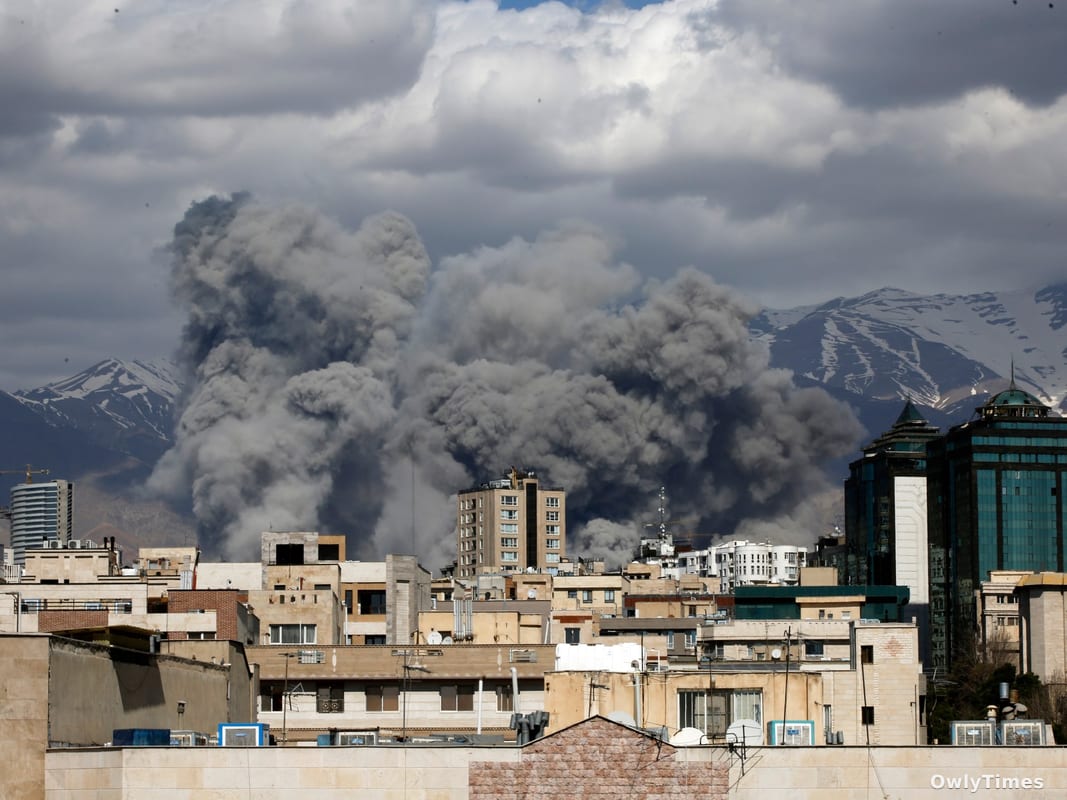

The escalating exchange of attacks between Iran, Israel, and the United States isn’t simply a tit-for-tat response to a perceived breach of sovereignty; it’s a complex demonstration of layered deterrence, and a stark illustration of how readily regional conflicts can expand when multiple actors with overlapping interests – and deeply held grievances – are involved. While headlines focus on the immediate casualties and retaliatory strikes, a closer look at the geography of these attacks, and the extensive US military footprint in the region, reveals a calculated risk assessment unfolding in real-time. This isn’t a spontaneous eruption, but a carefully calibrated escalation, raising the critical question of whether either side truly intends a full-scale war, or if these actions are designed to signal resolve without crossing a definitive threshold.
Israel’s air force, in concert with the US, initiated the current cycle with a reported 1,200 munitions deployed across 24 of Iran’s 31 provinces on Saturday. This wasn’t a surgical strike targeting specific military assets, but a broad demonstration of capability, intended to overwhelm Iranian defenses and signal the potential for widespread damage. The Islamic Revolutionary Guard Corps (IRGC) responded predictably, launching attacks on 27 bases housing US troops and Israeli facilities. What’s often glossed over in reporting is the scope of Iran’s counter-offensive: strikes have now impacted eight countries – Bahrain, Iraq, Jordan, Kuwait, Oman, Qatar, Saudi Arabia, and the United Arab Emirates – demonstrating Tehran’s willingness to project force across the region and directly challenge the US presence.
The sheer number of US military installations in the Middle East, a network comprising at least 19 locations including eight permanent bases, is a crucial element of this dynamic. According to the Council on Foreign Relations, between 40,000 and 50,000 US soldiers are stationed across the region as of mid-2025, concentrated in Qatar, Bahrain, Kuwait, the UAE, and Saudi Arabia. These bases aren’t merely logistical hubs; they are critical for US air and naval operations, intelligence gathering, and force projection. Iran’s targeting of these facilities, as explicitly warned prior to any attacks, isn’t simply aggression, but a direct challenge to US regional power and a demonstration of its ability to inflict costs. The three US soldiers killed and five seriously wounded underscore that this isn’t a risk-free posture for American forces.
Original reporting: Al Jazeera.
The human cost of this escalation is already significant, and tragically unevenly distributed. As of Sunday afternoon GMT, confirmed casualties include 201 killed and 747 injured in Iran, with the deadliest single incident occurring in Minab, where a strike on an elementary girls’ school reportedly killed at least 148 people. This detail – the targeting of a school – is particularly harrowing and demands independent investigation. In Israel, nine people have been killed and 121 injured, with substantial property damage reported in Tel Aviv. Beyond these headline figures, the impact is spreading: Kuwait has reported one death and 32 injuries, the UAE three deaths and 58 injuries, and Bahrain, Iraq, Oman, Qatar, and Jordan have all sustained injuries, ranging from shrapnel wounds to more serious trauma. The numbers are preliminary and likely to rise as rescue operations continue and the situation remains volatile.
It’s important to note the discrepancies in reporting and the inherent challenges in verifying information during active conflict. Casualty figures are constantly evolving, and access to affected areas is often restricted. While Iranian state media reports 201 killed, independent verification is limited. Similarly, reports of damage in Tel Aviv and other Israeli cities require corroboration. The speed with which information is disseminated – and often amplified through social media – necessitates a cautious approach to interpreting initial reports.
The Geography of Risk: Beyond Direct Targets
The attacks aren’t confined to military targets. The targeting of civilian infrastructure, such as Kuwait International Airport and the Duqm port in Oman, demonstrates a willingness to disrupt regional commerce and daily life. The injuries sustained by airport staff in Dubai and the fire at Palm Jumeirah highlight the vulnerability of civilian populations. This broadening of targets suggests a deliberate strategy to raise the stakes and exert pressure on regional governments. The fact that Jordan successfully intercepted 49 drones and missiles, yet still experienced localized property damage, illustrates the limitations of even advanced air defense systems. The reliance on these systems, and the potential for collateral damage, is a significant concern.
US Response and the Question of Escalation Control
The US response, thus far, has been limited to defensive measures and statements of support for Israel. However, the deaths of three US soldiers represent a critical turning point. While the US has emphasized its commitment to de-escalation, the pressure to respond more forcefully will undoubtedly increase. President Biden’s administration faces a difficult balancing act: demonstrating resolve to deter further attacks while avoiding actions that could trigger a wider regional war. The current strategy appears to be focused on bolstering regional defenses and coordinating with allies to intercept incoming threats, but this approach may not be sustainable in the long term.
Limitations to Consider
It’s crucial to acknowledge the limitations of our understanding at this stage. The full extent of the damage and casualties is still unknown. The motivations and intentions of all parties involved are subject to interpretation. And the potential for miscalculation or unintended consequences is high. Furthermore, the information available is heavily filtered through official channels, and independent reporting is severely constrained. The narrative being presented by each side is likely to be biased and self-serving.
What Comes Next: Monitoring for a Shift in Strategy
The immediate focus will be on assessing the effectiveness of the defensive measures employed by Israel, the US, and their regional allies. However, the more important question is whether this exchange of attacks represents a temporary escalation, or a fundamental shift in the regional security landscape. We should be watching closely for any indication that Iran is preparing for a more sustained and aggressive campaign, or that Israel is contemplating a broader military operation. Specifically, the coming days will reveal whether Iran continues to target US military facilities, and whether the US responds with retaliatory strikes. The fate of negotiations surrounding Iran’s nuclear program, already stalled, will also be a key indicator of the long-term implications of this crisis. Will this escalation push the region closer to a wider conflict, or will it ultimately serve as a warning shot, prompting a renewed effort to de-escalate tensions and find a diplomatic solution?





