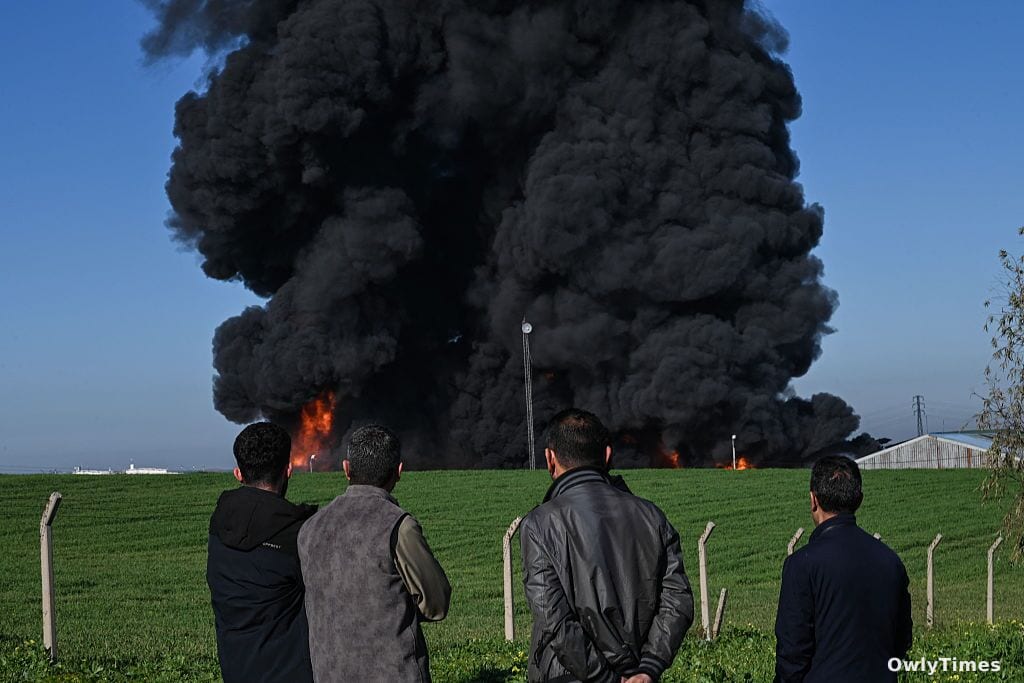

Is anyone actually paying attention to the logistics of this conflict, or are we all just hypnotized by the pronouncements of “Stone Ages” and escalating target counts? The narrative surrounding the U.S.-Iran conflict, now entering its second month, is overwhelmingly focused on rhetoric – President Trump’s bluster, Emmanuel Macron’s rebukes, Masoud Pezeshkian’s appeals to the “American people.” The real story here isn't the escalating strikes or the diplomatic spats – it's the unraveling of global supply chains and the quiet panic setting in among those who actually move the world’s goods.
The numbers are staggering, even if they’re presented as just another data point in the daily updates. U.S. Central Command boasts of over 12,300 targets hit in Iran, 155 Iranian vessels “destroyed or damaged.” But what does that actually mean for the container ship carrying your new refrigerator, or the fertilizer needed for next season’s harvest? It means delays, increased costs, and a growing sense of instability in a system already stretched thin by years of pandemic-related disruptions. The focus on military targets conveniently obscures the collateral damage to civilian infrastructure – like the bombed bridge connecting Karaj to Tehran, or the damaged 100-year-old medical research center – which are vital arteries for commerce and daily life.
The situation in the Strait of Hormuz is particularly alarming. Iran’s effective closure of this critical waterway, through which roughly 20% of the world’s oil passes, is sending ripples through global energy markets. While British Foreign Secretary Yvette Cooper condemns “Iranian recklessness,” the fact remains that the U.S. wasn’t even at the table during the recent 40-nation meeting convened by Britain to discuss reopening the strait. This isn’t a sign of strong leadership; it’s a signal of fractured alliances and a lack of coordinated strategy. President Trump’s suggestion that countries simply “take” the strait and protect it themselves is not only legally dubious – as pointed out by international law expert Gabor Rona, it’s a potential war crime – but also utterly impractical. It’s a billionaire telling a homeowner to just “build a wall” around their property without offering any actual assistance.
Based on the original NPR report.
The internal political maneuvering is equally unsettling. The abrupt request by Defense Secretary Pete Hegseth for Army Chief of Staff Randy George to step down, amidst an active war, speaks to a deeper instability within the U.S. command structure. While the official explanation remains vague, the timing is undeniably suspicious. Meanwhile, President Trump’s personal attacks on Brigitte Macron, delivered during a speech ostensibly about a military conflict, highlight a disturbing pattern of prioritizing personal grievances over serious geopolitical concerns. This isn’t leadership; it’s performance art, and the world is paying the price. The security alert issued by the U.S. Embassy in Baghdad, warning of attacks by Iran-backed militias, and the kidnapping of American journalist Shelley Kittleson, are grim reminders that this conflict is spilling over into the civilian sphere, impacting ordinary people caught in the crossfire.
The attacks on Saudi Arabia, Bahrain, and Kuwait – drones, missiles, and even fires at Kuwait International Airport – demonstrate the widening scope of the conflict. President Trump’s pledge of support to Middle Eastern allies rings hollow when juxtaposed with his administration’s apparent disregard for international law and diplomatic norms. The strikes in Lebanon, with reports of at least 50 people killed, and the creation of a “security zone” by Israel, are escalating a regional conflict with potentially devastating consequences. The letter from Iranian President Pezeshkian to the American public, questioning the rationale for the war, feels almost surreal given the level of destruction already underway, and his current level of influence is questionable. It’s a desperate attempt at communication in a situation spiraling out of control.
Here’s what to watch for: in the next six weeks, expect a significant spike in “shrinkflation” – products shrinking in size while prices remain the same – as supply chain disruptions hit consumer goods. More importantly, pay attention to the insurance rates for cargo ships transiting the Red Sea and the Persian Gulf. If those rates continue to climb, it won’t be a sign of temporary instability; it will be a clear indication that the world is bracing for a prolonged period of economic disruption, and the “Stone Ages” President Trump envisions won’t be limited to Iran.





