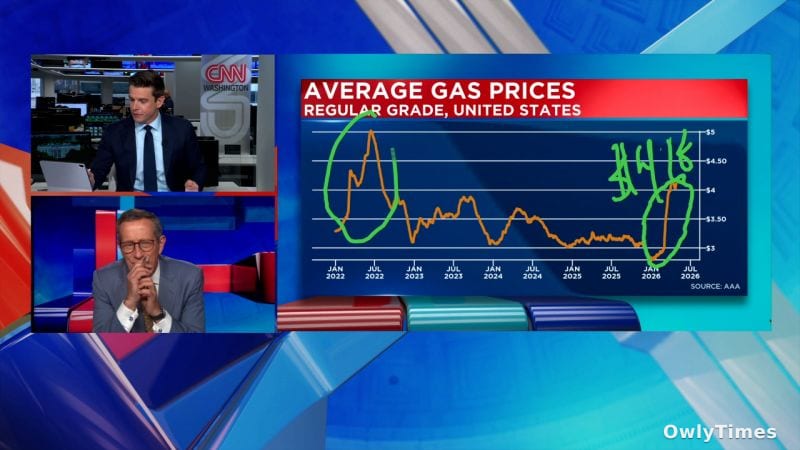

The duration of the conflict in Iran is rapidly becoming the primary variable in the American consumer’s cost-of-living equation. As geopolitical instability stretches on, the transmission mechanism from regional violence to domestic fuel prices has moved beyond mere speculation, settling into a persistent drag on macroeconomic health.
The Cost of Geopolitical Volatility
When observing the current energy landscape, one must follow the money from the oil markets, through the production decisions of OPEC, and directly into the retail price at the pump. The correlation is stark: as international tensions escalate, the market anticipates supply disruptions, which in turn elevates crude prices. These heightened levels are not merely temporary fluctuations but represent a structural impediment to economic expansion.
Richard Quest, an economic expert, highlights the cyclical damage being done to global and domestic markets. "Every moment that oil is at these elevated levels, the economies are slowing, inflation is getting worse, and it is a continuing deteriorating situation," Quest notes. This perspective, shared with Phil Mattingly on CNN’s "Inside Politics," underscores that the longer these elevated price floors remain, the more corrosive they become to broader price stability.
Why Inflationary Pressure Persists
The tension between the global oil supply and inflationary pressures creates a feedback loop that is difficult to break. Because energy costs serve as a foundational input for the transportation and production of almost all consumer goods, sustained high prices at the pump act as a hidden tax on the broader economy.
When oil remains at these elevated levels, it forces a contraction in disposable income for households. Simultaneously, businesses faced with rising logistics costs are often compelled to pass these expenses onto consumers to protect margins. The result is a slow-motion erosion of purchasing power that complicates the efforts of policymakers to curb inflation.
The Market's Deteriorating Outlook
The current situation suggests that investors should anticipate a period of sustained volatility. The interaction between OPEC supply quotas and the ongoing conflict in Iran means that the market lacks a clear path back to lower energy costs in the near term.
For the average American consumer, this means that the "deteriorating situation" described by analysts is likely to show up in the next series of monthly consumer price index reports. As you track your own household budget, the most reliable indicator to watch will be the crude oil spot price, which continues to act as the lead indicator for the retail gas prices you see at the pump each week.