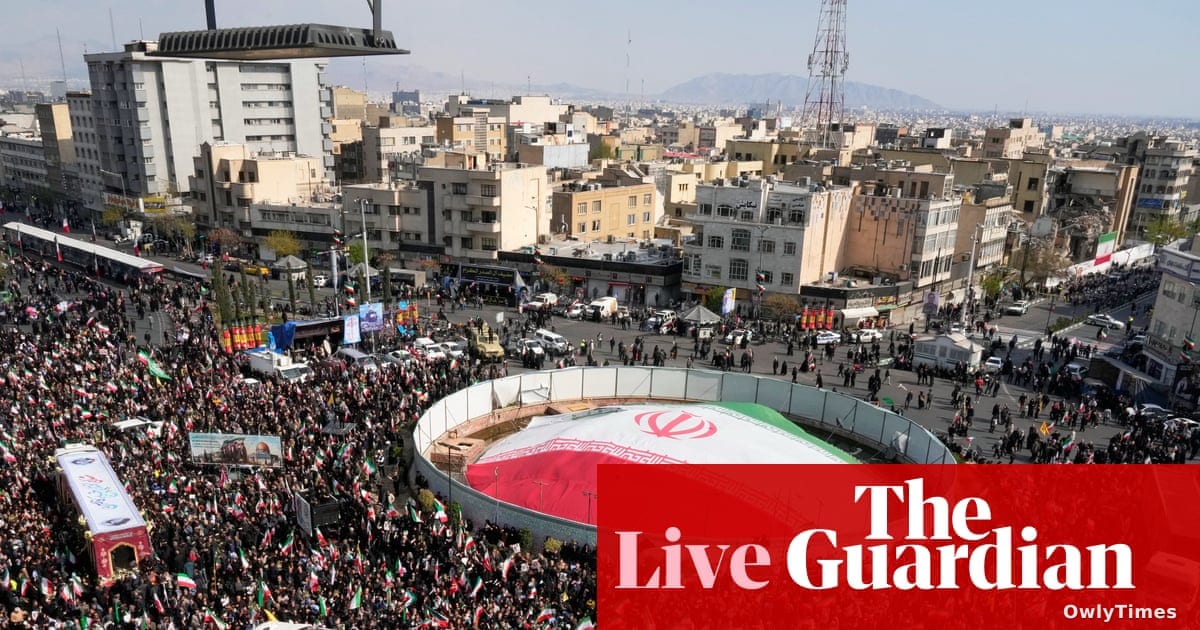

The timing of Iran’s President Masoud Pezeshkian’s open letter to the American people isn’t a gesture of goodwill, but a calculated attempt to fracture the domestic political coalition supporting the war in Iran. While framed as a plea for understanding, the letter – released hours before Donald Trump’s prime-time address – is a strategic communication designed to exploit fissures within the US electorate and sow doubt about the war’s justification. It’s a classic move in asymmetric warfare: when direct military advantage is limited, target the enemy’s internal cohesion. The letter’s emphasis on historical grievances, particularly the 1953 coup, isn’t about rewriting history, but about activating pre-existing anti-interventionist sentiment within the US, particularly on the left, and framing Iran as a victim of American overreach.
The core of Pezeshkian’s message – a distinction between the US government and the American people – is a carefully constructed appeal. It’s not a genuine belief in the inherent goodness of Americans, but a recognition that sustained public support for a protracted and costly conflict is far from guaranteed. This tactic mirrors strategies employed by Ho Chi Minh during the Vietnam War, who consistently sought to appeal directly to the American public, portraying his movement as a fight for national liberation against a foreign power. The parallel isn’t accidental; Iranian strategists are acutely aware of the historical parallels and the potential for replicating the anti-war movement that ultimately contributed to the US withdrawal from Vietnam. Who benefits from this messaging? Primarily, the Iranian regime, by attempting to delegitimize the war in the eyes of the American public and potentially constrain Trump’s options. Who loses? The Biden administration, if the narrative takes hold that the war is a misguided intervention, and the hawkish elements within the US foreign policy establishment who advocate for regime change.
Drawn from The Guardian.
The backdrop to this diplomatic maneuver is a rapidly escalating crisis on multiple fronts. The reported injury of Kamal Kharazi, a top Iranian official, in a strike on Tehran, coupled with continued Israeli strikes, signals a willingness to escalate despite the public messaging. The $3 million bounty offered by the US State Department for information on attacks on Iraq facilities is a further indication of the hardening US position. Simultaneously, the disruption of humanitarian aid shipments through the Strait of Hormuz – trapping over $100,000 of IRC aid – isn’t merely a consequence of the conflict, but a deliberate pressure tactic. David Miliband’s warning about a potential food security crisis highlights the broader regional implications, and the fact that 30% of the world’s fertilizer transits that waterway underscores the leverage Iran holds. This isn’t simply about military confrontation; it’s about economic coercion and the potential for destabilizing global markets.
Trump’s threats to withdraw from NATO, fueled by European reluctance to fully support his Iran policy, are a critical component of this unfolding drama. This isn’t simply a matter of pique; it’s a calculated attempt to redefine the US’s relationship with its allies and assert greater unilateral control over foreign policy. The historical precedent here is Charles de Gaulle’s withdrawal of France from NATO’s integrated military command in 1966, a move designed to assert French independence and pursue a more independent foreign policy. Trump is attempting a similar maneuver, albeit on a far grander scale, aiming to dismantle the post-World War II security architecture and replace it with a more transactional, US-centric system. The visit of NATO Secretary General Mark Rutte to Washington is a damage control exercise, but the underlying tensions remain. The benefit here accrues to Russia, which stands to gain from a weakened and divided NATO. The losers are European allies, who face increased uncertainty and the prospect of having to shoulder a greater share of the security burden.
The immediate political chess move to watch isn’t Trump’s speech tonight – the rhetoric is largely pre-ordained. It’s Mark Rutte’s response to Trump’s continued threats regarding NATO. Will he attempt to appease Trump with concessions on Iran, potentially undermining European solidarity? Or will he stand firm, risking a further deterioration in US-European relations and potentially accelerating the unraveling of the alliance? The answer to that question will reveal the true extent of Trump’s leverage and the future of transatlantic security. The carefully crafted letter from Tehran is merely a supporting move, designed to create space for that critical confrontation to play out.





