
The Hjortspring Boat: Rewriting the Narrative of Viking-Age Seafaring
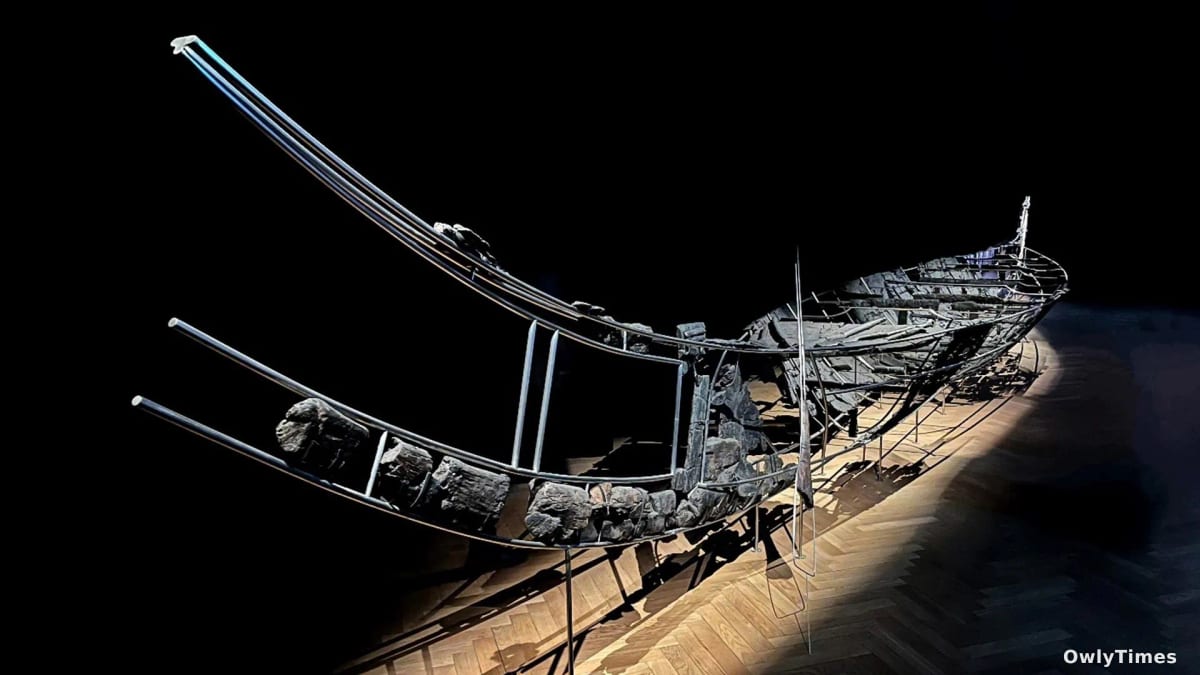
The discovery, over a century ago, of the Hjortspring boat – Scandinavia’s oldest known plank boat – has long been a cornerstone of our understanding of early seafaring in the region. But new analysis of the vessel’s caulking and cords isn’t simply adding detail; it’s fundamentally challenging the long-held assumption that these early Scandinavian maritime capabilities were limited to coastal travel. The identification of materials originating from regions east of Denmark signals a level of planning, logistical capability, and open-water navigation previously underestimated for the Iron Age warriors who sailed it over 2,000 years ago. This isn’t just about a boat; it’s about recalibrating our understanding of the origins of Viking expansion and the maritime skills that underpinned it.
Background & Context: From Coastal Raids to Baltic Voyages
For decades, archaeological interpretations of the Hjortspring boat, discovered in 1921-1922 in a bog near the town of Hjortspring in Denmark, focused on its size – approximately 19 meters long – and construction. It was understood to be a significant vessel, capable of carrying around 35 warriors. The prevailing theory centered on its use in localized conflicts, specifically the attack on the island of Als during the early Germanic Iron Age. However, this narrative largely confined its voyages to the relatively sheltered waters of the Danish straits and nearby coasts.
See the original sciencedaily.com story for the full account.
What’s often overlooked is the inherent difficulty in sourcing materials in Iron Age Scandinavia. Denmark, while possessing some pine forests, lacked the abundant, high-quality pine needed for large-scale pitch production. Similarly, the specific animal fats used in the caulking wouldn’t have been readily available locally in the quantities required. This reliance on imported materials points to established trade routes or, more intriguingly, deliberate expeditions to acquire these resources. Previous research hinted at connections with regions further afield, but the new chemical analysis provides concrete evidence, shifting the focus from opportunistic scavenging to purposeful procurement. This represents a shift from viewing the Hjortspring boat as a tool of localized warfare to recognizing it as a component of a broader, more ambitious maritime strategy.
Unpacking the Evidence: Pine Pitch, Animal Fat, and a Planned Expedition
The recent breakthrough stems from meticulous analysis of the ancient caulking and cords. Researchers identified traces of pine pitch and animal fat – crucial components for waterproofing and preserving the wooden hull. Crucially, the isotopic signatures of these materials indicate their origin lies in pine-rich regions along the Baltic Sea, east of Denmark. This isn’t a minor detail. The distance involved suggests a deliberate voyage, not a chance encounter. The warriors who commissioned and sailed the Hjortspring boat weren’t simply raiding nearby settlements; they were undertaking a planned mission to secure essential shipbuilding materials.
The significance here is the scale of the undertaking. Acquiring sufficient pine pitch and animal fat would have required significant manpower, logistical planning, and a vessel capable of navigating open water. It challenges the notion of early Scandinavian seafaring as primarily coastal and riverine. While the Hjortspring boat wasn’t a longship in the later Viking tradition, it demonstrates a clear capacity for extended voyages and a willingness to venture beyond familiar shores. The fact that this capability existed centuries before the traditional Viking Age (roughly 8th-11th centuries) is particularly noteworthy.
What This Means: Reassessing the Roots of Scandinavian Maritime Power
The implications of this discovery are far-reaching. For archaeologists, it necessitates a re-evaluation of the technological and logistical capabilities of Iron Age Scandinavian societies. It suggests a more sophisticated understanding of shipbuilding, navigation, and resource management than previously acknowledged. For historians, it forces a reconsideration of the origins of Scandinavian expansion. The traditional narrative often begins with the Viking Age, but the Hjortspring boat suggests that the foundations for this expansion – the maritime skills and the willingness to explore – were laid much earlier.
The public perception of the Vikings as fearless seafarers is well-established, but this research reveals that those skills weren’t born fully formed. They evolved over centuries, building on earlier innovations and experiences. For policymakers and cultural heritage managers, this underscores the importance of continued archaeological research and the preservation of these invaluable historical resources. The boat itself, currently housed at the National Museum of Denmark, becomes even more significant as a tangible link to a pivotal moment in Scandinavian history. A potential tension arises, however, in interpreting the purpose of the voyage. Was it purely for resource acquisition, or did it also serve as a reconnaissance mission, paving the way for future raids and settlements?
Looking Ahead: Charting New Courses in Scandinavian History
Future research will undoubtedly focus on refining the dating of the materials and pinpointing the precise origin of the pine pitch and animal fat. Further analysis of the boat’s construction techniques and the weaponry found within could provide additional clues about the warriors who sailed it and their motivations. What should readers watch for next? The development of more sophisticated isotopic analysis techniques will allow for even more precise sourcing of materials, potentially revealing further connections to distant regions.
The possibility of discovering similar vessels or archaeological sites along the Baltic Sea coast could corroborate these findings and provide a more complete picture of early Scandinavian maritime activity. Ultimately, the Hjortspring boat is prompting a fundamental reassessment of the narrative surrounding the origins of Scandinavian seafaring and the roots of the Viking Age. It’s a reminder that history is rarely a linear progression, but rather a complex tapestry woven from centuries of innovation, adaptation, and exploration.