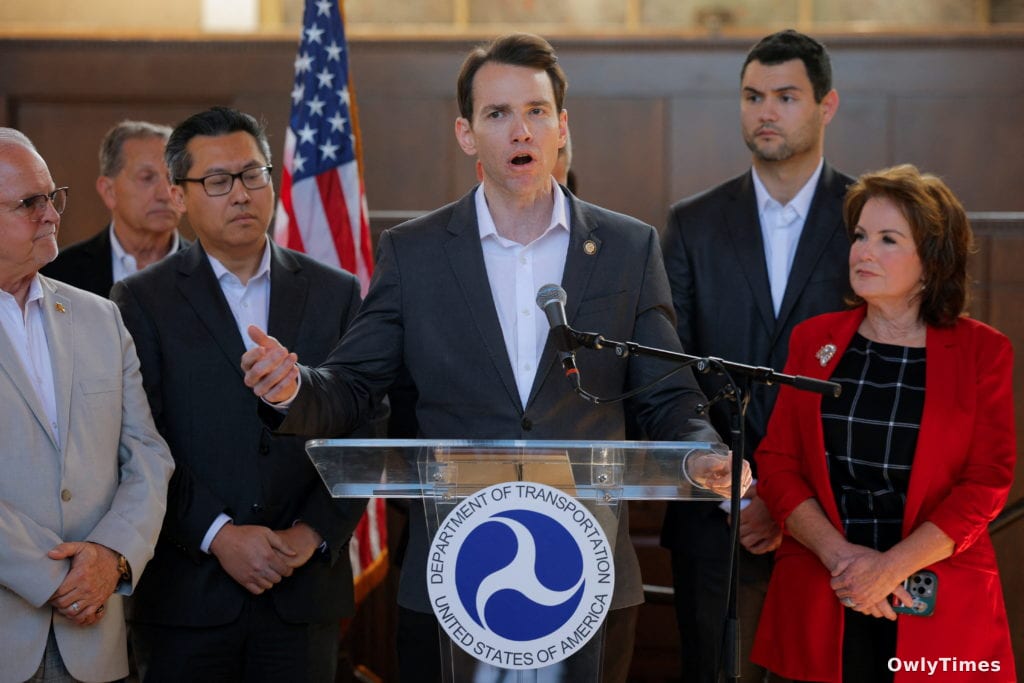

The Calculus of Defiance: Kiley and the Escalating Redistricting War
The political maneuvering of Kevin Kiley, a Republican representative from California, isn’t simply about saving his seat; it’s a calculated demonstration of independence within a rapidly fracturing party, and a direct response to the escalating weaponization of redistricting. While many incumbents facing unfavorable maps quietly adjust or seek alternative paths, Kiley’s public defiance – simultaneously attacking Gavin Newsom and occasionally even Donald Trump – isn’t a sign of political desperation, but a strategic positioning. It’s a high-risk gambit designed to appeal to a shrinking center and signal a willingness to operate outside the increasingly rigid demands of both party wings. The core calculation is simple: in a district reshaped by partisan warfare, establishing a personal brand of contrarianism might be the only viable path to survival.
From Texas Trigger to California Counterpunch
The current situation stems directly from a tit-for-tat escalation initiated in Texas. Following Donald Trump’s explicit urging, Texas Republicans aggressively redrew congressional maps to solidify their majority, a move widely seen as a blatant power grab. This wasn’t a novel tactic – partisan gerrymandering has been a feature of American politics for centuries – but the direct presidential involvement and the sheer scale of the changes signaled a new level of aggression. California Democrats, under Gavin Newsom’s leadership, responded in kind, enacting their own redistricting plan that significantly altered the landscape for Republican incumbents like Kiley. His district, as the Associated Press reports, has been fractured into six separate pieces, effectively dismantling his existing political base. This isn’t merely about fairness; it’s about leveraging the control of mapmaking to maximize partisan advantage, a practice with deep roots in American history. Consider the 1812 gerrymandering in Massachusetts, orchestrated by Elbridge Gerry – the very term “gerrymander” originates from this event – demonstrating that the pursuit of partisan advantage through map manipulation is a longstanding tradition.
Original reporting: PBS.
Who Benefits and Who Loses in the Redistricting Fallout?
The immediate losers are, predictably, incumbents like Kevin Kiley caught in the crossfire. The reshaped maps force him to either run in a district where he lacks established support, challenge a fellow Republican, or seek another office. However, the broader beneficiaries are the parties themselves. For Democrats, the California redistricting plan aims to increase their congressional delegation, bolstering their national power. For Republicans, the initial moves in Texas were intended to do the same. Beyond the parties, political consultants and legal firms specializing in redistricting stand to profit handsomely from the ensuing legal battles and campaign strategizing. The real long-term loser, however, is the principle of representative democracy. When electoral boundaries are dictated by partisan calculations rather than geographic coherence or community interests, voter trust erodes and the legitimacy of the political system is undermined. The current conflict mirrors the post-2010 redistricting cycle, following the Republican sweep of state legislatures, which led to a decade of heavily gerrymandered maps across the country.
Kiley’s Balancing Act: Appealing to a Disenfranchised Electorate
Kevin Kiley’s strategy of simultaneously criticizing both Donald Trump and Gavin Newsom is a deliberate attempt to carve out a niche among voters disillusioned with the extremes of both parties. His opposition to Trump’s tariffs, while seemingly counterintuitive for a Republican, could appeal to business owners and moderate voters concerned about economic impacts. Similarly, his continued attacks on Newsom and the high-speed rail project resonate with conservative voters in his district. This isn’t necessarily a reflection of genuine ideological disagreement, but a pragmatic calculation to broaden his appeal in a reshaped district. The risk, of course, is alienating core supporters within either party. However, Kiley appears to be betting that the potential reward – attracting a critical mass of independent and moderate voters – outweighs the risk of backlash. This approach is reminiscent of the “New Republican” movement of the 1970s, which sought to appeal to a broader electorate by embracing moderate positions on social issues.
The Next Chess Move: Will Kiley Run, and Against Whom?
Kevin Kiley is scheduled to announce his reelection plans on Monday. The crucial question isn’t simply if he will run, but against whom. Will he challenge a fellow Republican in a newly drawn district, potentially triggering a divisive primary battle? Or will he seek another office, perhaps a state-level position, to avoid a difficult House race? The answer will reveal the extent to which Kiley is willing to double down on his strategy of defiance. More broadly, the political chess move to watch is how Democrats respond to Kiley’s positioning. Will they attempt to portray him as an opportunist, or will they elevate his criticisms of Trump to further fracture the Republican party? The outcome of this redistricting war, and Kiley’s role within it, will have significant implications for the balance of power in Congress and the future of partisan politics in California.





