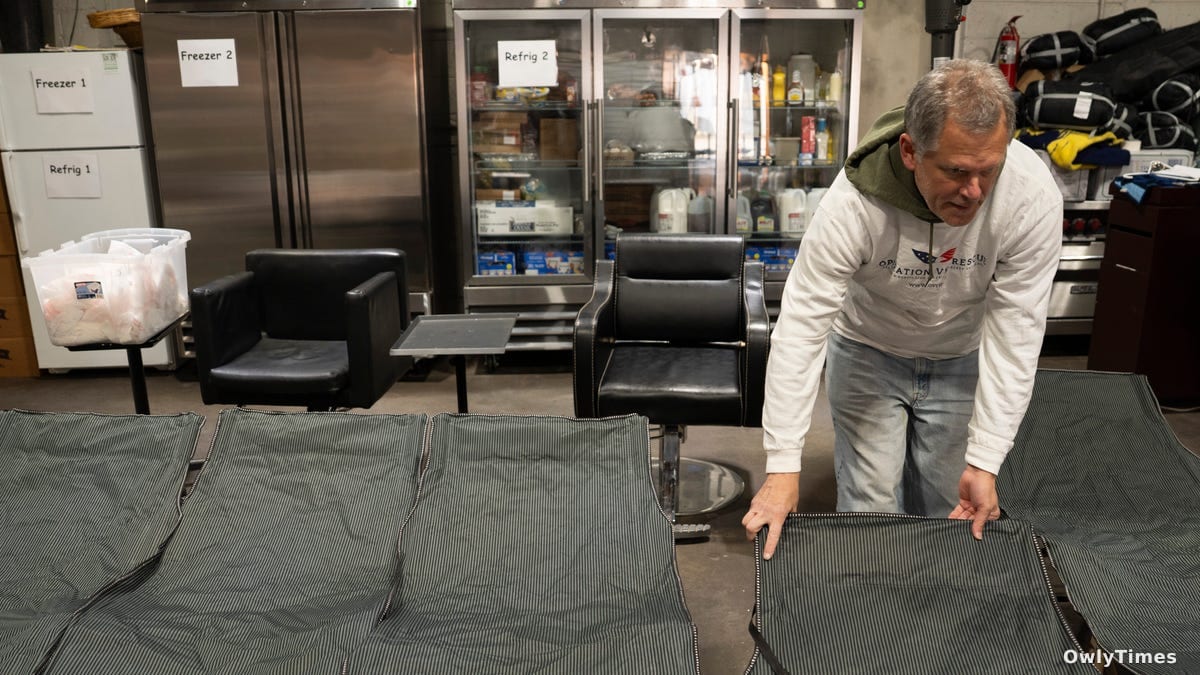

The strategic calculation driving the flurry of activity at Knoxville City Hall isn’t about warming centers or zoning codes, it’s about shifting the locus of responsibility for social safety nets – and the political risk that comes with them. While presented as compassionate responses to recent severe weather, the proposals from Councilmembers Matthew DeBardelaben and Amelia Parker represent a subtle but significant attempt to broaden the base of actors involved in addressing homelessness, effectively diffusing accountability away from solely city-funded programs. This isn’t simply about helping people stay warm; it’s about managing the political fallout when those systems inevitably fall short.
The two proposals, slated for discussion on March 3rd, operate on distinct but complementary tracks. The first, a resolution recognizing existing efforts and exploring expansion of warming/cooling center access based on wind chill and heat index, is a relatively low-risk maneuver. It aligns Knoxville with peer cities like Chattanooga, Memphis, Murfreesboro, and Nashville, framing the change as a matter of regional consistency rather than a radical departure. Who benefits here is the Knoxville-Knox County Office of Housing Stability, receiving validation of its work and a potential boost in resources. Who loses, potentially, is the city itself, as expanding eligibility criteria inevitably increases operational costs and demands on existing infrastructure. The resolution’s language – “explore” opening centers – is carefully chosen, offering plausible deniability if budgetary constraints or logistical hurdles prevent full implementation.
The second proposal, to alter zoning codes to allow private citizens to open shelters, is the more ambitious – and politically fraught – of the two. Modeled after a rule in Louisville, it seeks to leverage private charity to fill gaps in public provision. This echoes a historical pattern dating back to the English Poor Laws, where responsibility for the destitute was initially decentralized and reliant on local parishes and private benefactors. However, that system was notoriously uneven and prone to abuse, a lesson often overlooked in contemporary calls for “community-based solutions.” The benefit here accrues to those advocating for limited government intervention, and potentially to private entities willing to take on the responsibility – assuming they can navigate the bureaucratic hurdles of zoning and permitting. The potential losers are the unhoused population themselves, who may find themselves subject to the varying standards and conditions imposed by private shelters, lacking the oversight and accountability of publicly funded facilities.
This piece references the knoxnews.com report.
The parallel delay in the Knox County Commission’s vote on Andy Fox’s proposed gun access lawsuit policy reveals a similar dynamic: a reluctance to fully commit to a potentially costly and divisive policy. Commissioner Fox’s proposal, ostensibly aimed at protecting gun rights, quickly revealed itself to be narrowly focused on a single case – the East Tennessee Historical Society – and lacked a clear justification for broader application. The pushback from Commissioners like Larsen Jay, who advocated for utilizing existing enforcement mechanisms, underscores a broader tension within the Commission: a desire to avoid unnecessary regulation and potential legal challenges. The postponement, supported by almost all members, demonstrates a prioritization of political expediency over ideological fervor. This is a classic example of “kicking the can down the road,” deferring a difficult decision to avoid alienating key constituencies.
The junior commissioner program, highlighted in this week’s dispatch, offers a counterpoint to the prevailing cynicism. Engaging young people in the political process, as demonstrated by the interactions with students from Knox County high schools, represents a genuine attempt to foster civic participation and build a more informed electorate. However, even this seemingly positive development is tinged with a degree of strategic calculation. Cultivating future leaders who are invested in the system serves to legitimize the existing power structures, even as those structures are being subtly reshaped by the proposals outlined above.
The political chess move to watch next isn’t the vote on the warming center resolution – that’s largely a formality. It’s the response from the Knoxville-Knox County Planning Commission to the zoning code proposal. Will they embrace the idea of expanding private shelter options, or will they raise concerns about safety, regulation, and equitable access? Their recommendation will reveal whether the Councilmembers’ gambit is a genuine attempt to address homelessness, or simply a calculated effort to shift the burden – and the blame – elsewhere.





