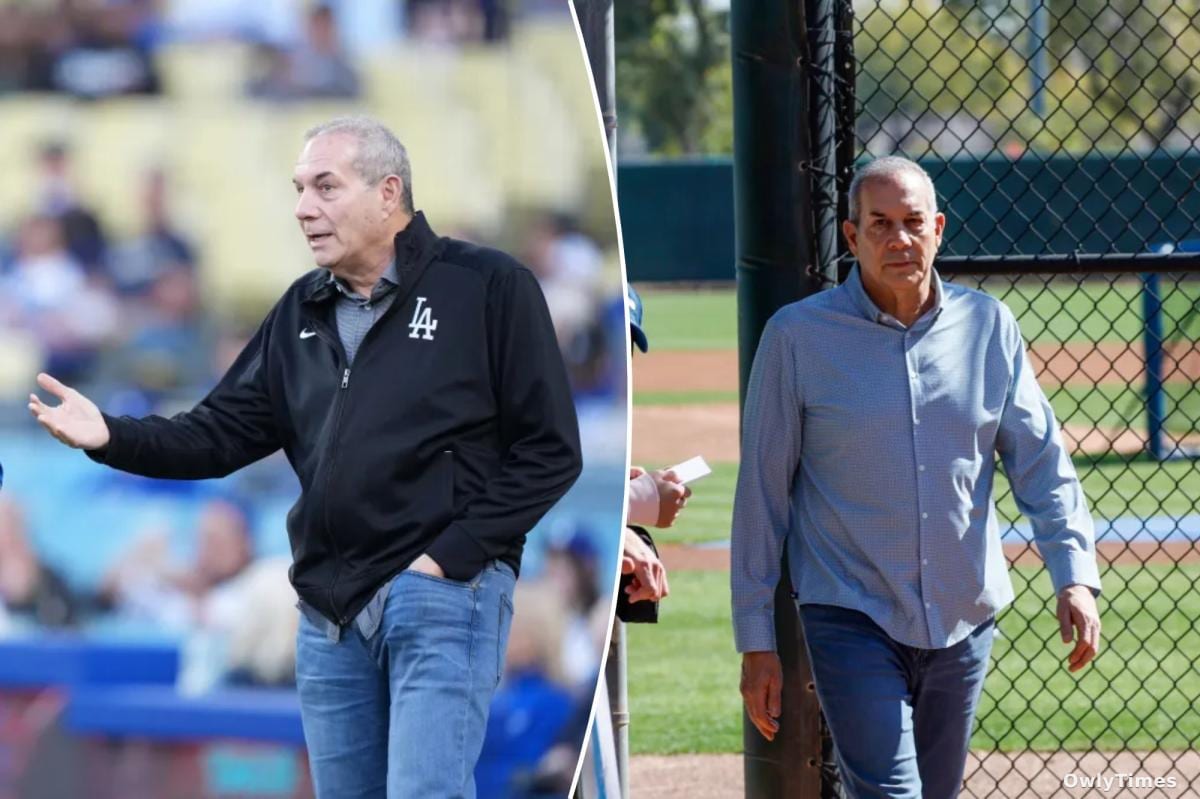

A $3.7 Billion Synergy Play: The Lakers’ New Business Chief Signals a Shift in Revenue Strategy
The Los Angeles Lakers’ appointment of Lon Rosen as president of business operations isn’t simply a personnel change; it’s a calculated move signaling a deeper integration of business strategy between the Lakers and the Los Angeles Dodgers, a combined enterprise valued at an estimated $3.7 billion. While the departure of 30-year veteran Tim Harris marks the end of an era, Rosen’s hiring, announced Thursday, immediately focuses attention on how Lakers owner Mark Walter intends to leverage cross-ownership for increased revenue generation. Follow the money: Walter’s dual control of both franchises isn’t about passion for sports, it’s about identifying and exploiting synergistic opportunities, and Rosen is the key to unlocking them.
Rosen’s track record with the Dodgers, where he served as executive vice president and chief marketing officer since 2012, demonstrates a clear ability to monetize a major league brand. During his tenure, the Dodgers saw a consistent year-over-year increase in revenue, fueled by premium seating, strategic sponsorships, and an aggressive digital marketing strategy – a model the Lakers are now likely to emulate. While specific revenue figures for the Dodgers under Rosen’s leadership aren’t publicly broken down, the franchise’s overall valuation has increased by an estimated 300% since 2012, outpacing the league average of 220% for comparable teams. This isn’t coincidence; it’s a direct result of focused business development.
This piece references the the New York Post report.
The appointment is particularly noteworthy given Walter’s recent acquisition of majority ownership of the Lakers from the Buss family in October. This wasn’t a sentimental handover; it was a financial transaction predicated on maximizing the Lakers’ commercial potential. Jeanie Buss’s statement emphasizing Rosen’s “deep understanding of both sports and entertainment” isn’t simply polite praise. It’s an acknowledgement that the future of Lakers revenue won’t solely rely on on-court success, but on creating immersive fan experiences and expanding brand reach – areas where Rosen has demonstrably excelled. The Lakers’ current revenue, estimated at $550 million annually, lags behind franchises like the New York Knicks ($650 million) and Golden State Warriors ($700 million); closing that gap is now Rosen’s primary directive.
From Intern to Integrator: Rosen’s Lakers Roots and the Magic Johnson Connection
Beyond the Dodgers’ success, Rosen’s history with the Lakers provides a crucial layer of understanding. His career began as an intern with the team while in college, evolving into a front office executive in the 1980s – a period of unparalleled Lakers dominance. This institutional knowledge, combined with his subsequent experience as an agent and business executive representing players like Magic Johnson, positions him uniquely to navigate the complex relationship between players, management, and sponsors. The fact that Rosen has also been a business partner with Johnson isn’t merely a footnote; it suggests a pre-existing rapport and shared vision for leveraging star power to drive revenue. This is particularly relevant as the Lakers continue to build around LeBron James and other high-profile players.
The transition from Harris, who oversaw the business side for three decades, is being framed as a natural progression. However, the timing is suspect. Harris’s departure comes immediately after Walter’s acquisition, suggesting a deliberate restructuring to align the Lakers’ business operations with Walter’s broader strategy. While Buss acknowledged the difficulty of replacing Harris, the swiftness with which Rosen was appointed indicates a pre-planned succession. This isn’t about honoring a legacy; it’s about implementing a new vision. The Lakers’ sponsorship revenue, currently estimated at $150 million annually, is ripe for expansion, particularly in the areas of digital partnerships and international markets – areas where the Dodgers have seen significant growth.
What This Means for Your Wallet
The appointment of Lon Rosen isn’t likely to result in immediate changes to ticket prices or merchandise costs. However, expect a gradual shift towards more premium offerings, enhanced in-arena experiences, and a greater emphasis on data-driven marketing. This translates to more targeted advertising, personalized ticket packages, and potentially, increased costs for access to exclusive events and content. The long-term impact will be a more sophisticated, and potentially more expensive, Lakers experience. The key question for Lakers fans – and for investors watching Walter’s portfolio – is whether Rosen can successfully replicate the Dodgers’ revenue model without alienating the team’s loyal fanbase. Will the pursuit of increased profitability come at the expense of accessibility, or can Rosen deliver a win-win scenario for both the Lakers and their supporters? Watch for changes in the Lakers’ sponsorship portfolio over the next 12-18 months; the brands they attract – and the deals they secure – will be the clearest indicator of Rosen’s success.





