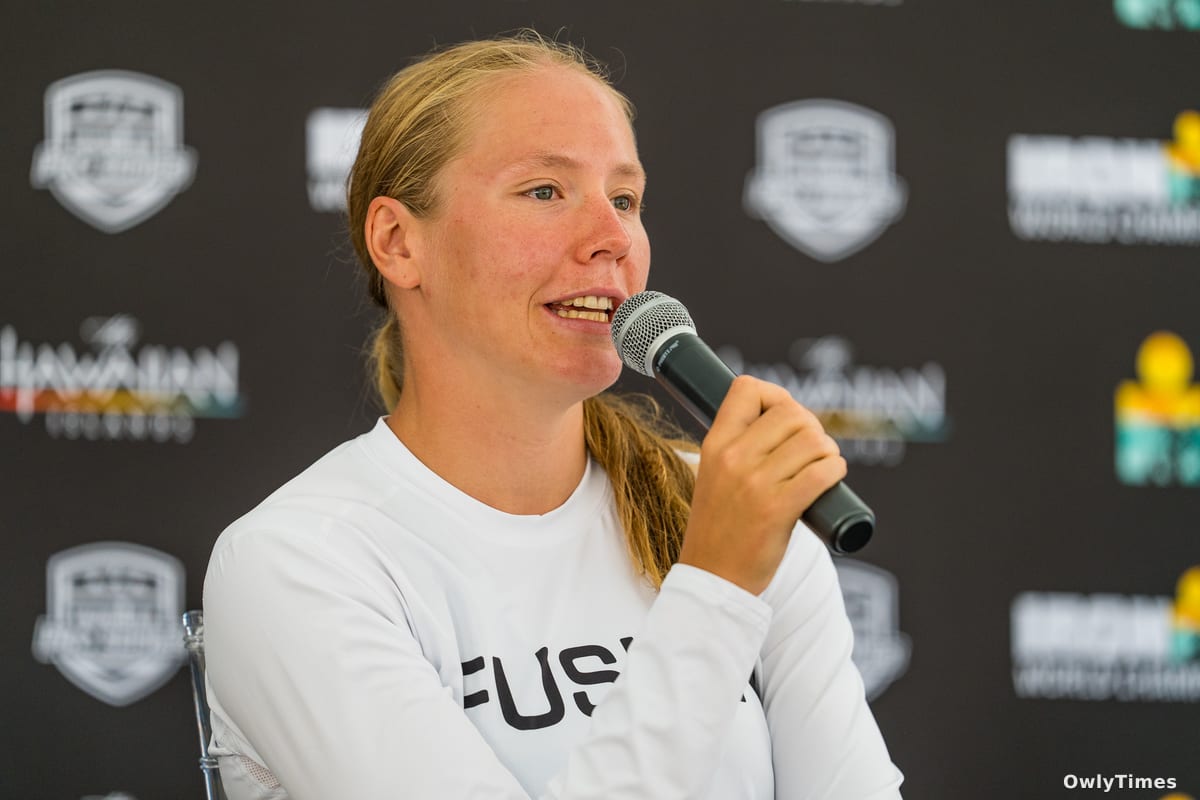

$250,000 is the estimated immediate financial shift for IRONMAN World Champion Solveig Løvseth, a figure that underscores a fundamental truth in professional endurance sports: performance isn’t solely about physical prowess, it’s about unlocking exponential economic opportunity. The recent deal between Løvseth and On, finalized after her historic win in Kona, reveals a carefully calculated game of risk, reward, and brand valuation, a dynamic increasingly common in the high-stakes world of triathlon. Follow the money, and a clear pattern emerges: world championships aren’t just athletic achievements, they’re inflection points in an athlete’s earning potential, forcing brands to reassess their investment strategies.
The story began before the race, with On offering Løvseth a contract with a deadline looming during race week. The 26-year-old Norwegian, known for her deliberate decision-making, opted not to sign, prioritizing focus on the competition itself. “I’m a person that needs some time making decisions, especially if I feel it is quite a big decision,” Løvseth explained, acknowledging the weight of a long-term commitment. She raced in the On Cloudboom Strike shoes, admitting she potentially forfeited earnings by not formalizing the agreement beforehand, a testament to her commitment to prioritizing performance over immediate financial gain. This initial hesitation, however, positioned her for a far more lucrative outcome.
Original reporting: slowtwitch.com.
The core tension here isn’t about Løvseth’s preference for On’s product—she “really liked” the shoes—but about controlling the negotiation. As her manager, Adam Acworth of Santara Group, bluntly states, “Once you become a world champion, it’s a completely different game.” Acworth, who also represents fellow Norwegian stars Kristian Blummenfelt and Gustav Iden, has honed a strategy of delaying sponsorship commitments until after a major victory, maximizing leverage. This approach isn’t universal; some brands prefer to invest before the win, hoping to capitalize on the marketing boost, but Acworth’s success with his athletes demonstrates the power of post-victory negotiation. The difference is stark: pre-win deals are about potential, post-win deals are about proven return.
Acworth’s experience is the key. He’s navigated these waters for two decades, understanding the nuanced valuations placed on athletes. For Løvseth, the process was slower, more deliberate, requiring a deeper level of trust-building with brands like Felt (a partnership renewed this summer) and Precision Hydration. This contrasts with Blummenfelt and Iden, who already had established relationships and a track record for sponsors to assess. The On deal, initially offering “big bonuses, big rollovers,” was ultimately signed after the win, unchanged from the pre-race offer. While Løvseth may have initially left money on the table, Acworth’s strategy unlocked a far greater potential for future earnings. The $125,000 Kona prize money is a footnote compared to the long-term value of the world champion title.
The immediate aftermath of the win was a whirlwind. Løvseth, initially without phone access, found herself thrust into a media frenzy, a stark reminder of the non-athletic demands of championship status. While overwhelming, this attention also provided an opportunity for self-reflection and a deeper appreciation of her accomplishment. “Now, talking so much about the race with different people, it makes it easier for me to process,” she shared, acknowledging the surreal nature of her victory. This shift from athlete to brand ambassador is a critical one, and Acworth is focused on building a sustainable sponsorship portfolio for Løvseth, prioritizing quality over quantity. He aims for six to eight “fully invested” partners, a strategy designed to build long-term revenue streams beyond race winnings and standard sponsorship fees.
Acworth’s long play isn’t just about securing deals; it’s about diversifying Løvseth’s income. He points to Blummenfelt and Iden as examples of athletes who have moved beyond traditional sponsorship models, creating multiple revenue streams. This is particularly important in a sport where careers can be short-lived and unpredictable. The financial transformation Løvseth experienced—going from considering a house purchase unattainable to potentially being able to buy one outright—highlights the magnitude of this shift. But it also raises a critical question: can Løvseth maintain her focus on performance amidst the demands of newfound fame and financial opportunity? Watch for her next race not just for athletic performance, but for how effectively she balances the pressures of being a world champion with the pursuit of continued success.

