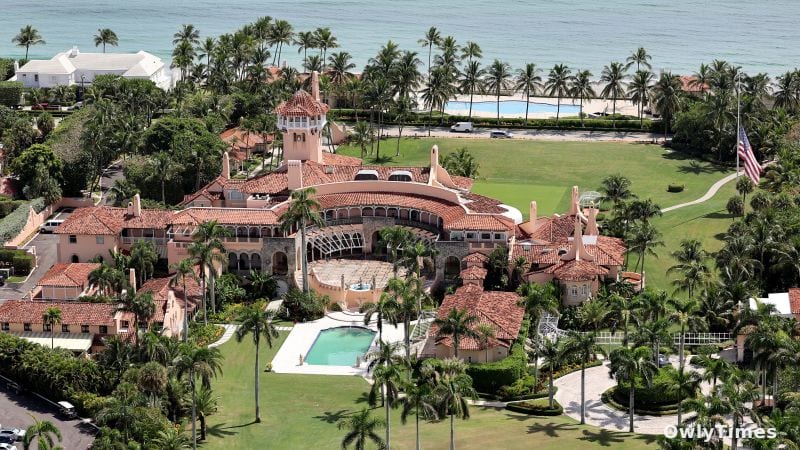

The escalating frequency of targeted attacks against high-profile political figures isn’t a series of isolated incidents; it’s a strategic realignment of American political conflict, shifting from the ballot box and legislative chambers to direct, and increasingly violent, confrontation. Sunday’s fatal shooting of an armed man attempting to breach the perimeter of Donald Trump’s Mar-a-Lago estate isn’t simply a security failure, but a predictable consequence of a political environment where the perceived stakes have risen to existential levels for a significant portion of the electorate. The incident, occurring just months after a life sentence was handed down for a separate assassination plot against Trump and following the killings of Melissa Hortman and Charlie Kirk, reveals a disturbing normalization of political violence as a potential tool for achieving political ends.
The immediate facts are stark: a White man in his early 20s, reported missing from North Carolina, penetrated the north gate of Mar-a-Lago around 1:30 a.m. ET carrying a shotgun and a fuel can. Palm Beach County Sheriff Ric Bradshaw confirmed the man raised the weapon towards law enforcement – two Secret Service agents and a deputy – prompting a fatal response. While President Trump and First Lady were at the White House, the incident underscores the vulnerability inherent in a post-presidency where official duties increasingly blend with private club membership. This is not a new concern; intelligence officials have long flagged Mar-a-Lago’s open access policy for paying members as a security risk, even with enhancements like snipers, bomb-sniffing dogs, and waterway patrols. The question isn’t whether security can be improved, but whether the inherent tension between a secure presidential presence and a functioning private club is resolvable.
Who benefits and who loses in this scenario is complex. Trump himself, while physically safe, benefits from a narrative of victimhood and external threat, reinforcing his base’s loyalty and potentially galvanizing fundraising efforts. The Secret Service, despite the incident occurring on their watch, receives validation of its need for resources and expanded authority. Conversely, the public loses faith in the stability of the political system, and the broader political discourse is further poisoned by fear and distrust. The most significant losers, however, are the principles of democratic debate and peaceful transfer of power, eroded each time violence is contemplated, let alone enacted, as a legitimate form of political expression. The fact that this incident follows the July 2024 assassination attempt during a campaign stop in Pennsylvania – a near miss – suggests a pattern of escalating aggression.
Based on the original CNN report.
Historically, periods of intense political polarization have often been accompanied by spikes in political violence. The late 1960s, during the Vietnam War and Civil Rights Movement, saw a surge in bombings, assassinations, and riots. The Reconstruction era following the Civil War was marked by widespread intimidation and violence against African Americans and their allies. While the specific ideologies and actors differ, the underlying dynamic remains consistent: a breakdown in shared norms and a belief that the political system is fundamentally illegitimate. The current moment, fueled by disinformation, social media echo chambers, and increasingly hostile rhetoric, bears unsettling similarities to these past periods. The speed with which the man was able to penetrate the perimeter – reaching within 20-30 yards of law enforcement – raises questions about the effectiveness of existing security protocols, and whether they are adequately prepared for a sustained increase in threats.
The swift response from officials – Attorney General Pamela Bondi coordinating with federal partners, White House Press Secretary Karoline Leavitt praising the Secret Service, and Secret Service Deputy Director Matthew Quinn traveling to Florida – is a standard playbook reaction. However, the administrative leave placed on the agents involved, while procedural, signals a degree of accountability and a recognition of the potential for systemic failures. The FBI’s investigation, focusing on the man’s background and motive, is crucial, but it’s unlikely to uncover a singular cause. The more pertinent question is not who pulled the trigger, but what conditions allowed this individual to believe that violence was a justifiable response.
The political chess move to watch next isn’t a policy change or a security upgrade, but the framing of this incident by key political actors. Will it be used to further inflame tensions and demonize opponents, or will it serve as a catalyst for a broader conversation about the corrosive effects of political polarization and the urgent need to restore a shared commitment to democratic norms? The answer to that question will determine whether Mar-a-Lago was an isolated incident, or a harbinger of things to come.





