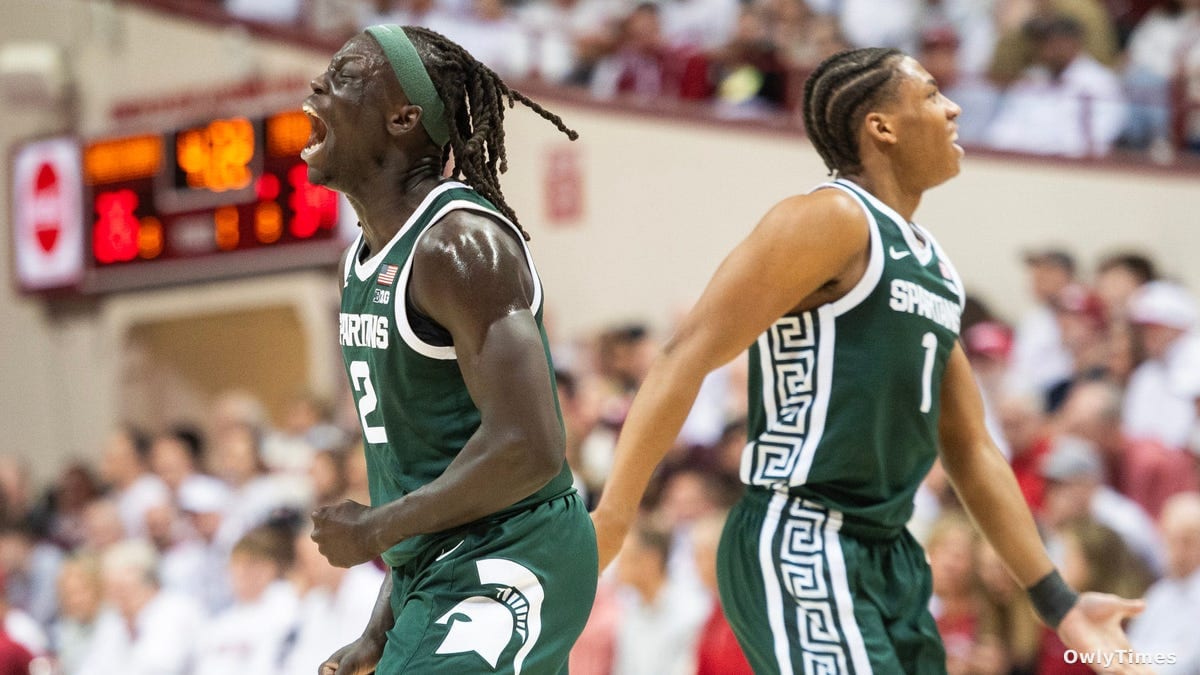

The air in Mackey Arena crackled with disbelief last Thursday. For seven long years, Michigan State hadn’t tasted victory on Purdue’s home court. Seven years of Boilermaker dominance, of Spartan frustration. Then, a stunning upset, 68-65, a seismic shift in the Big Ten landscape and a stark reminder: March is not about projections, it’s about momentum. And right now, Tom Izzo’s Spartans are surging at precisely the right time, a quiet force reshaping the narrative as March Madness looms just 13 days away. This isn’t just about a single win; it’s about a program built for this moment, a testament to the enduring power of coaching and a warning to anyone who underestimated the heart of the Midwest.
The bracketology world is in a frenzy, scrambling to adjust after a weekend of upsets that saw No. 8 Purdue stumble twice and Iowa State fall to Texas Tech. The margin for error has evaporated for bubble teams like Auburn and Indiana, forcing them to treat every remaining game like an elimination round. But beyond the frantic recalculations and the panicked pleas for resume-boosting wins, a more subtle story is unfolding: several teams, already comfortably projected for a tournament berth, are quietly building a case for higher seeds, and a deeper run. USA TODAY Sports is highlighting these “underrated” squads, and their analysis points to a fascinating trend – teams whose statistical profiles don’t quite match their perceived status. It’s a reminder that the eye test, while valuable, can be misleading, and that the numbers often tell a more complete story.
Source material: USA Today.
Take Michigan State, currently a projected No. 4 seed. Their KenPom ranking of No. 10 and NET ranking of No. 11 suggest a team capable of exceeding expectations. The win at Purdue wasn’t a fluke; they followed it up with a victory at Indiana, fueled by 21 points apiece from Jeremy Fears Jr. and Jaxon Kohler. These aren’t just names to remember for this tournament; they’re veteran pieces capable of leading a national championship run, supported by a defense that ranks sixth nationally on KenPom. Their 14-5 record in Quad 1 and Quad 2 games speaks volumes, and a potential date with Michigan on Sunday could propel them towards a 2-seed line before the Big Ten tournament in Chicago. The Spartans aren’t just making the tournament; they’re positioning themselves to make noise.
But Michigan State isn’t alone. Kansas, a blue-blood program with a history of March success, is also flying under the radar. Despite being a consistent No. 3 seed in projections, the Bill Self led Jayhawks are hitting their stride amidst the brutal competition of the Big 12 – arguably the best conference in college basketball this season. Since January 13th, they’ve won all but three games, including impressive victories over then-No. 13 BYU, then-No. 13 Texas Tech, then-No. 1 Arizona, and then-No. 5 Houston. Seven Quad 1 wins, tied for second-most in the Big 12, demonstrate their ability to compete with – and defeat – the nation’s elite. This isn’t a team peaking for the tournament; it’s a team that’s already playing at an elite level.
The story extends beyond the power conferences. Virginia, under Ryan Odom, is quietly assembling a remarkable season. Overshadowed by Duke’s dominance in the ACC, the Cavaliers boast a 25-4 record, a top-15 NET ranking, and a top-20 KenPom rating. Thijs De Ridder, averaging 16.0 points and 6.2 rebounds, leads a team that’s already secured more wins than they did all of last season under the previous coach. Odom’s impact is undeniable, and Virginia’s resurgence is a testament to the power of strong leadership and a cohesive team identity. Then there’s Alabama, navigating the complexities of the Charles Bediako eligibility case while simultaneously winning eight straight games, and Nebraska, a Cinderella story that started the season undefeated and, despite a recent stumble, remains a dangerous contender with a top-five ranked defense.
These teams aren’t just seeking a tournament bid; they’re seeking to redefine expectations. They represent a shift in the landscape, a challenge to the established order. The question now isn’t simply who will make the tournament, but how high these underrated teams can climb. Will the selection committee reward their consistent performance and strong statistical profiles? Or will they succumb to the allure of name recognition and perceived prestige? As Selection Sunday approaches, keep a close watch on these programs. Their success – or failure – will not only shape their own destinies but will also reveal a great deal about the values and priorities of the NCAA Tournament itself. Will the committee finally prioritize data-driven analysis over brand recognition, or will the old guard continue to hold sway? That’s the story worth watching as March Madness truly begins.