
A Week of Breakthroughs and Unanswered Questions: Science Pushes Boundaries on Earth and Beyond
This week’s scientific headlines aren’t just a collection of isolated discoveries; they represent a fascinating convergence of efforts to understand fundamental processes – from the origins of life to the very nature of aging and the universe itself. While each finding is significant on its own, taken together they highlight a crucial trend: science is increasingly tackling problems previously considered intractable, even as it reveals the depth of our remaining ignorance. The sheer breadth of these advancements – spanning astrobiology, cardiology, neuroscience, and astrophysics – underscores a period of rapid innovation, but also a growing awareness of the complexity inherent in the questions we’re asking.
Decoding the Brain: Alzheimer’s and the Promise of Reversal
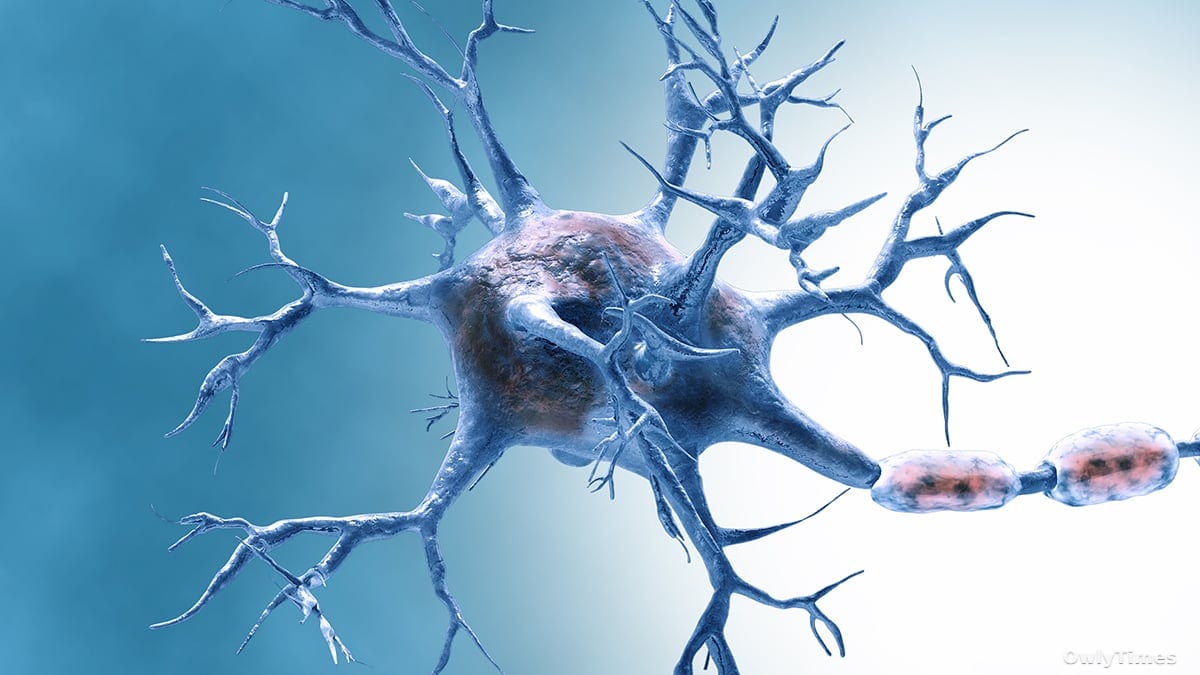
The link between Alzheimer’s disease and disruptions in the brain’s “replay mode” is a particularly poignant finding. A new study in mice, led by neuroscientist Caswell Barry, reveals that the brain doesn’t simply stop consolidating memories in Alzheimer’s; the process itself becomes fundamentally flawed. As Barry explains, “What’s striking is that replay events still occur – but they’ve lost their normal structure. It’s not that the brain stops trying to consolidate memories; the process itself has gone wrong.” This is a critical distinction. Previous research focused heavily on amyloid plaques and tau tangles, but this suggests that targeting the mechanism of memory consolidation, rather than just the physical manifestations of the disease, could be a more effective therapeutic strategy.
This article draws on reporting from ScienceAlert.
Simultaneously, research into the protein DMTF1 offers a tantalizing glimpse of potential reversal. Increasing DMTF1 levels in the lab has been shown to restore neuron production, effectively reversing aspects of brain aging. The fact that DMTF1 is more abundant in younger, healthier brains isn’t surprising – neurogenesis naturally declines with age – but the ability to induce its production is a major step forward. What’s often overlooked is the sheer difficulty of delivering therapies to the brain, and the potential for off-target effects. Both of these findings, while promising, are still in early stages and require extensive further research.
The Search for Life and the Mysteries of the Cosmos
The news from Mars is equally compelling. A NASA-led analysis concludes that organic molecules detected on the Red Planet are difficult to explain through non-biological processes. While this doesn’t constitute proof of life, it significantly strengthens the argument that Mars could have once harbored, or even still harbors, microbial life. The researchers exhaustively considered various abiotic sources – interplanetary dust, meteorites, atmospheric processes – but none could fully account for the observed abundance of these molecules. This signals a shift in the conversation, moving beyond simply detecting organic molecules to seriously considering their potential biological origin.
Further expanding our understanding of the universe, a new model proposes that the Milky Way’s galactic center may not harbor a supermassive black hole at all, but rather a dense concentration of fermionic dark matter. Astrophysicist Carlos Argüelles posits that this dark matter concentration and the galaxy’s dark matter halo could be “two manifestations of the same, continuous substance.” This is a radical departure from conventional wisdom, and challenges our fundamental understanding of galactic formation and the nature of dark matter, which constitutes roughly 85% of the universe’s mass. The implications are profound, potentially requiring a re-evaluation of our cosmological models.
Medical Innovations: From Cholesterol to Sleep Apnea
Beyond the grand challenges of astrobiology and neuroscience, significant progress is being made in more immediate medical applications. The development of TLC-2716, a compound that reduces “remnant” cholesterol by up to 61% in clinical trials, represents a potential breakthrough in cardiovascular disease treatment. Remnant cholesterol, a particularly harmful type, has been difficult to target with existing therapies. The fact that TLC-2716 is orally administered, safe, and well-tolerated adds to its potential appeal, offering “patient convenience, reduced cost, and the potential to combine with other lipid-lowering therapies.”
Finally, a 93% success rate in human trials for a new implantable electrode treatment for sleep apnea offers hope to millions suffering from this debilitating condition. Developed by Simon Carney and his team, the procedure is minimally invasive and has proven effective even in patients previously unsuitable for traditional surgery. This highlights the power of targeted, minimally invasive interventions in addressing complex medical problems.
What This Means: A Landscape of Opportunity and Uncertainty
These diverse breakthroughs have implications for a wide range of stakeholders. For the public, they offer hope for future treatments and a deeper understanding of our place in the universe. For the pharmaceutical industry, they represent potential new markets and opportunities for innovation. For policymakers, they underscore the importance of continued investment in scientific research. However, it’s crucial to acknowledge the inherent uncertainties. Translating lab results into effective therapies is a long and arduous process, and the true nature of dark matter and the potential for life on Mars remain open questions. The high success rate of the sleep apnea treatment is encouraging, but long-term data is needed to assess its durability and potential side effects.
Looking Ahead: The Next Frontiers
The coming months and years will be critical for building on these discoveries. We should watch for further research into the mechanisms underlying Alzheimer’s disease, particularly efforts to translate the DMTF1 findings into human therapies. Continued exploration of Mars, with a focus on searching for biosignatures, will be paramount. The debate surrounding the Milky Way’s galactic center will likely intensify, with astronomers seeking observational evidence to support or refute the dark matter hypothesis. And the development of TLC-2716 will progress through larger clinical trials, potentially paving the way for a new generation of cholesterol-lowering drugs. Ultimately, this week’s headlines serve as a powerful reminder that science is a dynamic and evolving process, constantly pushing the boundaries of our knowledge and challenging our assumptions about the world around us.