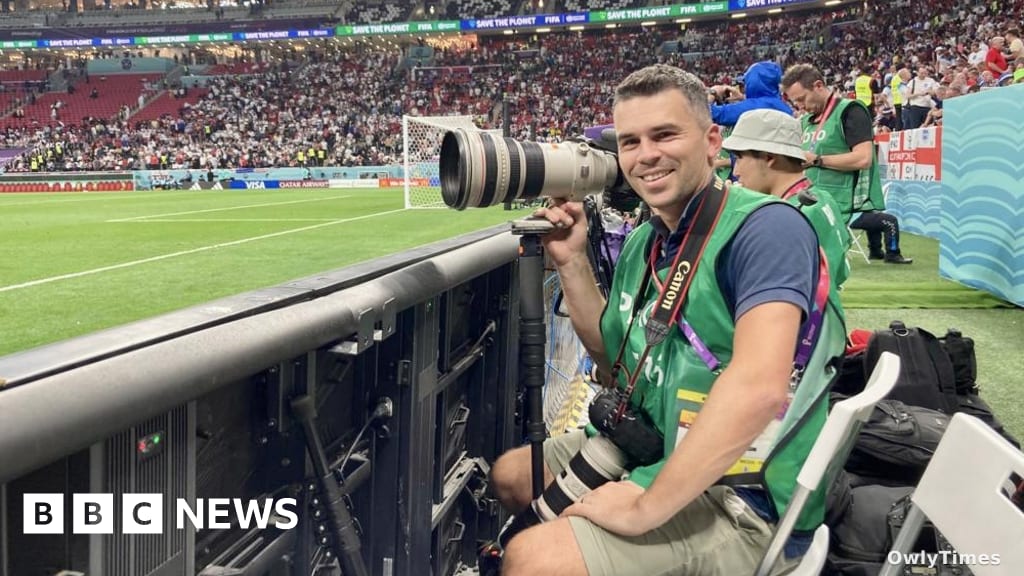

The roar was deafening, a wave of pure Argentinian joy crashing over Simon Stacpoole as Lionel Messi was hoisted onto the shoulders of his teammates, the World Cup gleaming under the Qatari lights. Stacpoole, a sports photographer with two decades of experience, wasn’t caught up in the euphoria as a fan. He was working. Squashed behind the goal, battling for position in the chaotic scrum of photographers, he was tasked with capturing the image – the one that would define a nation’s triumph. And yet, as he told the West Midlands recently, the absurdity of the situation struck him: “It’s ridiculous at times when you’re sitting there with the best seats in the house…and you’re being paid to be there.” This isn’t just a story about a photographer’s career; it’s a window into the evolving relationship between access, spectacle, and the very human cost of documenting our cultural obsessions.
The Privilege Paradox of Sports Photography
Stacpoole’s sentiment cuts to the heart of a paradox inherent in the world of professional sports photography. While the industry is often romanticized – a life of travel, adrenaline, and proximity to greatness – it’s built on a foundation of intense competition and, increasingly, precarious financial footing. The freelance model, which Stacpoole has navigated for 20 years, is the norm, meaning consistent work isn’t guaranteed. He averages four football matches a week, a grueling schedule that demands relentless dedication. This contrasts sharply with the public perception of glamorous assignments at events like the World Cup or the Olympics, where the demand for photographers far outweighs the available accreditation. In 2022, FIFA received over 13,000 applications for media accreditation for the Qatar World Cup, granting access to just over 3,000. That’s a 77% rejection rate, highlighting the sheer difficulty of simply getting to these iconic moments, let alone being paid to capture them. The “best seat in the house” comes at a price, and it’s not always monetary.
Based on the original the BBC report.
Beyond the Finish Line: Grief and the Pressure to Perform
The story of Stacpoole’s career isn’t solely about navigating logistical challenges. It’s about the emotional weight carried by those tasked with freezing time during moments of profound human experience. He recounts the 2012 London Olympics, specifically the night of the 100m final, as the most nerve-wracking of his career. The pressure wasn’t just about capturing Usain Bolt’s historic run; it was compounded by the recent loss of his father and the overwhelming grief he was processing. “I’ve got 9.5 seconds to get my act together,” he remembers thinking, the weight of expectation pressing down on him. This reveals a side of sports photography rarely discussed: the vulnerability of the documentarian, the need to compartmentalize personal pain to deliver a professional product. It’s a reminder that behind every iconic image is a human being grappling with their own life, their own story.
The Ghost Games and the Shifting Landscape of Access
Stacpoole’s career has spanned a period of significant change in the sports world, and the pandemic era brought a particularly stark illustration of this. He photographed matches during the early stages of COVID-19, when stadiums were empty and the atmosphere was eerily silent. The experience, he notes, was a stark contrast to the usual vibrant energy of a live game. This period also highlighted the increasingly restricted access afforded to photographers. While the demand for visual content has exploded – fueled by social media and the 24/7 news cycle – the ability to freely capture those moments has often diminished. Leagues and teams are increasingly controlling the narrative, limiting access to prime shooting positions and dictating the terms of image usage. This tension between access and control is a defining feature of the modern sports media landscape.
What Does This Mean for the Future of Sports Imagery?
Simon Stacpoole’s story isn’t just about one photographer’s journey; it’s a microcosm of the broader challenges and contradictions facing the industry. The rise of AI-generated imagery poses a new threat, potentially devaluing the skill and artistry of human photographers. Simultaneously, the demand for authentic, emotionally resonant content remains high. The question now is whether the industry can find a sustainable model that values both the technical expertise and the human element of sports photography. Will photographers continue to be squeezed by shrinking budgets and increasing restrictions, or will a new appreciation for their unique perspective emerge? The future of sports imagery may depend on whether we, as a culture, recognize the value of having someone there to capture not just the victory, but the weight of the moment, the grief, and even the absurdity of being paid to witness history unfold.

