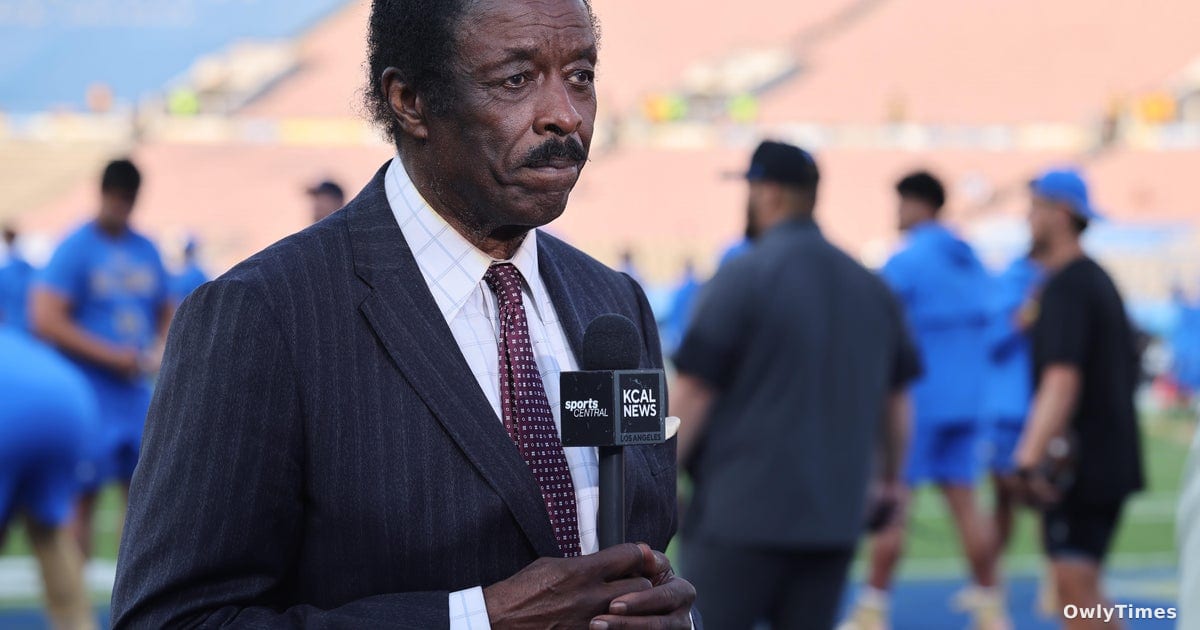

The Rose Bowl throbbed with anticipation on September 12, 2025, a typical Saturday for UCLA Bruins football. But for Jim Hill, it wasn’t just another game. It was a marker – a visible, roaring testament to five decades spent chronicling the heart and soul of Los Angeles sports. Fifty years. Fifty years of Super Bowls, championship banners, heartbreaking losses, and the quiet dignity of athletes pushing their limits. The celebration of Hill’s milestone isn’t simply about longevity; it’s about witnessing a fundamental shift in how we consume sports, and how a former player became the city’s most enduring voice within that evolution.
Hill’s journey began, fittingly, in the arena. Drafted in the first round by the San Diego Chargers in 1968, he spent seven years as a defensive back, racking up 19 interceptions against legends like Len Dawson and Joe Namath. But even then, the spotlight seemed to follow him. While with the Green Bay Packers, he simultaneously spun records as a disc jockey and called local games, a foreshadowing of the multifaceted career to come. This early duality is crucial: Hill wasn’t simply transitioning to broadcasting, he was already performing the role, understanding the inherent drama and connection to the audience that separated a good athlete from a compelling storyteller. The fact that he juggled these roles in the late 60s and early 70s, a period of immense social upheaval, speaks to a natural charisma and adaptability that would define his career.
Reporting from CBS News informs this analysis.
The move to Los Angeles in 1976 with CBS wasn’t just a career change; it was an entry into a cultural phenomenon. Los Angeles, even then, was a city obsessed with spectacle, with the curated narratives of winning and losing. Hill arrived as one of the first player-turned-broadcasters, a novelty that instantly resonated with stars like Steve Garvey, Jack Youngblood, and Marques Johnson. He wasn’t an outsider looking in; he understood the pressure, the dedication, the fleeting glory. This insider perspective, rare at the time, allowed him to forge genuine connections with athletes, resulting in interviews that felt less like interrogations and more like conversations. Consider the context: in 1976, sports broadcasting was largely dominated by established, often distant figures. Hill broke that mold, ushering in an era of relatability that continues to shape the industry today.
But Hill’s impact extends beyond individual interviews. He’s been a constant presence through a period of unprecedented growth and change for Los Angeles sports. Since he joined CBS, the city has witnessed a staggering 28 championships across six major sports – two Super Bowls, six World Series titles, eleven Lakers NBA championships, seven MLS Cups, three Stanley Cups, three USC National Championships, and three WNBA Finals titles. He’s reported from the construction of iconic venues like SoFi Stadium and the Intuit Dome, and chronicled the dramatic return of the Rams after a twenty-year exile. This isn’t just reporting; it’s a living archive of the city’s sporting identity. The sheer volume of championships witnessed during his tenure – a 63% increase in major sports titles compared to the preceding 50 years – underscores the golden age of Los Angeles sports he’s simultaneously documented and helped to define.
The outpouring of praise from figures like Magic Johnson, Luc Robitaille, and Dave Roberts isn’t simply polite acknowledgement of a colleague. It’s a recognition of Hill’s role as a protector of their stories, a champion of their achievements. Magic Johnson’s words – “You told our stories, you protected us and you made us bigger than life” – are particularly telling. In a world increasingly dominated by social media and direct athlete-to-fan communication, the role of the traditional sportscaster is evolving. But Hill’s legacy demonstrates the enduring value of a trusted voice, a skilled storyteller who can contextualize athletic performance within the broader cultural landscape. His 2006 star on the Hollywood Walk of Fame, and subsequent accolades from the LA Press Club, aren’t just honors; they’re acknowledgements of his cultural significance.
What happens now, as the media landscape continues to fragment and the demand for instant analysis intensifies? Will the model of the seasoned, locally-rooted sportscaster – the kind who understands the nuances of a city’s sporting soul – survive? Jim Hill’s fifty years in Los Angeles offer a powerful argument for its continued relevance. But the question remains: can a new generation of broadcasters cultivate the same level of trust and connection in an era defined by algorithms and fleeting attention spans? The future of sports journalism may depend on it.