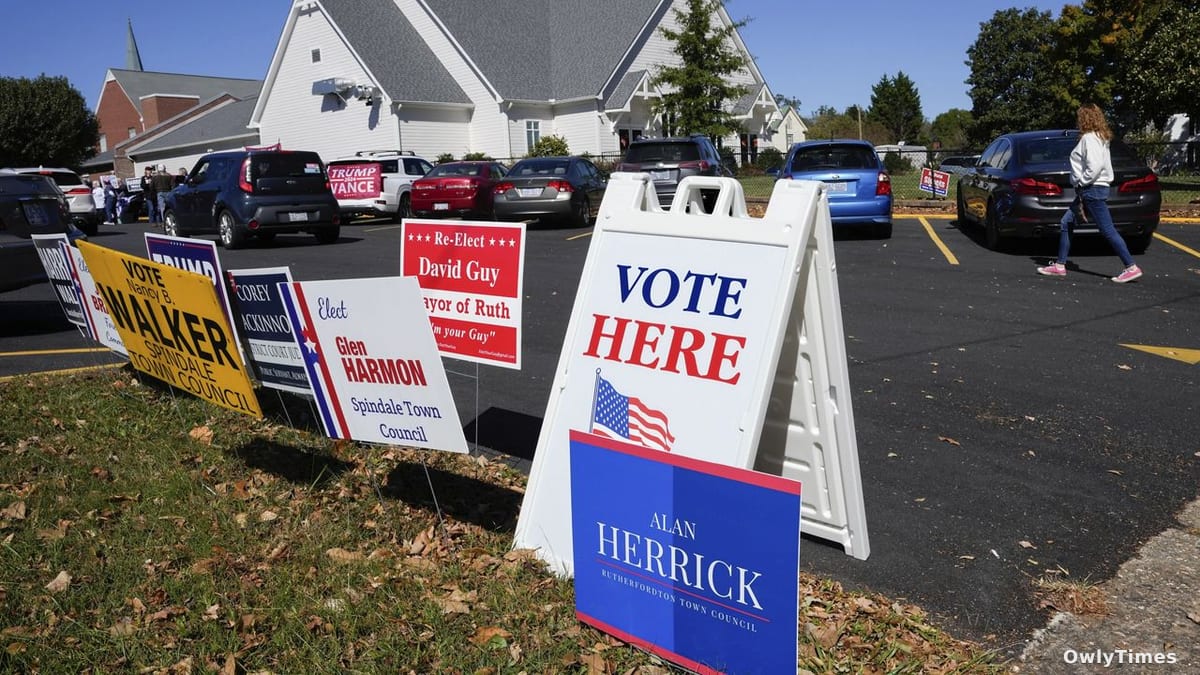

The strategic calculation behind North Carolina’s protracted legal battle over voter ID wasn’t about securing election integrity – a justification routinely offered – but about shifting the baseline for acceptable voter access and, consequently, electoral outcomes. Judge Loretta Biggs’ upholding of the 2018 law on Thursday isn’t a vindication of the law’s merits, but a demonstration of how legal precedent can be leveraged to neutralize challenges to demonstrably restrictive voting policies. The ruling, while a win for Senate Leader Phil Berger and the Republican legislative leadership, reveals a broader trend: the erosion of legal recourse against measures that disproportionately impact minority voters, even when evidence suggests a disparate impact.
The Shifting Sands of Voting Rights Litigation
The NAACP’s lawsuit, arguing discriminatory intent under the U.S. Constitution and the Voting Rights Act, hinged on demonstrating that the law was designed to suppress votes from communities historically aligned with the Democratic party. This argument, while presented with evidence of a heavier burden to obtain IDs falling on Black and Hispanic voters, ran headfirst into a legal wall constructed by recent appellate court rulings. Judge Biggs herself acknowledged the historical context of racial discrimination in North Carolina and the potential for voter suppression, yet felt constrained by the 4th U.S. Circuit Court of Appeals’ directive to grant “almost impenetrable deference” to the presumption of good faith on the part of the legislature. This deference, in effect, requires plaintiffs to overcome an extraordinarily high bar to prove intentional discrimination, even when statistical disparities and historical patterns suggest otherwise. The fact that the state offers free ID cards, while presented as mitigating the burden, doesn’t negate the logistical and informational hurdles faced by many voters, particularly those in rural areas or with limited mobility.
A History of Recurrence: Voter ID Laws and Political Control
North Carolina’s experience isn’t isolated. The state’s journey with voter ID – from the 2013 law struck down for racial bias to the current iteration – mirrors a national pattern. Thirty-six states now have laws requesting or requiring identification at the polls, with 23 demanding photo ID, according to the National Conference of State Legislatures. This surge in restrictive voting laws followed the Supreme Court’s 2013 Shelby County v. Holder decision, which gutted key provisions of the Voting Rights Act, removing federal oversight of elections in states with a history of discrimination. Shelby County unleashed a wave of voter ID legislation, often justified by unsubstantiated claims of widespread voter fraud. The parallel is stark: just as after the Civil Rights Movement, when new tactics emerged to disenfranchise Black voters, the weakening of the Voting Rights Act has created space for states to implement policies that, while ostensibly neutral, have a demonstrably disparate impact. The 2018 law itself was passed weeks after voters approved a constitutional amendment supporting the idea, a strategic move to create a veneer of popular support.
See the original Spectrum News story for the full account.
Who Benefits and Who Loses in the Long Run?
The immediate beneficiaries of this ruling are the Republican legislative leaders who championed the voter ID law. By securing its legality, they solidify their control over the electoral process and potentially increase their chances of maintaining power. The long-term losers are likely to be voters of color, low-income individuals, and students – groups who are statistically less likely to possess the required forms of identification. While the law allows for provisional ballots and exception forms, these mechanisms rely on voter awareness and access, which are not uniformly distributed. The NAACP’s President Deborah Dicks Maxwell rightly points out that the ruling “ignores the real and documented barriers” these laws create. The cost isn’t simply a few votes lost here and there; it’s the systematic erosion of political participation from communities already marginalized. The fact that the state Supreme Court flipped from a Democratic to a Republican majority and subsequently upheld the law underscores the political stakes involved.
The Next Chess Move: Federal Intervention or Further Restriction?
The question now isn’t whether North Carolina’s voter ID law will be enforced – it already has been since the 2023 municipal elections – but whether the federal government will intervene. With the Department of Justice under the Biden administration, there’s a possibility of renewed scrutiny of voting laws in states with a history of discrimination. However, the legal landscape, shaped by recent appellate court decisions, presents significant obstacles. The more likely scenario is that North Carolina Republicans will build on this victory by exploring further restrictions on voting access, perhaps through limitations on early voting or absentee ballots. The political chess move to watch is whether the state legislature attempts to further refine the voter ID law to address the concerns raised by Judge Biggs regarding disparate impact – not to alleviate the burden on voters, but to create a legal shield against future challenges.





