
The Supreme Court’s recent ruling on presidential tariff authority wasn’t simply a legal setback for Donald Trump; it was a calculated exposure of a power dynamic rapidly shifting against him, and a stark illustration of a presidency increasingly reliant on circumventing constitutional checks and balances. The decision, limiting the President’s ability to unilaterally impose tariffs, immediately triggered a predictable response – a 45-minute tirade denouncing the justices as “unpatriotic” and “disloyal.” This wasn’t a spontaneous outburst, but a strategic, if self-destructive, attempt to reassert dominance over a branch of government that has, until now, largely accommodated his expansive view of executive power. The core calculus at play is simple: when direct authority is curtailed, the response is to delegitimize the authority itself.
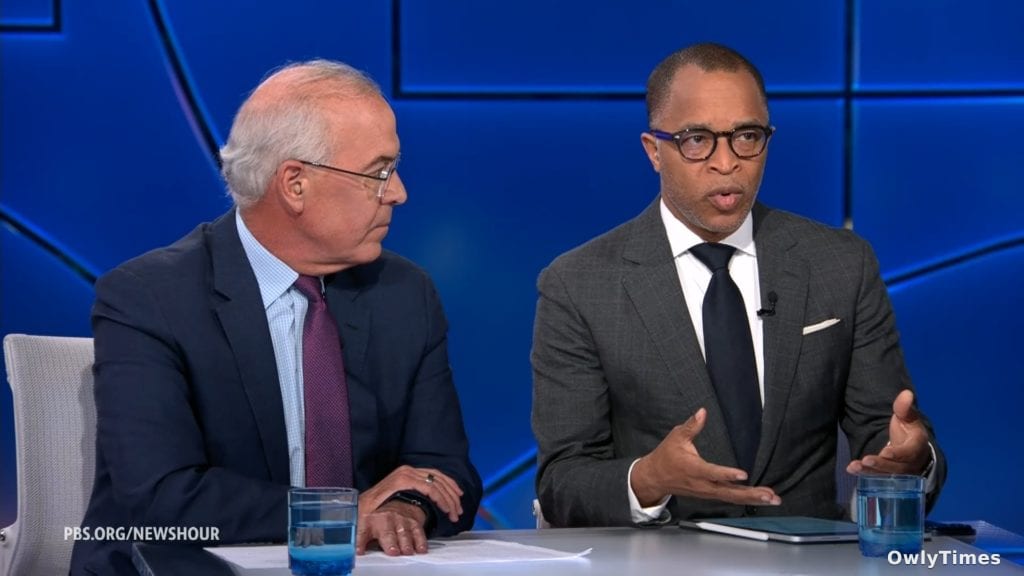
The ruling itself, while seemingly focused on the narrow issue of tariffs, reveals a broader pattern within the Court. As David Brooks of The Atlantic observed, the Court has consistently granted Trump broad latitude in running the executive branch, but is now demonstrably drawing a line at encroaching on the legislative domain – the power of Congress to tax and spend, enshrined in the Constitution. This isn’t a new legal argument; the Court’s consistent line on federal power was highlighted by Brooks, echoing the concerns articulated decades ago by historian Arthur Schlesinger Jr. in his 1974 book, The Imperial Presidency, regarding Richard Nixon. However, the current situation dwarfs even the concerns raised during the Nixon era, compounded by a Congress seemingly willing to abdicate its constitutional responsibilities. Who benefits and who loses here is clear: the President loses a tool for unilateral economic action, Congress gains a potential opportunity to reassert its authority, and American consumers – who, according to a recent Federal Reserve study, bear 90% of the cost of these tariffs – remain vulnerable.
This piece references the PBS report.
The immediate aftermath of the ruling – the President’s executive order imposing a 10% global tariff set to expire in 150 days unless Congress acts – is a deliberate trap. It forces Republicans in Congress into a difficult position. Extending the tariff would invite criticism from constituents already feeling the pinch of inflation, while allowing it to lapse would be seen as a rebuke of the President. This is a classic “Hobson’s choice,” offering only undesirable options. Jonathan Capehart of MSNBC NOW rightly pointed out the bind, noting the simultaneous pressure from Democrats eager to dismantle the tariff regime. The parallel to past legislative standoffs is notable. Consider the debt ceiling crises of the Obama and Biden administrations, where political maneuvering consistently prioritized partisan advantage over economic stability. This tariff situation is a smaller-scale version of the same dynamic, but with potentially significant consequences for global trade and domestic prices.
Beyond the tariff dispute, the President’s convening of his “Board of Peace” – a gathering of international leaders to discuss ongoing conflicts – presents another layer of strategic complexity. While framed as a reassertion of American leadership, as Brooks suggested, it also skirts traditional diplomatic channels and potentially undermines the role of established international institutions like the United Nations. The U.N.’s diminished credibility in regions like the Middle East, particularly regarding Gaza, creates a vacuum that the President is attempting to fill. However, as Capehart astutely questioned, the lack of transparency surrounding the funding and implementation of this initiative raises legitimate concerns about potential conflicts of interest. The question isn’t simply whether the Board can achieve peace, but whether it’s a genuine effort at diplomacy or a vehicle for self-enrichment. This echoes historical precedents of unilateral peace initiatives, often driven by personal ambition rather than genuine commitment to conflict resolution.
The passing of Rev. Jesse Jackson this week adds another dimension to the week’s political currents. Both Brooks and Capehart reflected on Jackson’s legacy as a pivotal figure in the civil rights movement and a formative influence on the modern progressive movement. His two presidential campaigns, while unsuccessful, fundamentally reshaped the political landscape, forcing a national conversation about economic justice and racial equality. Jackson’s life, as Brooks noted, was one of significant accomplishment, bridging the gap between the civil rights struggles of the past and the progressive activism of the present. However, his passing also underscores the fragility of the coalition he helped build, a coalition now facing unprecedented challenges in a deeply polarized political climate. The political chess move to watch next isn’t simply about tariffs or international diplomacy; it’s about whether Congress will seize the opportunity presented by the Supreme Court ruling to reassert its constitutional authority, or continue its voluntary descent into irrelevance. Will they act as a check on executive power, or allow the President to further erode the foundations of American democracy?