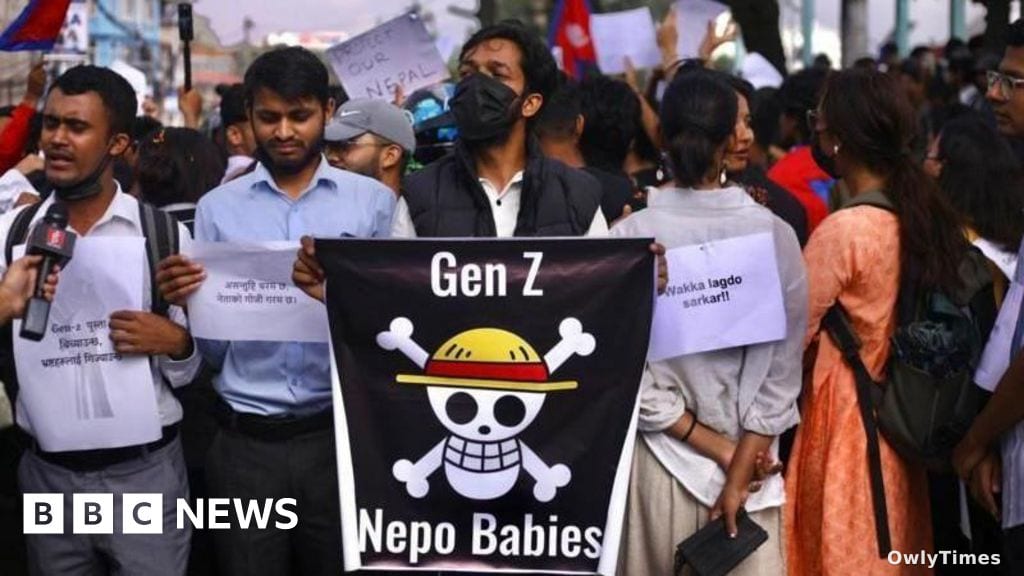

The calculus behind the recent quiet on Nepali social media isn’t a change of heart, but a calculated retreat. Last summer’s protests, fueled by outrage over the conspicuous consumption of politicians’ children – dubbed “nepo kids” – directly led to the downfall of a prime minister and now dictates the pre-election maneuvering of every major party. The strategic shift isn’t about addressing the underlying issues of corruption and inequality, but about managing the perception of those issues ahead of next week’s polls. Who benefits and who loses from this carefully curated silence? The immediate beneficiaries are the political elite, buying themselves time and attempting to reframe the narrative. The losers are the Gen Z voters whose anger, while momentarily diffused, remains a potent force.
The spark that ignited the unrest was deceptively simple: images of lavish lifestyles flaunted online, a stark contrast to the realities faced by a nation where youth unemployment stands at 20.6% and three million citizens work abroad. Satish Kumar Yadav, a 25-year-old lab technician, succinctly captured the sentiment: “The kids of big politicians celebrate special occasions in places like Thailand and Switzerland… But, the children of the general public are forced to go to Gulf countries to find jobs.” This disparity, amplified by social media, became a focal point for discontent. The proposed ban on the very platforms enabling this criticism proved to be the tipping point, triggering protests on September 8th that resulted in 77 deaths and a change in leadership. This echoes historical precedents – from the French Revolution’s pamphlets to the Arab Spring’s social media campaigns – where control of information, or attempts to control it, become flashpoints for rebellion.
See the original the BBC story for the full account.
The immediate aftermath saw a flurry of damage control. Shrinkhala Khatiwada, a former Miss Nepal and daughter of a former health minister, deactivated her Instagram account after facing accusations of benefiting from nepotism, even releasing a 34-minute YouTube video attempting to defend her position. Smita Dahal, granddaughter of a three-time prime minister, made her Instagram private. Even more visibly, images of Saugat Thapa, a former minister’s son, posing with stacks of designer boxes circulated widely, becoming a symbol of elite excess. While Thapa continues to post an international lifestyle, the broader trend is towards a muted online presence. This isn’t organic; it’s a direct response to the political pressure. The fact that these accounts have gone quiet after the protests, and before the election, is not coincidental.
However, the silence isn’t universal, and the underlying issues haven’t disappeared. The fact that Saugat Thapa continues to showcase his lifestyle, while others retreat, highlights a fracture within the elite itself – a willingness to test the boundaries of public tolerance. More importantly, the outrage stems from a deeper well of frustration with systemic corruption. Transparency International’s latest data reveals that 84% of Nepalis believe government corruption is a major problem, a figure underscored by recent scandals involving inflated airport construction costs ($74 million) and fraudulent refugee schemes. These aren’t isolated incidents; they represent a pattern of impunity that fuels public distrust. The scale of corruption – a fifth of Nepal earning less than $2 a day – puts these figures into stark relief.
Political parties, recognizing the shift in public sentiment, have responded with a series of promises. The Rastriya Swatantra Party (RSP), a relatively new entrant, pledges greater accountability for constitutional bodies. The Communist Party of Nepal UML promises youth involvement in national development. The Nepali Congress proposes investigating the assets of public officials since 1991 and even removed five-time former Prime Minister Sher Bahadur Deuba as president, a move linked to the lavish wedding of his son. These gestures, while potentially meaningful, are largely performative. As a source within Transparency International points out, addressing systemic corruption requires a long-term commitment, not just pre-election pledges. The likely outcome – a coalition government – further complicates the prospect of genuine reform.
The political chess move to watch next isn’t whether these promises are kept, but whether Gen Z voters remain disengaged. The current lull in “nepo kid” outrage, as noted by protester Dipika Saru Mugar, is a temporary phenomenon. The underlying anger hasn’t vanished; it’s merely shifted focus. The crucial question is whether that anger will translate into sustained political pressure, or whether the elite’s calculated retreat will be enough to secure another term in power. Will the memory of September – and the lives lost – be enough to motivate voters to demand real change, or will the promise of a better future prove too easily forgotten? The answer to that question will determine Nepal’s political trajectory for years to come.





